
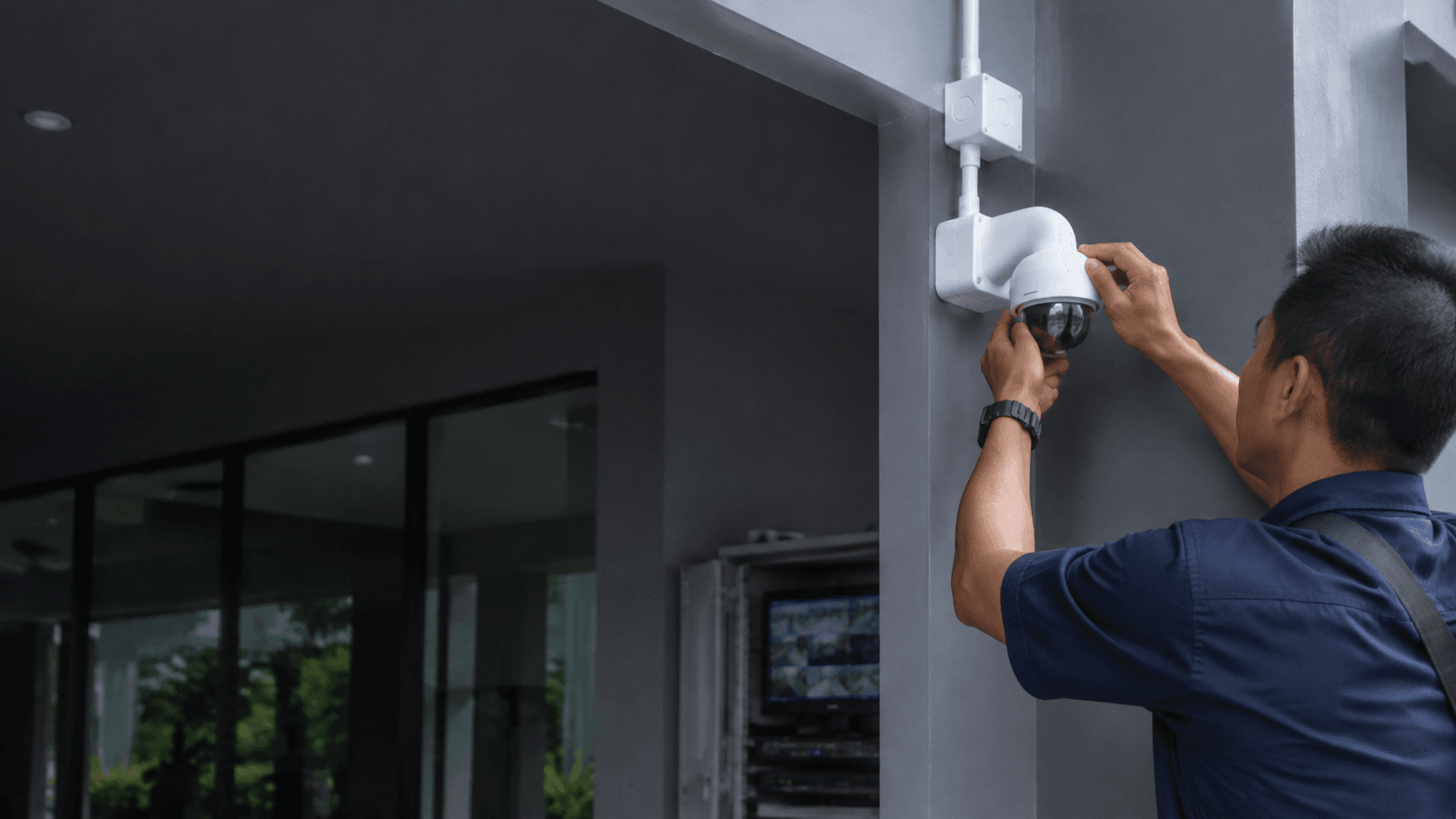
Buyers in Malaysia searching for an Arlo Pro 4 Bundle are usually trying to work out one thing before paying: what actually lands in the box, and whether a kit suits the property better than a single camera. The honest position is that bundle contents vary by listing, so the camera count and accessory list have to be confirmed against the specific product page rather than assumed from the name.
What follows covers the parts that stay consistent across bundle versions, the checks that decide whether a wire-free kit fits a Malaysian property, and the running requirements that continue after installation.
What an Arlo Pro 4 Bundle typically includes
A bundle is a packaging decision, not a separate camera. The cameras inside are Arlo Pro 4 units, and the bundle exists to supply several of them with the accessories needed to run them together.
Across the bundle listings reviewed for this topic, the recurring components are the cameras themselves, rechargeable batteries, a charging station, mounting hardware, and the cable or adapter needed to power the charging station. Listings differ on how many of each item are included, and some describe the total as a piece count rather than a camera count.
That distinction matters. A listing described as a twelve-piece bundle may contain three cameras plus batteries, mounts, and charging hardware, so the piece number is not the camera number. Reading the itemised contents is the only reliable way to know how many cameras are being bought.
Camera count and accessory differences between kits
Bundle versions differ mainly in camera count. Two-camera, three-camera, and larger configurations appear across listings, and the accessory quantities scale with the camera count rather than staying fixed.
Three differences are worth checking on any listing:
- Whether the batteries included match the camera count, or whether spares are supplied on top.
- Whether the charging station charges one battery at a time or several.
- Whether mounts are the standard adjustable type or a fixed wall mount.
A bundle that supplies one charging station for several cameras is workable, because batteries can be rotated through it. A bundle that supplies fewer batteries than cameras is a different proposition, since each camera needs a battery to run.
Accessory compatibility is the other variable. Arlo sells mounts, solar panel chargers, and charging cables as separate accessories, and compatibility is listed per accessory rather than assumed across the range. A mount listed for the Pro 4 may also fit other Arlo models, but the listing states which ones, and that statement is the one to trust.
Wire-free placement and lighting checks before mounting
Wire-free cameras remove the cable run, not the planning. Placement still decides whether the footage is useful.
Eyonic, a security system supplier in Sarawak, recommends checking actual lighting conditions before confirming placement for cameras that depend on low-light performance. The same discipline applies to a wire-free kit: the position that looks correct on a floor plan is not always the position that produces a usable image after dark.
For a Malaysian property, three placement constraints tend to shape the layout:
- Confirm the camera count against the entry points that actually need coverage, rather than the number of cameras in the kit.
- Check the light at each proposed position at the time of day the footage matters most.
- Confirm the mounting surface holds the mount securely and that the camera angle covers the intended approach.
- Check that each position sits within reliable Wi-Fi range, since wire-free cameras still depend on a network connection.
- Confirm the charging routine is practical from each mounted position, because a camera that is awkward to reach is a camera that runs flat.
Eyonic's own installation process runs through site survey, system proposal, installation, and handover, and the survey stage exists precisely because placement decisions made on paper often change once the site is seen.
Power, charging and battery routine
Wire-free operation moves the power question from wiring to routine. Each camera runs on a rechargeable battery, and the bundle's charging station is what makes that routine manageable.
The practical sequence is straightforward: a battery runs down, it comes out of the camera, it goes into the charging station, and a charged battery goes back in. A bundle with more batteries than cameras shortens the gap, because a charged spare is always available.
Two constraints are worth planning around. First, charging time is not instant, so a single battery per camera means that camera is offline while it charges. Second, the charging station needs its own power point, which is a fixed location even though the cameras are not.
Solar panel chargers appear as separate accessories in Arlo's range and are listed as compatible with several camera models. Whether one suits a given position depends on how much direct light that position receives, which is the same lighting question that governs placement.
Storage, subscription and app requirements
Recording and viewing depend on the Arlo app, and storage arrangements depend on the plan attached to the account. Bundle listings frequently reference a trial period of a subscription plan, which means the arrangement after the trial is a separate decision.
Cloud storage subscription terms, plan names, and storage limits are set by Arlo and change over time, so the current terms on Arlo's own documentation are the ones that apply. Local storage options exist on some Arlo setups through a hub accessory, and whether that applies to a specific bundle depends on what the bundle contains.
Smart home integration is similarly model and region dependent. Compatibility lists are published per product, and a bundle inherits the compatibility of the cameras inside it rather than adding anything new.
What to confirm before committing to an Arlo Pro 4 Bundle
The bundle decision comes down to whether the kit matches the property. A few checks settle it.
Confirm the camera count from the itemised contents, not the piece count or the product name. Confirm the accessory list, particularly batteries and mounts, because those determine how much additional purchasing is needed. Confirm the storage arrangement after any trial period ends. Confirm availability and support locally, since warranty and service terms are set by the seller and vary by market.
For properties where coverage needs are already clear, a bundle reduces the number of separate purchases. For properties where the coverage plan is still being worked out, a site survey before purchase tends to be the cheaper sequence, because it establishes how many cameras the layout actually needs.
Eyonic handles CCTV planning, supply, and installation for homes, offices, shops, and industrial sites in Sarawak, and completed a project for the Kuching Immigration Office covering arrival flow, staff areas, visitor movement, and dependable daily operation. Share the location, property type, and required system with Eyonic on WhatsApp at +60 11-5111 7959 for the next practical step.