
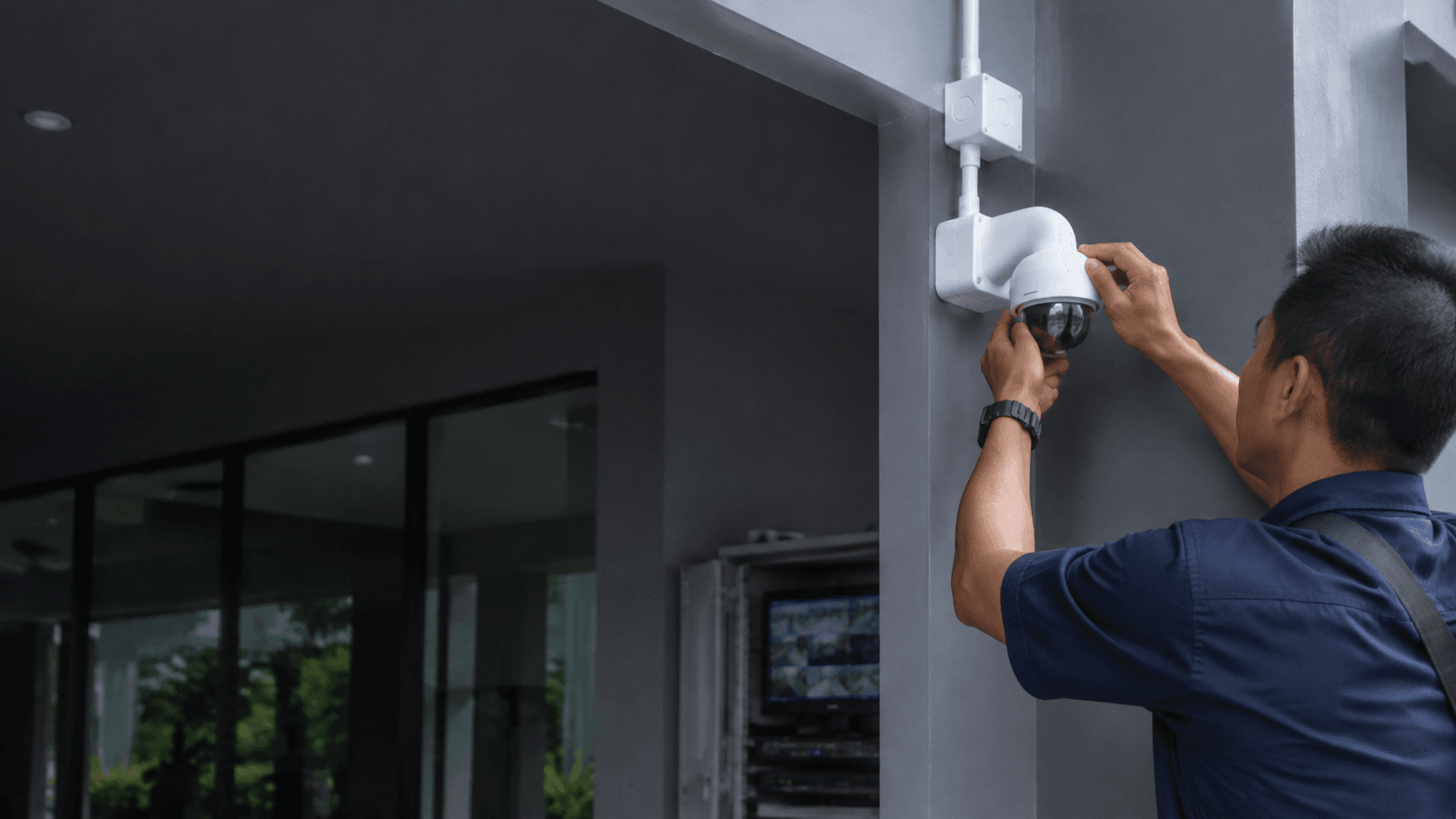
The technology behind an anpr kamera sits between ordinary video surveillance and a dedicated recognition system. A standard camera records a scene; an anpr kamera is positioned and configured so that a plate fills enough of the frame to be read, then software converts that plate image into text that can be logged, searched or matched against a list.
That distinction matters because most plate captures fail for physical reasons rather than software reasons. Angle, distance, speed and light all decide whether a plate is legible before any recognition engine sees it.
What an anpr kamera reads and records
An anpr kamera captures the characters on a vehicle plate and turns them into machine-readable text. The camera itself supplies the image; recognition happens either inside the camera or in connected software, depending on the model.
What gets stored usually includes the plate string, a timestamp and a still image of the vehicle. Some systems also keep a short video clip around the event. The plate string is what makes the record searchable — a viewer can look up a specific vehicle rather than scrubbing through hours of footage.
Recognition quality depends on the plate being readable in the captured frame. Motion blur, glare, a dirty plate, a non-standard font or a plate partly hidden by a tow bar can all defeat recognition even when the camera is working correctly. This is why plate capture is a placement problem as much as a hardware problem.
Where anpr kamera setups are used in Malaysia
Plate-reading cameras appear wherever vehicles cross a controlled point and someone needs a record of which vehicle passed. Common settings include gated residential entrances, office and factory vehicle gates, commercial car parks, weighbridges and site compounds.
In Malaysian residential and commercial settings, the practical appeal is usually access logging rather than enforcement. A guardhouse or management office wants to know which vehicle entered, at what time, and whether it belongs to a resident, staff member or visitor. A plate log answers that without relying on a guard writing entries by hand.
Industrial and logistics sites use the same principle at weighbridges and dispatch lanes, where matching a plate to a delivery or collection record saves manual reconciliation. Public-sector buildings with heavy visitor traffic face a similar problem in a different form: separating regular staff movement from unfamiliar vehicles.
Eyonic's work for the Kuching Immigration Office focused on arrival flow, staff areas, visitor movement and dependable daily operation — the same operational questions that sit behind most plate-reading decisions, even where the final system differs.
What to compare before choosing an anpr kamera
Comparison should start with the site, not the specification sheet. A camera that reads plates perfectly on a straight, well-lit approach can fail completely on a sharp turn or a steep ramp.
- Approach geometry — how far the vehicle travels in a straight line before the capture point, and whether the plate faces the camera at a workable angle.
- Vehicle speed at the capture point, since faster traffic needs a shorter exposure and often a tighter field of view.
- Lighting across the full operating day, including headlight glare at night and low sun at particular hours.
- Whether recognition runs inside the camera or in separate software, and what that means for recording and storage.
- How plate events are used afterwards — logged for review, matched against a list, or connected to a barrier or gate.
- Who surveys the site and confirms placement before any hardware is ordered.
Two of these deserve more weight than the rest. Recognition location decides the shape of the whole system, because edge processing reduces the load on a recorder while server-based processing can be easier to update centrally. Event handling decides whether the project stops at a log or extends into access control, and that decision changes the budget far more than camera choice does.
Eyonic's documented packages cover Hikvision CCTV, alarm and autogate systems at RM 1,599 each, with camera supply and setup, basic recording configuration and mobile viewing handover included in the CCTV package. Those packages describe general security work rather than plate recognition specifically, so they should be treated as a reference point for how Eyonic structures supply and handover, not as an anpr kamera price.
Lighting, lane layout and plate capture conditions
Plate capture is a lighting problem before it is a software problem. A plate needs enough contrast against its background for the characters to resolve, and that contrast changes through the day.
Daytime capture is usually the easier case, though direct low sun can wash out a plate facing the camera. Night capture depends on how the plate is illuminated — headlights alone rarely light a plate evenly, and glare from oncoming headlights can overwhelm a frame. Eyonic's guidance on ColorVu-style cameras is to check actual lighting conditions on site before confirming placement, and the same principle applies with more force to plate reading, where the target is a small reflective rectangle rather than a whole scene.
Lane layout sets the geometry. A single lane with a straight approach gives the camera a predictable angle and distance. A wide entrance where vehicles can approach at different angles forces a trade-off: a wider view covers more of the entrance but shrinks the plate in the frame, while a narrower view reads plates reliably but misses vehicles that drift outside it.
Speed adds a third constraint. A vehicle moving quickly across the frame blurs unless exposure is short, and short exposure demands more light. Sites with fast traffic therefore tend to need more deliberate illumination and tighter framing than slow residential entrances.
Edge cases worth naming before purchase: motorcycles with plates mounted at an angle or partly obscured, vehicles towing trailers that block the plate, temporary plates and foreign plates with different formats, and plates that are dirty, faded or bent. None of these are reasons to abandon the project, but each one reduces the realistic read rate and should be discussed during the survey rather than discovered afterwards.
Planning an anpr kamera installation with Eyonic
Eyonic's CCTV installation process runs through site survey, system proposal, installation and handover. That sequence suits plate-reading work because the survey is where placement, lighting and lane geometry get settled.
Eyonic Sdn Bhd is a security system supplier based in Sarawak, working on CCTV and ELV systems for homes, offices, shops and industrial sites, with planning, supply and installation. The founder, Eric Yong, has more than ten years in the industry and works on technical installation of digital security solutions for commercial businesses in Sarawak.
Documented project work includes the Kuching Immigration Office, where the focus was arrival flow, staff areas, visitor movement and dependable daily operation, and KTA Sarawak Sdn Bhd, an engineering consultancy office setup in Kuching supporting staff movement, visitor handling, tidy cabling and clearer daily site control. Approximate budgets for that type of work are recorded at RM 12,000 to RM 28,000 for the Immigration Office project and RM 8,000 to RM 18,000 for the KTA Sarawak project.
Those figures describe broader security and ELV work rather than plate recognition alone, and they should be read as scale indicators for comparable site work rather than as an anpr kamera quotation.
One limit is worth stating plainly. The supplied evidence does not confirm which plate-recognition hardware Eyonic supplies, what recognition distances or lane widths are supported, or how plate events integrate with barriers, autogates or access-control software. Those questions belong in the survey conversation, where the site can be assessed directly rather than answered from a specification sheet.
Share your location, property type and required system with Eyonic on WhatsApp at +60 11-5111 7959 for the next practical step.