
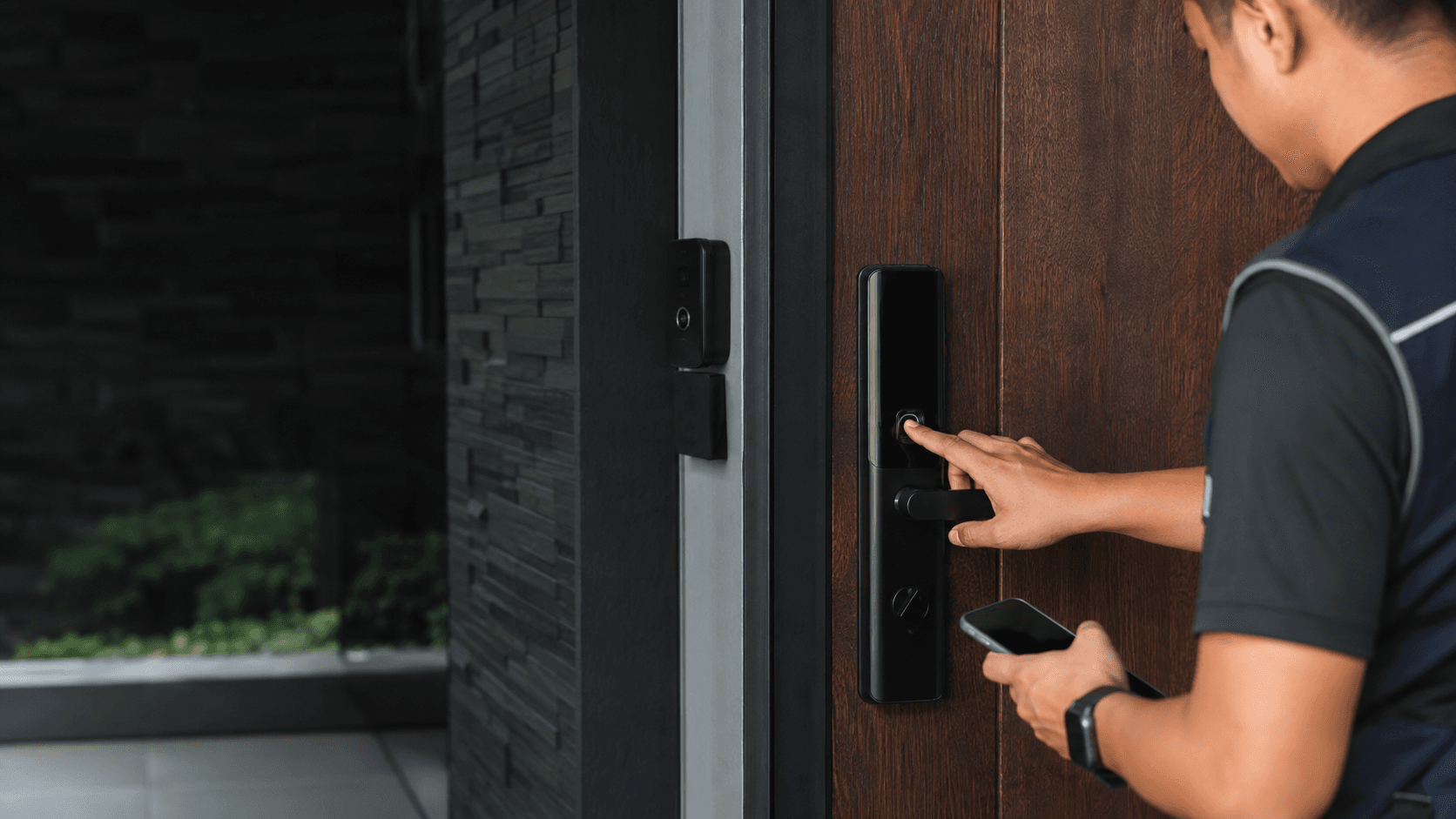
The term covers a family of Yale smart locks rather than one single model. Buyers comparing a yale keyless lock are usually weighing keypad entry, app control, and how the lock fits an existing door. The sections below set out what the products are, how they differ, and which conditions change the decision.
Yale Keyless Lock. What Matters Before Choosing
Three things decide most of the outcome: the door itself, how the lock connects, and what happens when power or connectivity fails. A lock that fits one door may not fit another, and a lock that works well for a household may be the wrong choice for a shop with rotating staff.
- Check the door and existing hardware, including bore hole size and backset.
- Decide how entry should work. keypad code, app, fingerprint, or a combination.
- Confirm the connection method, since some features depend on a bridge or module.
- Plan a backup entry method before installation, not after.
- Review who needs access and whether permissions must be changed or revoked.
Yale's own product pages describe the range as smart door locks offering keyless convenience through fingerprint, RFID card, PIN code, or mobile app. That list matters because it shows the category is not uniform. A keypad-only lock and a lock with app control solve different problems.
What Is a Yale Keyless Lock?
A Yale keyless lock is a door lock that grants entry without a physical key, using a keypad, code, card, fingerprint, or connected app instead. The Yale Assure Lock 2 is sold in keypad and touchscreen versions, and Yale also offers a separate Yale Keypad that pairs with compatible smart locks to issue access codes.
The distinction between a lock and an accessory is easy to miss. The Yale Keypad is not a standalone lock. It pairs with a compatible smart lock and provides code-based entry, which means the lock it pairs with still does the physical work. A buyer searching for a yale keyless lock may land on either type of product, so checking whether the item is a complete lock or an add-on keypad prevents a mismatched purchase.
Yale's smart lock range also spans retrofit and full-replacement designs. Retrofit models keep the existing deadbolt and add smart control to it. Full-replacement models include the deadbolt itself. The choice affects installation effort and how much of the original door hardware stays in place.
Choosing the Right Yale Keyless Lock
Fit comes before features. A lock that does not match the door's preparation cannot be installed regardless of how well its app works.
Match the lock to the door
Door thickness, bore hole diameter, backset, and the presence of an existing deadbolt all affect which models fit. A door with no deadbolt preparation needs a different approach than a door that already has one. Measuring before ordering avoids a return.
Decide how entry should work
Keypad entry suits households where several people need access without carrying keys. Fingerprint access suits people who want to skip code entry entirely. App control suits owners who need to issue or revoke access remotely, which is common for short-term rentals and small businesses.
Check the connection method
Some Yale locks connect over Bluetooth alone, while remote access and integration with other smart home systems may require a Wi-Fi module, a bridge, or a compatible hub. The lock's feature list can look identical whether or not the connection hardware is included, so the module requirement is worth confirming before purchase.
Plan the backup
Every keyless lock needs a fallback for dead batteries or a forgotten code. Yale locks commonly provide a physical key override or an external power option. A lock installed without a tested backup method creates a lockout risk that a traditional keyed lock does not have.
Practical Considerations for Installation
Installation difficulty depends on the model and the door. A retrofit lock that reuses the existing deadbolt is generally simpler than a full replacement, which may require adjusting the door preparation.
Battery life is a maintenance item rather than a one-time decision. A lock that reports low battery through an app gives more warning than one that only signals at the door. For a rental property or a business entrance, that warning matters more than it does in a home where the door is used a few times a day.
Access management is the other practical constraint. Households rarely need to track who entered and when. Businesses, clinics, and rental operators often do. Where permissions must be changed frequently or audited, a standalone smart lock may be less suitable than a managed access-control setup. Eyonic, a security system supplier in Sarawak, notes that smart locks work best when door condition, user roles, and backup method are reviewed before installation, and that business use sometimes calls for an access-control panel instead of a standalone lock.
For properties in Malaysia, humidity and direct rain exposure are worth checking against the lock's rating. An exterior gate or an unsheltered door faces conditions that an interior door does not.
Making an Informed Choice About
The decision usually comes down to whether the lock is being bought for convenience or for control. Convenience favors a keypad or fingerprint lock on a single household door. Control favors a system where access can be issued, revoked, and reviewed, which may mean a lock plus a management layer, or a different product category entirely.
Two questions resolve most of the uncertainty. First, does the door accept the lock without modification? Second, if the battery dies or the connection drops, how does someone get in? A clear answer to both means the lock is a reasonable fit. An unclear answer means the model or the door needs another look before purchase.
For buyers in Sarawak who want the door hardware assessed alongside the rest of a property's security setup, Eyonic handles site survey, system proposal, installation, and handover for security systems, and can advise on whether a standalone smart lock or a wider access-control approach suits the site. Share your location, property type and required system with Eyonic on WhatsApp at +60 11-5111 7959 for the next practical step.