
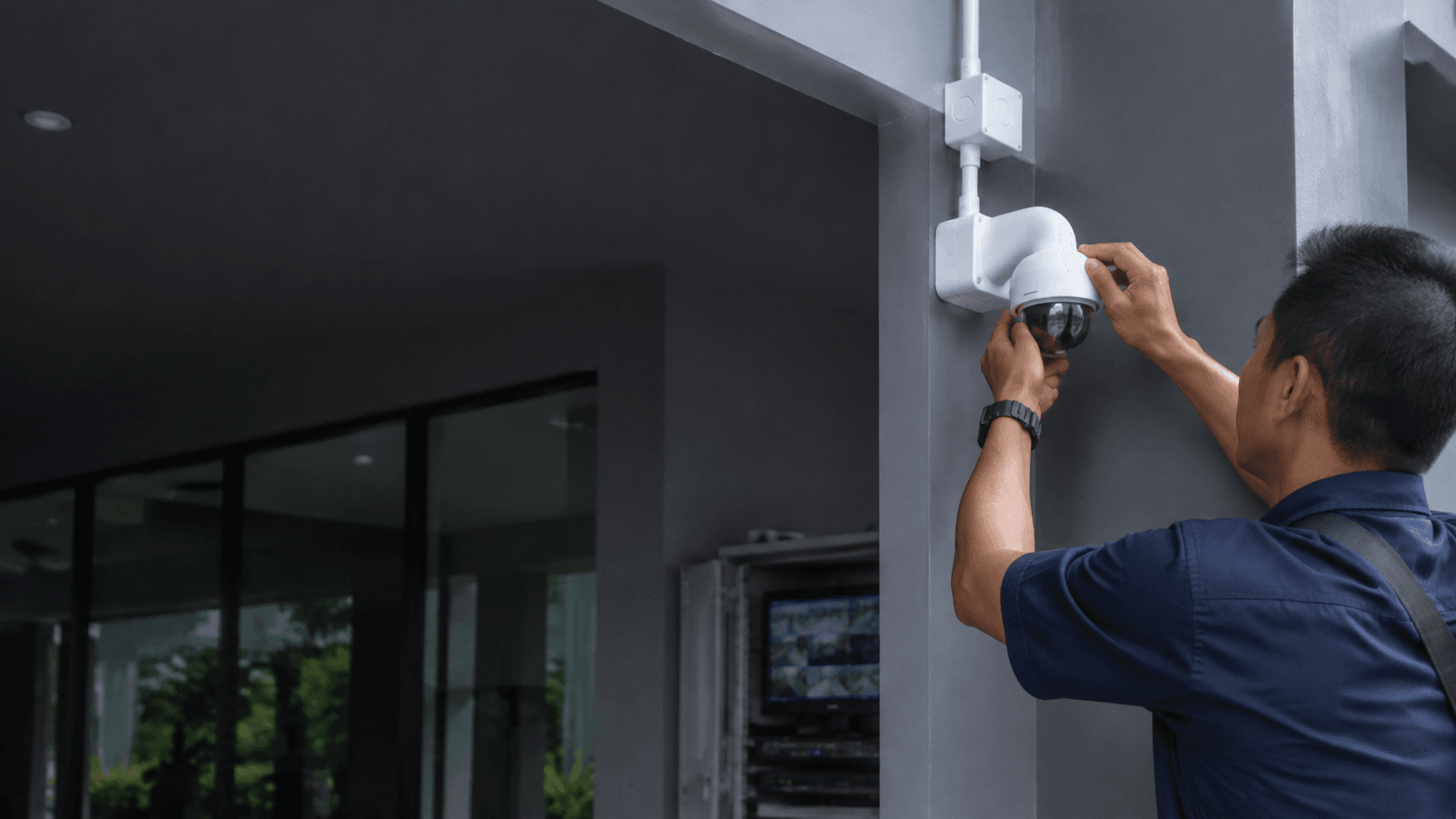
The exact-match query 16ch dvr describes a sixteen-channel digital video recorder: a single box that accepts video feeds from multiple cameras, writes them to local storage, and plays footage back when something needs checking. Channel count is the headline number, but it is rarely the deciding one. What decides whether a recorder works on a given site is whether it accepts the camera formats already installed, whether its storage holds enough days of footage, and whether someone local will survey, install and hand over the system.
Eyonic Sdn Bhd is a security system supplier in Sarawak that plans, supplies and installs monitoring systems with camera placement, recording and remote viewing. The company's founder, Eric Yong, has worked in the industry for more than 10 years, with technical installation experience on commercial sites in Sarawak. That local context matters for a 16-channel recorder, because a recorder is only one part of a working system.
What a 16-channel recorder is used for
A sixteen-channel recorder suits premises where the camera count runs into double figures: a shop with front, back, counter and storeroom views; an office with entrance, corridor and staff-area coverage; a small industrial yard with perimeter and gate cameras. The recorder is the point where all those feeds converge, so the person reviewing footage looks in one place instead of several.
Eyonic's Kuching Immigration Office project shows the pattern. The work focused on arrival flow, staff areas, visitor movement and dependable daily operation for a public office in Kuching. That is a multi-zone site where a single recorder covering many cameras makes more sense than several small recorders scattered across the building. The approximate budget for that type of work was RM 12,000 to RM 28,000, which reflects a full installation rather than a recorder alone.
A smaller example is the KTA Sarawak Sdn Bhd project, which needed a practical office setup in Kuching to support staff movement, visitor handling, tidy cabling and clearer daily site control. The approximate budget for that type of work was RM 8,000 to RM 18,000. Both projects point to the same reality: the recorder is chosen after the camera positions and the site's daily routine are understood, not before.
Camera formats and channel count to confirm first
The most common mistake with a 16ch dvr is buying on channel count alone. Sixteen channels means sixteen camera inputs, but inputs come in different signal types. Analog cameras, HD-over-coax cameras and network cameras do not all connect the same way, and a recorder that accepts one type may not accept another. Before committing, the existing cameras or the planned cameras need to be matched against what the recorder actually supports.
This is where a site survey earns its place. Eyonic's CCTV installation process begins with a site survey, which is the point where camera positions, existing cabling and lighting conditions get checked on site rather than assumed from a floor plan. Eyonic also recommends checking actual lighting conditions before confirming placement for ColorVu-style cameras, because a position that looks adequate on paper can behave differently once the real light is measured.
Channel count also interacts with future plans. A site with twelve cameras today may want room to grow, and a sixteen-channel recorder leaves four spare inputs. A site already at sixteen cameras has no headroom, so the choice becomes a larger recorder or a second unit. Neither is wrong; the decision depends on how likely expansion is.
Storage, recording time and playback
Storage is the part of a 16ch dvr decision that buyers most often underestimate. A recorder with sixteen cameras writing continuously fills its drive far faster than a four-camera setup, and the number of days of footage retained depends on how many cameras record, at what quality, and whether recording runs continuously or only on motion.
Retention is a practical question, not a technical one. If footage is typically reviewed within a week of an incident, a shorter retention window may be sufficient. If footage is needed for month-end reconciliation, insurance claims or dispute resolution weeks later, the storage has to be sized for that. The honest answer is that retention cannot be promised without knowing the camera count, the recording mode and the drive capacity in the specific build.
Playback matters as much as recording. When an incident is reported, someone has to find the relevant clip quickly. A recorder that stores thirty days of footage but makes searching painful is less useful than one with a shorter window and a clear timeline. Motion-based recording and event search reduce both storage pressure and search time, which is why recording mode is worth deciding deliberately rather than defaulting to continuous.
Installation steps from site survey to handover
Eyonic's installation process follows a defined sequence. The order matters, because each stage depends on the one before it.
- Site survey. camera positions, existing cabling, lighting conditions and the site's daily movement are checked on location.
- System proposal. the recorder, cameras, storage and layout are proposed against what the survey found.
- Installation. cameras, recorder, cabling and configuration are installed and set up.
- Handover. recording, playback and remote viewing are demonstrated and explained so the system can be used day to day.
Handover is the stage most easily treated as a formality, and it is the one that determines whether the system gets used properly. A recorder that nobody knows how to search is effectively a box on a shelf. Remote viewing is part of that handover, because checking a camera from a phone is often the first thing a site owner wants to do and the first thing that goes wrong if it is not set up and explained.
Where a 16ch dvr fits in Sarawak premises
In Sarawak, the practical constraint is usually support rather than hardware. A recorder bought online may arrive with the right channel count and still leave the site without anyone to survey the building, run the cabling tidily, or explain the playback interface. Eyonic's work is concentrated in Sarawak, with completed projects for government and engineering consultancy clients in Kuching, and the installation process is built around a local survey and handover rather than a shipped box.
For a home with a handful of cameras, a sixteen-channel recorder is more capacity than the site needs, and a smaller unit would do the same job for less. For a shop, office or industrial site with ten or more camera positions, the channel count starts to fit, and the deciding factors shift to format compatibility, storage sizing and who handles the installation. The Kuching Immigration Office and KTA Sarawak projects both sit in that multi-zone category, where the recorder is one component of a planned system.
Eyonic's published packages start at RM 1,599 for a Hikvision CCTV package covering camera supply and setup, basic recording configuration and mobile viewing handover. That package is a starting point rather than a sixteen-channel system, and a multi-camera site will need a proposal built around its actual layout. Pricing for a specific 16ch dvr unit or a full sixteen-channel system is confirmed against the site requirements rather than published as a fixed figure.
Share your location, property type and required system with Eyonic on WhatsApp at +60 11-5111 7959 for the next practical step.