
The exact-match query lorex 4k ultra hd nvr describes a specific class of recorder rather than a single fixed product. Lorex publishes several recorder families, and the model number on the box decides what the unit can actually do. That distinction matters in Malaysia, where a recorder bought online may arrive with no local installer, no spare parts channel and no one to call when a hard drive fails.
This guide covers what the recorder does inside a camera system, when it suits a home, shop or office, what to confirm about channels and storage before money changes hands, how a Sarawak installation is sequenced, and which continuity checks keep recording alive after handover.
Lorex 4k Ultra Hd Nvr: What the Recorder Does in a Camera System
A network video recorder is the box that receives video streams from IP cameras over network cable, writes them to a hard drive, and serves them back for live viewing and playback. It is not a camera and it is not a monitor. Remove the recorder and the cameras become live-only devices with nothing retained.
Lorex sells recorders as standalone units and as bundled systems with cameras included. Published Lorex product pages describe recorder families by camera capacity and pre-installed storage, and the company's own comparison page lists models described as 16 camera capable with 4TB, 32 camera capable with 8TB, and a Fusion unit described as 16 camera capable with 2TB. Those figures come from Lorex's own product listings and describe those specific models, not every unit sold under the 4K name.
The practical consequence is that "4K" on a recorder listing usually refers to the resolution the unit can record and output, while the channel count and drive size determine how many cameras it accepts and how long footage survives before it is overwritten. A recorder rated for 4K capture paired with 2K cameras still records at the lower camera resolution. The recorder does not upgrade a camera.
Remote viewing is handled through the manufacturer's app, and Lorex documentation references app-based live monitoring and playback. That app depends on the recorder staying reachable over the network, which is why the network design matters as much as the recorder specification.
When a Lorex 4k Ultra Hd Nvr Fits a Home, Shop or Office
A recorder-based system fits any property where footage must be retained and reviewed later. That includes a house with a gate and a rear entry, a shop with a counter and a stockroom, and an office with a reception area and a server room. The common thread is a need to answer a question after an incident rather than only watch a screen in the moment.
Eyonic completed a project for the Kuching Immigration Office covering arrival flow, staff areas, visitor movement and dependable daily operation. That project illustrates the pattern: multiple zones, different traffic types, and a requirement that the system keep working every day without someone babysitting it. A single-camera setup does not need that structure. A site with several entry points, a perimeter and an internal counter usually does.
Fit also depends on who maintains the system. A recorder with a fixed drive and a closed camera list is simpler to run but harder to expand. A recorder that accepts additional cameras and a larger drive costs more upfront and stays useful longer. Neither choice is wrong; the mistake is buying for the current camera count only and discovering later that the unit cannot take a ninth camera.
Where a recorder system is a poor fit
A property that only needs a doorbell view, or a single room watched occasionally, gains little from a multi-channel recorder. The same applies where nobody will review footage and no one will maintain the drive. Storage devices fail, and an unmonitored recorder that stopped writing three months ago provides no protection at all.
Channel Count, Storage and Camera Matching Before Purchase
Three numbers decide whether a recorder suits a site: how many cameras it accepts, how much storage it holds, and which camera models it will talk to. Lorex's published listings show recorders described as 8-channel, 16-channel and 32 camera capable, with storage listed at 2TB, 4TB and 8TB depending on the model. Those are the figures to check against the actual model number, because the same brand name appears across very different units.
Channel count sets the ceiling. A recorder described as 8-channel accepts eight cameras, and a site with nine camera positions needs a larger unit or a second recorder. Storage sets retention. More cameras and higher resolution both consume drive space faster, so a 16-camera site on a small drive overwrites old footage sooner than the same drive on an 8-camera site. Retention length is a decision the property owner should make before purchase, not after.
Camera matching is the least visible risk. IP cameras and recorders must agree on protocol and on the manufacturer's compatibility list. Lorex publishes compatibility information for its own products, and that list is the authority for a given model. A recorder paired with cameras outside that list may connect, may partially work, or may not work at all.
Eyonic supplies Hikvision-based camera systems, and no verified comparison data between a Lorex 4k Ultra Hd Nvr and those systems is available. The honest position is that a buyer choosing between them should compare the specific model numbers, the camera compatibility lists and the local support arrangement rather than the brand names alone.
Site Survey, Camera Placement and NVR Setup in Sarawak
Eyonic's CCTV installation process runs through four stages, and the recorder decision sits inside that sequence rather than before it.
- Site survey — the property is walked to identify entry points, sight lines, lighting conditions and where cabling can run.
- System proposal — camera positions, recorder specification, storage and cabling are set out for the property.
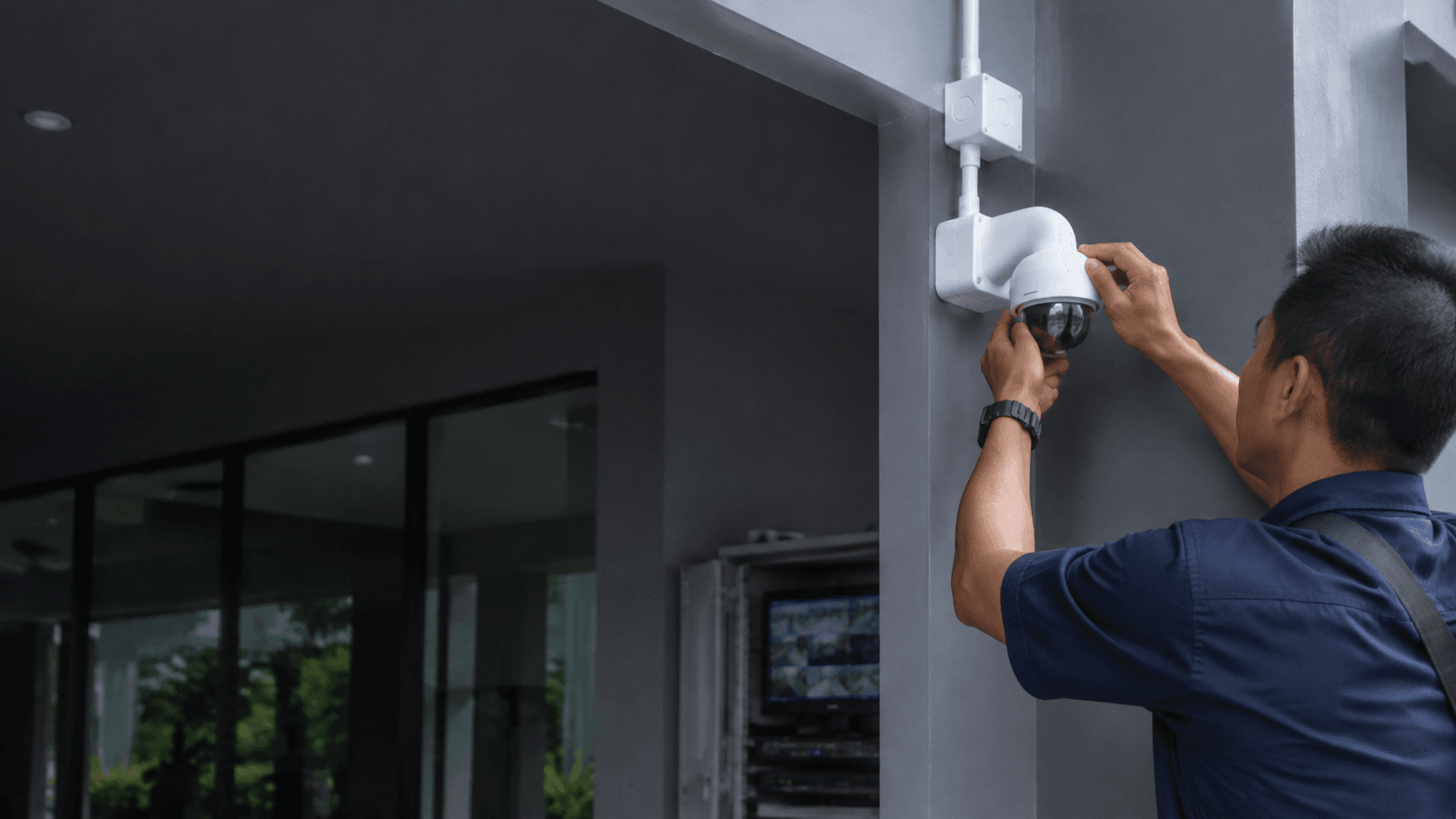
- Installation — cameras are mounted, cable is run, and the recorder is configured for recording and remote viewing.
- Handover — live viewing, playback and mobile access are demonstrated and tested with the people who will use them.
Camera placement is where most systems succeed or fail. A camera aimed at a bright doorway from a dark corridor produces a silhouette rather than a face. Eyonic recommends checking actual lighting conditions before confirming placement for ColorVu-style cameras, and the same discipline applies to any camera choice: the light at the site at the hour that matters decides the result, not the specification sheet.
For a recorder-based system, placement also affects cabling. Each IP camera needs a network run back to the recorder or to a switch, and long runs, outdoor exposure and cable routing all shape the installation. A survey that ignores cable paths produces a proposal that changes on the first day of work.
What the survey should record
A useful survey notes the number of camera positions, the light at each position during the hours that matter, the route cable will take, where the recorder will sit, and whether that location is ventilated and secure. It should also note who will review footage and on what device, because that determines how remote viewing is configured at handover.
Power Network and Recording Continuity Checks
A recorder that loses power stops recording. A recorder that loses network connectivity may keep recording locally while remote viewing goes dark. Those are different failures and they need different checks.
Power continuity means the recorder and the network equipment it depends on sit on a supply that survives a brief outage. If the recorder is protected but the router is not, remote viewing still drops. If neither is protected, recording stops entirely.
Network continuity means the recorder can reach the cameras and the internet. IP cameras depend on the network path, so a single failed switch or a disturbed cable can take several cameras offline at once. The recorder's own health indicators and camera status screens are the first place to look when a camera disappears.
Storage continuity is the check most often skipped. Drives fill, drives fail, and a recorder configured to overwrite oldest footage will keep running while quietly reducing retention. Someone should confirm periodically that the recorder is still writing and that the retention window still matches what the property needs.
Eyonic's project work for KTA Sarawak Sdn Bhd covered staff movement, visitor handling, tidy cabling and clearer daily site control. Tidy cabling is not cosmetic. Loose or undocumented cable runs are the most common cause of a camera that fails intermittently and cannot be traced.
Support Handover and the Next Practical Step
Support is the part of a recorder purchase that a specification sheet cannot answer. A Lorex 4k Ultra Hd Nvr bought from an overseas listing arrives without a local installer, and no verified Malaysia pricing, stock, warranty or distributor arrangement for a Lorex 4k Ultra Hd Nvr is available from primary sources. That gap is worth naming plainly rather than filling with assumptions.
What can be confirmed locally is the installation and support side. Eyonic Sdn Bhd plans, supplies and installs monitoring systems with camera placement, recording and remote viewing for homes, offices, shops and industrial sites, and the company's founder Eric Yong has worked in technical installation of digital security solutions for commercial businesses in Sarawak for more than ten years.
Handover is where a system becomes usable. Live viewing, playback, event search and mobile access should be demonstrated and tested with the people who will actually use them, not left as a manual. A recorder that nobody can operate is a recorder that nobody checks.
For a property in Sarawak, the practical sequence is a site survey first, then a proposal that names the recorder model, the channel count, the storage and the camera list, then installation and handover. Share the location, property type and required system with Eyonic on WhatsApp at +60 11-5111 7959 to start that sequence.