
The exact-match query ubiquiti cctv describes a camera stack rather than a single product. Ubiquiti builds the cameras, the recording appliances and the software that ties them together, and UniFi Protect is the application layer that manages all of it. That structure matters in Malaysia because it changes what a site needs before the first camera goes up: a working network, a place to record, and a plan for how footage leaves the building when someone needs to see it.
What Ubiquiti CCTV covers in a UniFi Protect setup
Ubiquiti CCTV is not a camera brand in the way most buyers expect. The cameras are one part of a wider stack, and UniFi Protect is the software that makes the parts behave as one system. A deployment normally includes cameras, a recorder, a PoE switch or injector, and the Protect application itself.
UniFi Protect runs the day-to-day work: live view, recorded playback, user permissions and event review. Cameras connect over Ethernet and draw power through the same cable, which is why PoE deployment sits at the centre of most UniFi installations. Recording happens on local hardware rather than in a subscription cloud, so storage capacity and drive health become operational concerns rather than someone else's.
That local-first design is the main reason Ubiquiti CCTV attracts attention in Malaysia. Footage stays on site, the system keeps working when the internet drops, and remote viewing is an add-on rather than the foundation. The trade-off is that the site must supply a stable local network and a secure place for the recorder, because there is no cloud service quietly covering for a failed drive or an unplugged switch.
Cameras, recorders and network hardware in one stack
Three layers do the work. Cameras capture and encode. A network video recorder stores and serves the footage. Network hardware carries power and data to every camera while keeping the surveillance traffic separate from ordinary office or household use.
Because the layers are separate, a site can start small and grow. Adding a camera means adding a PoE port and storage headroom, not replacing the whole system. The same separation creates the main constraint: a recorder sized for four cameras will not carry sixteen, and a switch with no spare ports blocks expansion regardless of what the software supports.
Camera placement decides how much of that stack is actually useful. A camera aimed at a blank wall records nothing of value, and a camera pointed into a light source records silhouettes. Eyonic's own guidance on ColorVu-style cameras is to check actual lighting conditions before confirming placement, and the same discipline applies to any camera choice: the site survey comes before the shopping list.
Where Ubiquiti CCTV suits Malaysian properties
Ubiquiti CCTV fits sites that already run a reasonable network and want footage to stay on the premises. Offices, clinics, retail units, warehouses and larger homes in Sarawak fall into that group when the building has structured cabling or can accept it.
Detached and semi-detached homes suit the stack because cable runs are short and the recorder can sit in a locked room. Shop lots and offices suit it because PoE cabling follows the same routes as data cabling, and the surveillance network can be kept apart from staff and guest traffic. Industrial sites suit it when the priority is many cameras on one recorder with clear ownership of the footage.
High-rise apartments and condominiums are the harder case. Cabling between floors usually needs building management approval, and a unit owner may not control the route from the recorder to each camera. Wireless cameras reduce that problem but still need power and a reliable signal, so the constraint moves rather than disappears.
Two practical limits apply across all of these. Local recording means someone at the site is responsible for storage, backups and drive replacement. Remote viewing depends on the quality of the internet connection at the property, and a weak upstream link makes live view frustrating no matter how good the cameras are.
Planning a Ubiquiti CCTV installation in Sarawak
Planning starts with the site, not the catalogue. A survey establishes where cameras can see something useful, where cable can run, where the recorder can live and how the network will be arranged. Only then does the equipment list make sense.
Eyonic's CCTV installation process follows four stages, and the same sequence applies to a UniFi Protect deployment:
- Site survey to review camera positions, lighting, cable routes and recorder location.
- System proposal covering camera selection, recorder sizing, network hardware and storage.
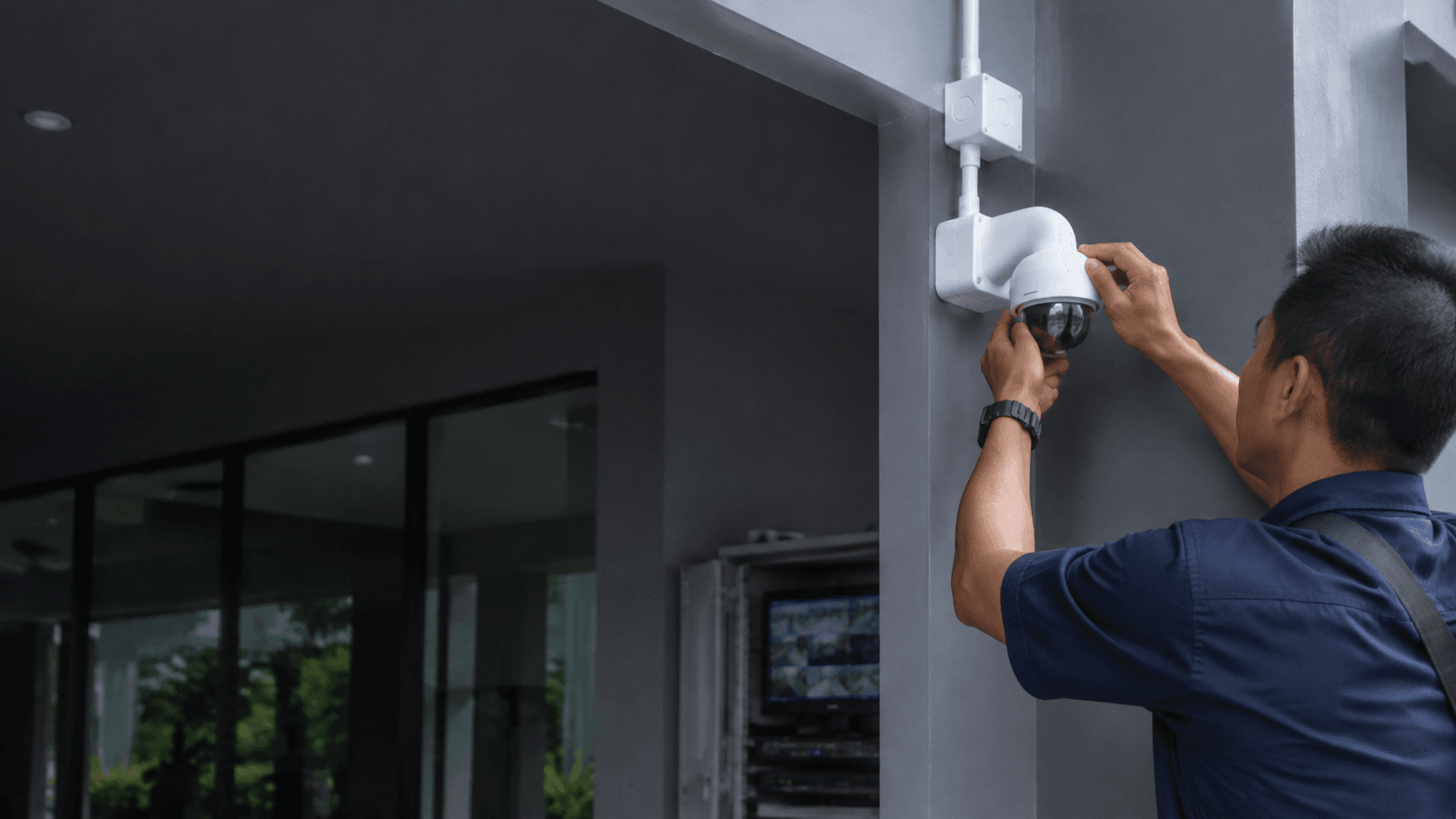
- Installation of cameras, cabling, recorder and network equipment.
- Handover with mobile viewing, user access and a walkthrough of daily operation.
Eyonic has completed work for the Kuching Immigration Office, focused on arrival flow, staff areas, visitor movement and dependable daily operation, and for KTA Sarawak Sdn Bhd, an engineering consultancy office in Kuching that needed support for staff movement, visitor handling and tidy cabling. Both projects show the same pattern: the value comes from coverage that matches how a building is actually used, not from the number of cameras installed.
Eric Yong, founder of Eyonic Security Systems, has worked in the industry for more than 10 years and specialises in technical installation of digital security solutions for commercial businesses in Sarawak. That experience matters most at the survey stage, where lighting, cable routes and recorder placement are decided.
Practical next step with Eyonic
Share the location, property type and required system with Eyonic on WhatsApp at +60 11-5111 7959. A site survey is the first stage of the installation process, and it is what turns a general interest in Ubiquiti CCTV into a workable camera layout, recorder size and cabling plan for a specific property.
Eyonic's published packages cover Hikvision CCTV, alarm systems and autogate at RM 1,599 each. Those figures describe different product lines and should not be read as Ubiquiti CCTV pricing, which depends on camera count, recorder capacity and cabling at the site.
What to weigh before committing
The decision usually comes down to three questions. Does the property have a network that can carry PoE to every camera position? Is there a secure, ventilated place for the recorder? And who will look after storage, firmware and user access once the installers leave?
If the answers are clear, a UniFi Protect deployment is straightforward to plan and expand. If the property has no cabling route, no secure equipment space or no one to own the system day to day, a simpler camera setup may serve better. The honest position is that Ubiquiti CCTV rewards sites that treat it as network infrastructure, and frustrates sites that treat it as a box of cameras.