
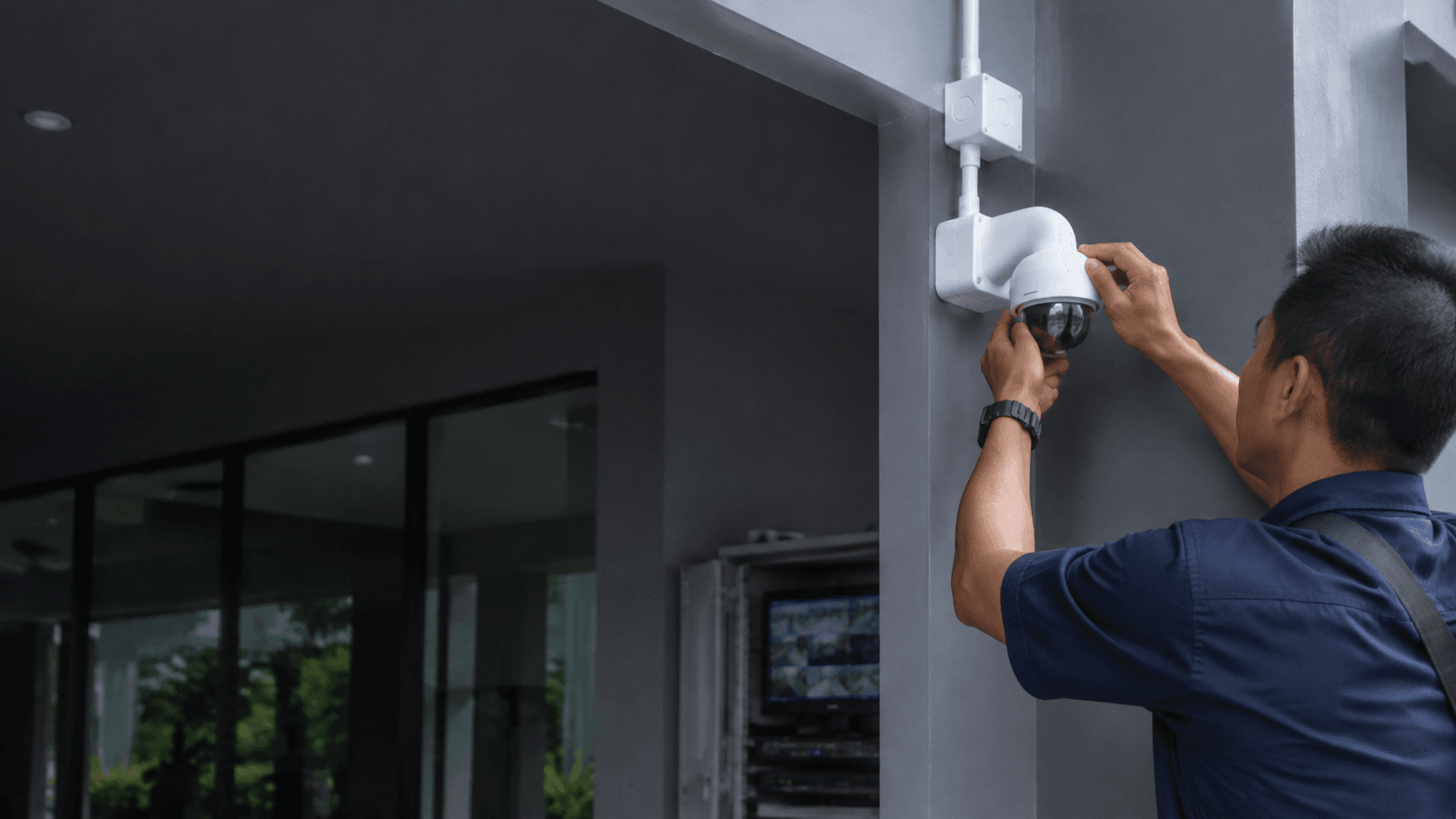
The phrase is short, so it carries two jobs at once. One reader already owns a Dahua camera and cannot see it on the network. Another reader is planning a new system and wants to know what to buy, who installs it, and what to check before any cable is pulled. Both readers need the same first step: settle what the camera must cover and where it will sit.
What readers usually mean by ip dahua
Search results for this term split into three groups. Marketplace pages list camera models with ratings and prices. Support pages explain how to find a camera's local address and sign-in details. Buying guides compare camera shapes, resolution, night vision, and price tiers.
That split matters because the right answer depends on which group a reader belongs to. Someone holding a camera that will not appear in a browser needs a network fix, not a product comparison. Someone quoting a new office or shop needs a coverage plan, not a password reset.
A third group sits between the two: readers who have a Dahua camera working but want to add cameras, move one, or hand the system to staff who will use it daily. That group needs both a network answer and a placement answer, which is why the practical sequence below starts with the network and ends with verification.
Finding a Dahua camera on the local network
A camera that is powered but invisible usually sits on a different subnet from the computer being used to reach it. The camera and the computer must share an address range before a browser or configuration tool can see the device.
- Confirm the camera has power and that its network cable or Wi-Fi link is active.
- Connect the computer to the same router or switch as the camera.
- Use the manufacturer's device-discovery or configuration tool to scan the local network for the camera.
- Note the address the tool reports, then open that address in a browser on the same network.
- Sign in, then change the default credentials before the camera is left running.
- Set a fixed address or a reserved lease so the camera keeps the same address after a restart.
- Confirm recording reaches the recorder and that live view opens in the viewing app.
Steps three and four are where most attempts stall. A discovery tool reads the local network directly, so it can find a camera whose address does not match the computer's subnet. A browser cannot do that, which is why opening a guessed address often fails while the tool succeeds.
If the tool finds nothing, the fault is usually physical or logical rather than a credential problem. Check the cable, the switch port, and whether the camera and computer are on the same network segment before changing any settings.
Default address and sign-in details people ask about
Default addresses and default credentials vary by model, firmware generation, and region, and Dahua has changed its first-time setup behaviour across firmware versions. A value copied from an unrelated page can send a reader to the wrong address or an account that no longer exists on that device.
The reliable source is the documentation that ships with the specific model, or the manufacturer's own configuration tool, which reports the address the device is actually using. Where a camera has never been initialised, the first sign-in usually requires creating an administrator password rather than entering a factory one.
Two habits prevent most access problems later. Record the final address, credentials, and recovery contact in a handover document. Change the default address and any default ports on devices that will be reachable from outside the local network.
Choosing between Dahua IP camera types
Camera shape follows from the site, not from a specification sheet. The common forms differ in how they are aimed, how exposed they are, and how much of a scene they can cover without moving.
Bullet cameras are long-bodied and easy to aim along a wall or fence line. Dome cameras sit closer to the mounting surface and are harder to redirect by hand, which suits entrances and corridors. Turret cameras sit between the two and are often chosen where a compact housing is wanted without losing aim flexibility. Pan-tilt-zoom cameras cover a wide area and can follow movement, at a higher cost and with more moving parts to maintain.
Resolution is a separate decision from shape. A higher pixel count spreads across a wider field of view, so a high-resolution camera aimed too broadly can identify less than a lower-resolution camera aimed tightly at the point that matters, such as a gate, a counter, or a doorway.
Connectivity is the next fork. Wired cameras draw power and data over one cable, which keeps the installation tidy and the link stable. Wireless cameras avoid cabling but depend on signal strength at the mounting point, and that signal is worth testing at the exact position rather than assumed from a nearby room.
Lighting and placement checks before confirming a model
Lighting decides more outcomes than any other single factor. A camera that performs well in daylight can behave very differently at night, and the difference between a scene with steady street lighting and one that goes fully dark changes which camera is appropriate.
Eyonic's own guidance on colour-at-night cameras is to check the actual lighting conditions at the site before confirming placement, rather than relying on a general claim about night performance. The same discipline applies to any Dahua model under consideration: the mounting position, the light available there, and what the camera must resolve at that distance all belong in the decision.
Placement checks worth completing before a model is confirmed include the height and angle of the mount, what the camera will see at night, whether a light source will sit inside the frame and wash out the image, and whether the cable route is practical. A camera aimed at a bright lamp or a reflective surface will underperform regardless of its specification.
What a local installation involves
Eyonic's CCTV installation process runs through site survey, system proposal, installation, and handover. That order matters because the survey is where coverage, lighting, and cable routes are settled, and the proposal is where the camera count and positions are agreed before any drilling starts.
Completed work in Sarawak shows the range of sites this covers. A project for the Kuching Immigration Office focused on arrival flow, staff areas, visitor movement, and dependable daily operation. A separate project for KTA Sarawak Sdn Bhd covered a practical office setup in Kuching supporting staff movement, visitor handling, tidy cabling, and clearer daily site control.
Handover is the stage most often treated as an afterthought. It is where staff learn to open live view, find recorded footage, and recognise when a camera has dropped offline. A system that records correctly but cannot be operated by the people on site has not finished its job.
Eyonic's evidenced product range is described around Hikvision cameras and smart locks, and its published packages are Hikvision CCTV, alarm, and autogate packages at RM 1,599 each. Readers who specifically need Dahua equipment should confirm supply and installation directly before planning around it.
Questions that decide the next step
Is the camera already owned, or is the system still being planned? An owned camera points to the network sequence above. A planned system points to a site survey, because coverage and lighting cannot be judged from a product listing.
What must the footage actually show? Identifying a face at a gate, reading a number plate, and confirming that a door was used are different requirements, and each one sets a different demand on camera position and resolution.
Who will operate the system after handover? If staff will check footage daily, the viewing app and playback steps belong in the handover, not in a manual left in a drawer.
Is the site in Sarawak? Local supply, installation, and support are practical advantages when a camera needs to be repositioned, replaced, or reconfigured after the initial work.
Readers who want to move from planning to a site-specific answer can share the location, property type, and required system with Eyonic on WhatsApp at +60 11-5111 7959.