
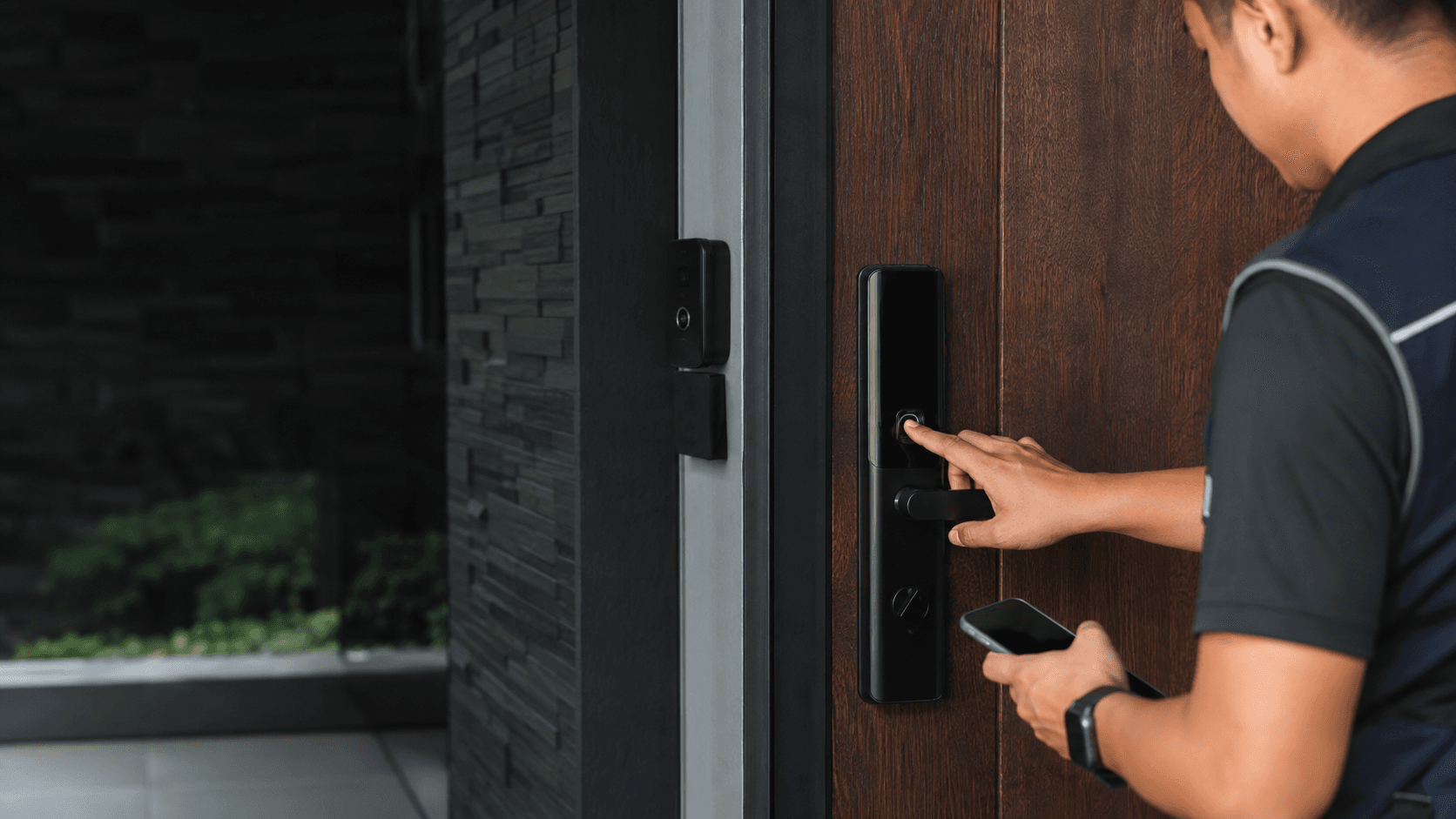
The exact-match query keyless entry for sliding glass door describes a narrow problem. A sliding glass door is not a swing door. It runs on a track, it usually has a narrow aluminium or glass frame, and the lock body has to sit somewhere the frame can actually carry it. That single constraint decides most of the buying decision before brand, price or features enter the conversation.
Eyonic Sdn Bhd is a security system supplier in Sarawak that plans, supplies and installs monitoring and access systems for homes, offices, shops and industrial sites. Its published product review position on smart lock door access is that smart locks work best when door condition, user roles and backup method are reviewed before installation. That is the same order of checks that applies to a sliding glass door.
Keyless Entry for Sliding Glass Door: What the Choice Comes Down To
Two lock families dominate this category, and they fail for different reasons. A mechanical keypad lock needs no power and no app, but it still needs a mounting surface and a bolt path that suits the door. A smart lock adds user permissions, remote control and audit trails, but it adds a power source, a network dependency and a backup entry question that has to be answered before installation, not after.
The practical sequence for anyone assessing a sliding glass door is short:
- Confirm the door type, frame material and available mounting surface.
- Decide whether the requirement is a single mechanical code or managed user access.
- Agree the backup entry method before installation begins.
- Complete a site survey so the lock, frame and track are assessed together.
- Install, then hand over with user testing and code or permission setup.
That order matters because the cheapest mistake in this category is buying a lock that suits a swing door and discovering the sliding frame cannot take it. The second cheapest mistake is installing a smart lock with no working backup entry, which turns a convenience feature into a lockout risk.
Mechanical keypad locks and smart locks for sliding glass doors
A mechanical keypad lock suits a door where the priority is simple, repeatable entry without batteries, apps or network coverage. It typically suits a single household or a small number of regular users. The trade-off is that changing who has access means changing the code, and there is no record of who entered or when.
A smart lock door access system suits a door where access has to be managed rather than just permitted. User permissions can be assigned and removed, and for business use Eyonic usually checks whether a standalone smart lock or an access-control panel is the more appropriate fit. The trade-off is dependency. power, connectivity and a backup entry method all become part of the installation plan.
Neither family is automatically more secure. The deciding factors are the door itself, how many people need access, and what happens on the day the primary entry method fails.
Door Condition, Frame Type and Thickness Before Any Purchase
Door condition is the first thing to assess and the most common reason a planned lock does not proceed as expected. A sliding glass door that runs smoothly, closes flush and has a sound frame is a different proposition from one with a worn track, a warped frame or a previous lock that has already been removed and left holes behind.
Frame type and thickness matter because a lock body needs material to mount into and a bolt needs a receiving point that lines up when the door is closed. Aluminium sliding frames are often narrower than the timber or steel frames a lock was designed around. Where the frame cannot carry the lock, the options narrow to a surface-mounted solution or a different door entirely.
Three checks are worth completing before any order is placed:
- Whether the door closes and latches consistently across its full travel.
- Whether the frame has a flat, sound section where a lock body can sit.
- Whether the existing lock or handle can be removed without leaving the frame unusable.
Where a door fails these checks, the honest answer is that a lock purchase should wait until the door is repaired or the frame is assessed on site. Ordering first and assessing later is how a workable door becomes an expensive problem.
How Eyonic reviews smart lock door access
Eyonic's published review position is that smart locks work best when door condition, user roles and backup method are reviewed before installation. For business use, the review checks whether a standalone smart lock or an access-control panel is more appropriate. That framing is useful because it separates the lock from the access decision.
User roles determine whether a simple code is enough or whether permissions need to be issued and revoked. Backup entry determines what happens when a battery, a network link or a reader fails. Door condition determines whether either option is physically viable. All three are assessed together rather than in isolation.
Eyonic's project work in Sarawak follows a similar pattern of matching the system to how a site actually operates. At the Kuching Immigration Office, the focus was arrival flow, staff areas, visitor movement and dependable daily operation. At KTA Sarawak Sdn Bhd, the focus was staff movement, visitor handling, tidy cabling and clearer daily site control. Both are examples of access and monitoring decisions being shaped by movement through a building rather than by product specification alone.
Installation and Handover in Sarawak
Eyonic's published installation process runs through site survey, system proposal, installation and handover. The same sequence applies to access work: the survey establishes what the door and frame can take, the proposal sets out what will be supplied and fitted, installation follows, and handover covers testing and user setup.
Handover is where a keyless entry for sliding glass door installation is either finished properly or left half done. It should cover how the primary entry works, how the backup entry works, how codes or permissions are changed, and who to contact when something stops working. A lock that is fitted but not explained tends to generate a support call within weeks.
Local installation coverage matters for the same reason. A lock supplied without an installer leaves the door owner coordinating between a retailer, a handyman and a manufacturer. Eyonic operates from Sarawak and covers Kuching and surrounding areas, which keeps survey, installation and handover with one party.
What to confirm before ordering
Before committing to a lock, confirm the door type and frame material, the number of people who need access, and the backup entry method. Confirm who will install it and who will support it afterwards. Confirm whether the requirement is a single code or managed permissions, because that decision changes the product category rather than just the model.
Where a supplier cannot answer the frame and mounting question, the order should wait. That question is not a detail; it is the difference between a lock that fits and a lock that sits in a box.
Eyonic's published packages cover Hikvision CCTV, alarm and autogate at RM 1,599 each. Those packages do not cover keyless entry or smart lock supply and installation, so lock pricing and scope should be confirmed directly rather than assumed from the published package figures.
For a property in Sarawak, sharing the location, property type and required system with Eyonic on WhatsApp at +60 11-5111 7959 is the practical next step, because the door assessment has to happen before the product decision can be made.