
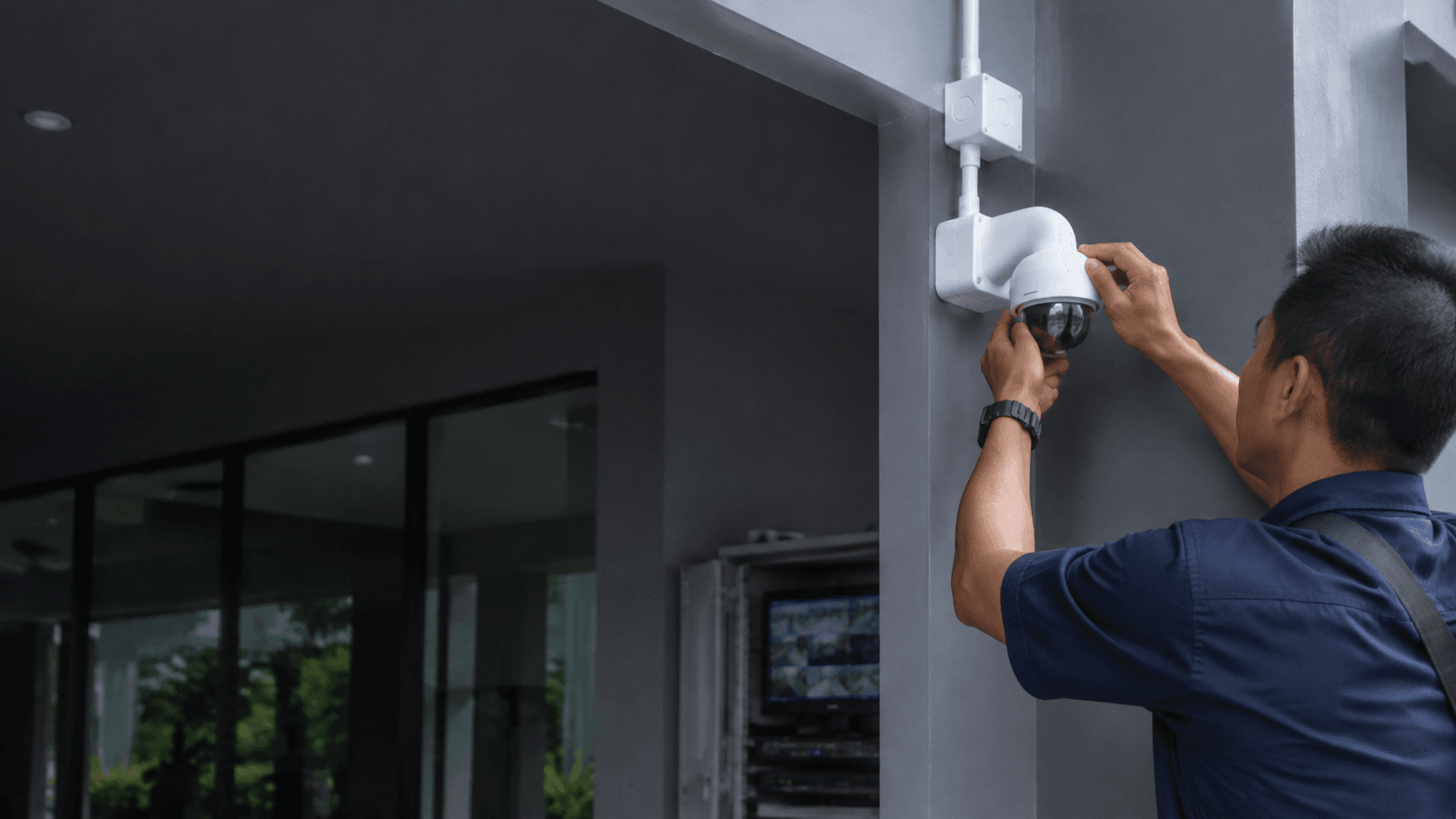
The term is a shortened way of writing Hikvision CCTV, and it points to a family of products rather than one boxed item. Hikvision builds the cameras, the recorders that store footage, and the software used to watch live or recorded video. Eyonic Sdn Bhd, a security system supplier based in Sarawak, plans, supplies and installs monitoring systems with camera placement, recording and remote viewing for homes, offices, shops and industrial sites.
Buyers searching for hik cctv usually want to know what the equipment does, which parts belong together, and what a working installation involves. The answers below stay close to what the products and the installation process actually cover.
Hik Cctv. What Matters Before You Choose
Three decisions shape the rest of the project: how many cameras are needed, whether the site runs on network cameras or older analogue cabling, and where footage is stored. Getting those wrong is expensive to undo because cabling and recorder capacity are fixed once installed.
- Survey the site and list the areas that need coverage, including entrances, counters, walkways and storage.
- Check the real lighting at each spot, day and night, before confirming camera placement.
- Choose camera type and resolution to match each area rather than one model for everything.
- Size the recorder and storage so retention matches how far back footage must be kept.
- Plan cabling routes and power so installation stays tidy and serviceable.
- Set up remote viewing and confirm the handover covers daily use.
Eyonic's CCTV installation process follows site survey, system proposal, installation and handover. That order matters because a proposal written before the survey tends to overstate or understate what the site needs.
What is hik cctv?
Hik Cctv refers to video surveillance equipment made by Hikvision, covering network cameras, recorders and the software that connects them. The range includes fixed dome, turret and bullet cameras, pan-tilt-zoom models, and recorders that accept either network cameras or analogue signals.
Two product families appear often in Malaysian enquiries. Colour-capable cameras record usable colour images in low light, while detection features distinguish people and vehicles from moving trees or rain. Both change what a camera is worth at a specific location, which is why lighting checks come before placement decisions.
Cameras, recorders and viewing software
A working system needs three parts. Cameras capture the image. A recorder stores it, either a network video recorder for IP cameras or a digital video recorder for analogue and hybrid setups. Viewing software, including mobile apps, lets someone watch live or review footage from elsewhere.
Storage is the part most often underestimated. Higher resolution, more cameras and longer retention all consume disk space, and a recorder bought without that calculation fills up sooner than expected.
Choosing the Right Hik Cctv Setup
Selection starts with the site, not the catalogue. A shop entrance, a factory loading bay and an office corridor have different lighting, distance and risk profiles, so they rarely suit the same camera.
Matching camera type to the location
Dome cameras suit indoor ceilings and areas where the camera should be less obvious. Turret and bullet cameras handle outdoor walls and longer distances. Colour-capable models help where lighting is poor but some ambient light remains, and Eyonic recommends checking actual lighting conditions before confirming placement for ColorVu-style cameras.
Resolution is a trade-off rather than a straight upgrade. Higher resolution shows more detail but needs more storage and bandwidth, and it does not help if the camera is pointed at the wrong spot.
Wired, network and hybrid systems
Network systems carry video and power over a single cable, which simplifies installation where cabling can be run. Hybrid recorders accept both analogue and network cameras, which suits sites that already have working analogue cabling and want to add newer cameras without replacing everything.
Network Cameras Network Products Hikvision Global
Hikvision's own product pages describe network cameras as delivering advanced imaging and smart features for needs ranging from reliable video security to business intelligence. That framing is useful because it separates two jobs: watching a site, and extracting information from what the cameras record.
For most Malaysian premises, the first job dominates. Detection features and analytics add value when someone actually reviews alerts or searches footage, and they add cost whether or not that happens.
Where the equipment is bought
Hikvision products reach buyers through official regional sites, specialist security retailers and general marketplaces. Marketplace listings often show model codes without installation, warranty handling or configuration support, so the buyer carries the setup work.
Eyonic supplies Hikvision cameras alongside planning and installation, which keeps the equipment choice and the physical work under one scope.
Practical Considerations for
Cost, coverage and maintenance decide whether a system stays useful after the first month. A cheap layout that misses the till area or the back gate fails at the moment it is needed.
Budget and package structure
Eyonic lists a Hikvision CCTV Package at RM 1,599 covering camera supply and setup, basic recording configuration and mobile viewing handover. Larger or more complex sites sit well above that figure. A completed public office project in Kuching, covering arrival flow, staff areas and visitor movement, carried an approximate budget of RM 12,000 to RM 28,000, and an engineering consultancy office project in Kuching carried an approximate budget of RM 8,000 to RM 18,000.
Those ranges show how much site complexity moves the number. Camera count, cable distance, recorder capacity and building constraints all push the total up or down.
Installation and handover
Installation quality shows up later. Tidy cabling, correct camera angles and a recorder that is actually configured for the retention period prevent most of the problems that surface months after handover. Handover should cover mobile viewing, because a system nobody can check remotely loses much of its day-to-day value.
Limits worth knowing
Cameras do not see through darkness, glare or obstruction. A camera aimed into a bright doorway will lose detail on faces, and a camera behind a pillar will miss the movement it was installed to catch. Detection features reduce false alerts but do not remove the need to review footage when something happens.
Equipment availability and firmware support also vary by region and model, so a specific model seen online may not be the right choice for a local installation.
Making an Informed Choice About
The practical path is to define what needs watching, confirm the lighting and cabling at each point, then choose cameras and storage that match. A site survey before purchase prevents most mismatches.
Eyonic Sdn Bhd works across Sarawak on CCTV and ELV systems, with founder Eric Yong bringing more than 10 years in technical installation of digital security solutions for commercial businesses. Completed work includes the Kuching Immigration Office and KTA Sarawak Sdn Bhd.
Share your location, property type and required system with Eyonic on WhatsApp at +60 11-5111 7959 for the next practical step.