
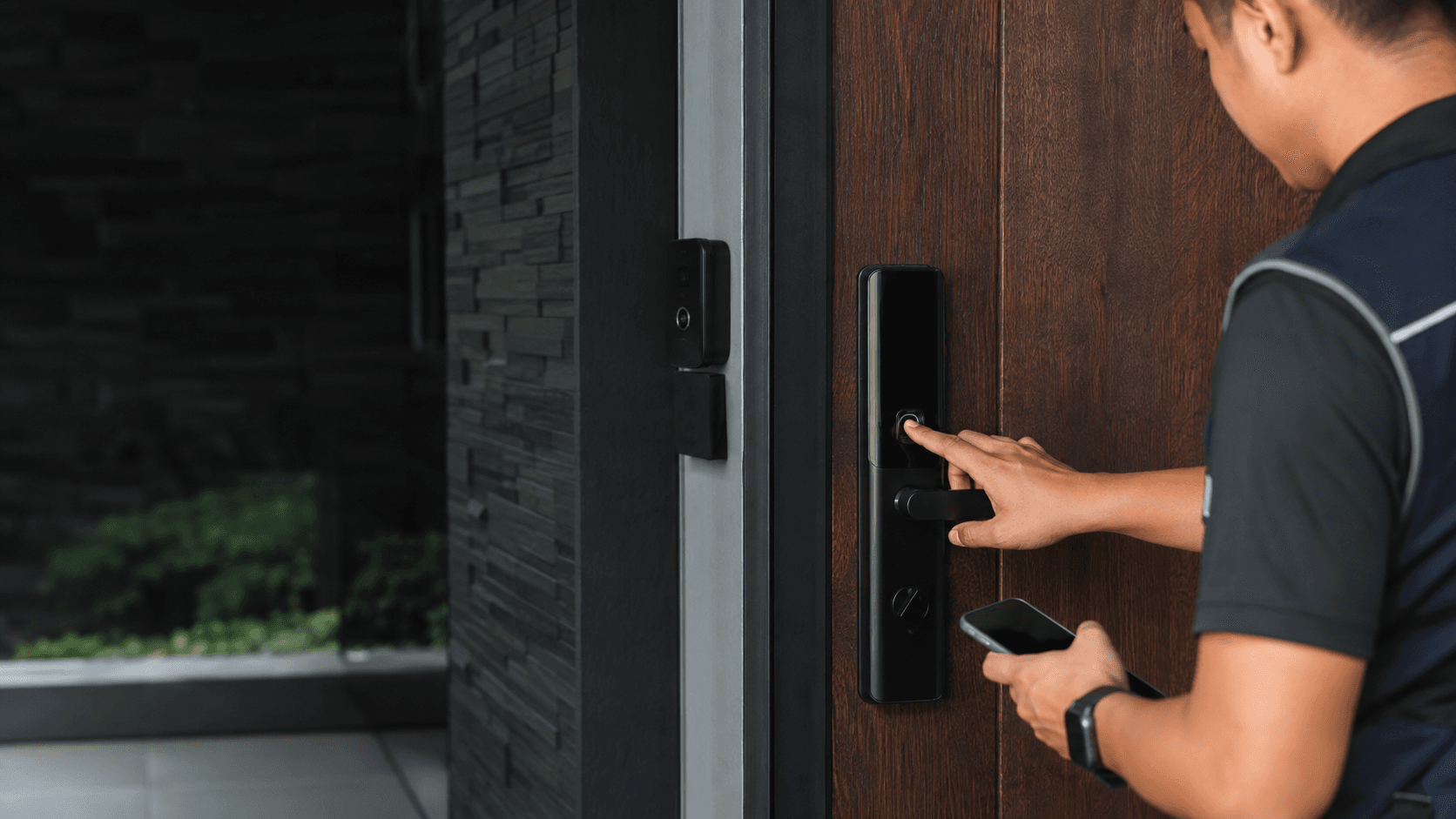
The exact phrase electronic door handle lock describes a door fitting where the handle and the locking electronics sit in one unit, rather than a separate deadbolt above a plain knob. That single-unit shape is what makes the product attractive on a main entrance, and it is also what makes the pre-purchase checks matter more than the marketing copy.
Eyonic Sdn Bhd is a security system supplier in Sarawak that plans, supplies and installs monitoring and ELV systems for homes, offices, shops and industrial sites. Its published product guidance on smart lock door access states that these locks work best when door condition, user roles and backup method are reviewed before installation, and that for business use the choice between a standalone smart lock and an access-control panel is usually checked first.
Electronic Door Handle Lock. What Buyers in Malaysia Should Know
A handle-integrated electronic lock is a door handle and an electronic locking mechanism in one body. Entry is granted electronically, and the lever still does the physical work of releasing the latch. The category sits between two familiar options: a mechanical handle with a separate padlock or deadbolt, and a full access-control installation with a panel, readers and electric strikes.
Three practical consequences follow from that shape.
- Door condition decides feasibility. The existing door, frame and cutout have to accept the handle body and its latch. A door that is warped, poorly fitted or already heavily cut may not close and latch reliably with a new unit.
- User roles decide the model class. A home with a handful of regular users has different needs from an office with staff, cleaners, contractors and visitors arriving at different hours.
- Backup entry decides the risk. Every electronic entry method needs a defined way in when the electronics, the power or the network are unavailable.
Those three points are the reason a site survey comes before a model recommendation. A handle that looks correct in a showroom can still be the wrong choice for a specific door.
Why the phrase matters less than the door
Buyers searching for an electronic door handle lock are usually comparing shapes, not brands. The useful comparison is between a handle-style unit and a deadbolt-style unit, because that choice determines how much of the existing door hardware is replaced and how the door is prepared.
How an Electronic Door Handle Lock Differs From a Deadbolt Lock
A deadbolt lock replaces or augments the bolt above the handle. An electronic door handle lock replaces the handle assembly itself. The difference changes what is removed, what is cut, and what the door looks like afterwards.
A deadbolt-style electronic lock typically keeps the existing handle and adds a keypad or reader above it. The door keeps its original grip, and the locking point stays where the bolt already sits. A handle-style unit removes the original handle and lever, so the finished door has one integrated fitting instead of two separate pieces.
The trade-offs run in both directions.
- Handle-style units give a cleaner single-piece appearance and suit doors where the handle is the natural place to interact. They also concentrate the electronics in a part of the door that gets touched constantly.
- Deadbolt-style units leave the existing handle in place, which can simplify the change on a door whose handle is a good match for the interior. They add a second fitting to the door face.
For business premises, the more important distinction is not handle versus deadbolt but standalone versus panel-controlled. Eyonic's published guidance notes that for business use it usually checks whether a standalone smart lock or an access-control panel is more appropriate. A standalone unit manages its own users. A panel-based system centralises permissions, which matters when staff join, leave or change roles.
Door, User, and Backup Checks Before an Electronic Door Handle Lock Is Chosen
These checks are the substance of a site survey. They are also the questions that separate a smooth installation from a return visit.
- Door condition. Check the door leaf, frame, existing cutout and how the door currently closes. A door that needs force to latch will not improve with new electronics.
- User roles. List who needs entry, how often, and whether their access should be time-limited or revocable. This determines whether a standalone unit is sufficient or whether centralised permissions are needed.
- Backup method. Agree how entry works when the primary electronic method is unavailable, and confirm that the agreed method is documented before handover.
Two edge cases deserve attention before ordering. The first is a door that is also a regulated exit or a fire door, where the locking hardware has to satisfy requirements beyond convenience; local authority or building-management guidance should be confirmed for that door specifically. The second is a shared entrance where multiple tenants or departments need separate access, which usually points toward a panel-based arrangement rather than a single standalone handle.
What to confirm in writing before committing
Ask the supplier to state, in writing, the door preparation required, the backup entry method, and what happens to access during a power or network interruption for the specific unit proposed. Those three items are the ones most often assumed rather than confirmed.
Where an Electronic Door Handle Lock Fits in a Malaysian Property
Handle-style electronic locking suits doors where a single, frequently used entrance needs controlled convenience without a full access-control build. Typical fits include a home's main entrance, a small office front door, a shop entrance used by a small team, and a staff or back door that a defined group uses daily.
It fits less well where the door is one of many entry points that must be managed together, where access has to be audited centrally, or where the door itself cannot accept new hardware without repair. In those cases the practical answer is usually a panel-based system, or door repair before any locking hardware is considered.
Eyonic's completed work in Sarawak shows the kind of requirement that drives these decisions. At the Kuching Immigration Office, the focus was arrival flow, staff areas, visitor movement and dependable daily operation. At KTA Sarawak Sdn Bhd, the requirement was a practical office setup supporting staff movement, visitor handling, tidy cabling and clearer daily site control. Both are cases where the entry point had to work reliably every day for a mixed group of users, which is the same question a handle-style lock raises on a smaller scale.
Installation Sequence for an
Eyonic's published installation process runs through four stages: site survey, system proposal, installation, and handover. The same sequence applies to handle-style electronic locking.
- Site survey. The door, frame, existing hardware and user requirements are reviewed on site. This is where door condition and backup entry are settled.
- System proposal. The proposed unit or system is set out, including what is supplied, what is installed, and how entry and permissions will work.
- Installation. The hardware is fitted and the entry methods and user permissions are configured.
- Handover. Users are shown how entry works, and the backup method is confirmed so it is not discovered for the first time during a failure.
Handover is the stage most often treated as a formality. It is the point where the backup method stops being a plan and becomes something the people using the door actually know how to do.
Questions Buyers Ask Before Ordering
Does a handle-style lock replace the whole handle? Yes. The original handle and lever are removed and the electronic unit takes their place, so the finished door has one fitting rather than a handle plus a separate lock.
Is a standalone unit enough for a business? It depends on how permissions are managed. A standalone unit handles its own users; a business with staff changes, time-limited access or multiple doors usually needs a panel-based approach instead.
What should be confirmed before installation? The door preparation required, the backup entry method, and the behaviour of the specific unit during a power or network interruption. These should be stated in writing rather than assumed.
What if the door is a fire door or a regulated exit? Locking hardware on those doors has to meet requirements beyond convenience, and the applicable local guidance should be confirmed for that door before any product is ordered.
Can the lock be managed remotely? Remote viewing and remote management are part of Eyonic's wider monitoring and ELV work, but the specific remote features available depend on the unit proposed and should be confirmed as part of the system proposal.
For a property in Sarawak, the practical next step is to share the location, property type and required system with Eyonic on WhatsApp at +60 11-5111 7959 so the door and user requirements can be reviewed before a unit is recommended.