
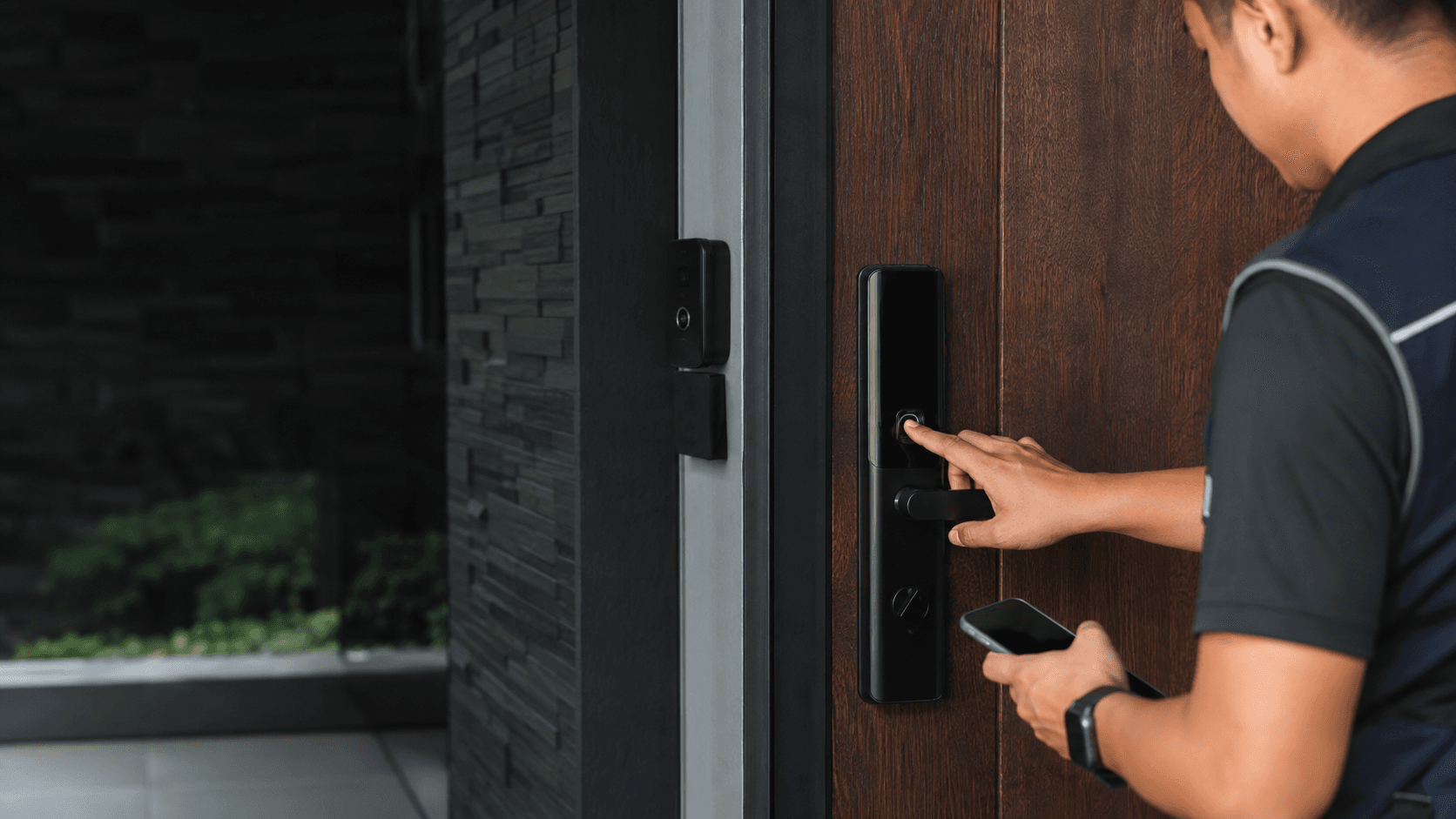
The exact-match query z wave plus door lock describes a specific category of smart lock rather than a single product. Z-Wave Plus is a certification tier of the Z-Wave wireless protocol, and locks carrying it are built to pair with hubs such as SmartThings, Hubitat, Ring Alarm, and similar controllers. The sections below cover what the certification actually changes, how to match a lock to a door and hub, and where installation decisions tend to go wrong.
What Matters Before Choosing a Z Wave Plus Door Lock
Three things decide whether a Z-Wave Plus lock works well in a given building: the hub already in place, the physical door and frame, and how people will get in when the network or batteries fail. Buyers who skip the third point often end up with a lock that is convenient most days and unusable on the one day it matters.
- Confirm the hub or alarm panel supports Z-Wave, and check whether it needs a specific Z-Wave module or region frequency.
- Measure the door thickness, backset, and cross-bore, then confirm the lock's deadbolt fits that preparation.
- Decide the entry methods. keypad code, physical key, app control, or a combination.
- Plan a backup entry route that does not depend on the hub, the internet, or a working battery.
- Check who needs ongoing access and whether temporary codes or scheduled access are required.
- Confirm the lock's radio range reaches the nearest mains-powered Z-Wave device or hub.
Z-Wave is a mesh protocol, so mains-powered devices in the network repeat the signal. A lock at the far end of a large property may pair successfully during setup and still respond slowly if no repeater sits between it and the hub. Battery-powered locks do not repeat the signal for other devices, which is why the position of other Z-Wave devices in the home affects lock reliability.
Choosing the Right Z Wave Plus Door Lock
Lock selection usually comes down to form factor and ecosystem rather than raw radio specification. Deadbolts replace an existing single-cylinder deadbolt and keep the door's existing handle. Lever and handle-set locks replace the whole lockset, which suits doors that need a single integrated unit. Both types appear in the Z-Wave lock market, and both can carry Z-Wave Plus certification.
Ecosystem fit is the more common source of disappointment. A lock that pairs cleanly with one hub may expose fewer features on another, and some hubs surface lock status, battery level, and code management while others show only lock and unlock. Checking the hub's own compatibility list before purchase avoids most of this.
Z-Wave Plus versus earlier Z-Wave locks
Z-Wave Plus is a certification that a device meets a newer generation of the protocol, with improvements in range, battery life, and interoperability compared with older Z-Wave hardware. In practice, a Z-Wave Plus lock is more likely to pair quickly and report status reliably than an early Z-Wave lock. Older Z-Wave locks are not automatically incompatible with newer hubs, but feature support can be thinner.
Some newer locks use Z-Wave Long Range, a separate mode with different range characteristics. A hub must support that mode for the lock to use it. Buyers comparing a standard Z-Wave Plus lock against a Long Range model should confirm hub support first, because the radio advantage is unavailable without it.
What is z wave plus door lock in practical terms
In practical terms, a z wave plus door lock is a lock that appears as a controllable device inside a Z-Wave network. That means the lock can be included in automation rules: locking automatically at a set time, unlocking when a specific user code is entered, or triggering other devices when the door opens. The lock itself does not need an internet connection to operate; the hub provides remote access when one is configured.
This is also where the category differs from Wi-Fi and Bluetooth locks. Wi-Fi locks connect directly to a router and typically draw more power. Bluetooth locks usually require proximity to a phone. A Z-Wave Plus lock sits between those approaches: local radio control through a hub, with remote access available through that hub.
Practical Considerations for Z Wave Plus Door Lock Installation
Installation is mechanical first and electronic second. The deadbolt must sit correctly in the door preparation and align with the strike plate before any pairing happens. A lock that binds against the frame will report jam errors and drain batteries faster, regardless of how well the radio performs.
Battery life varies with usage, motor torque, and how often the lock is polled by the hub. Frequent status polling and heavy motor operation shorten it. Most locks provide a low-battery warning through the hub, and that warning should be treated as a maintenance trigger rather than a notification to dismiss.
Door condition and user roles
Door condition, user roles, and backup entry are the three checks that matter most before installation. A warped door, a misaligned strike, or a frame that swells in humid weather can all cause a motorised deadbolt to fail intermittently. In buildings with several regular users, code management becomes a security question: shared codes are rarely removed when someone leaves.
For business premises, the choice between a standalone smart lock and a full access-control panel is worth reviewing early. A standalone lock suits a small number of doors and a small user group. A panel-based system suits multiple doors, audit trails, and central administration. Eyonic reviews door condition, user roles, and backup method before recommending either approach, and checks whether a standalone smart lock or an access-control panel is the better fit for business use.
Where Z Wave locks fit in a wider security setup
A Z-Wave Plus lock can share a network with alarms, sensors, and cameras, which allows a single automation to cover several actions. A door unlocking at a set time can disarm an alarm zone or trigger a camera recording. That integration is the main reason buyers choose Z-Wave over a standalone keypad lock.
Eyonic supplies and installs security and ELV systems across Sarawak, including CCTV, alarm systems, autogate packages, and smart lock door access. The company's smart lock guidance notes that locks work best when door condition, user roles, and backup method are reviewed before installation. For sites that combine locks with cameras or alarms, planning the network and power layout together avoids retrofitting later.
Making an Informed Choice About
The decision usually resolves into a short set of trade-offs. A Z-Wave Plus lock offers local control, hub-based automation, and reasonable battery life, but it depends on a compatible hub and a healthy mesh network. A Wi-Fi lock removes the hub requirement but draws more power. A keypad-only lock avoids both radios and apps but offers no remote status.
Buyers who already own a Z-Wave hub get the most from this category, because the lock joins an existing network and can be used in automations immediately. Buyers with no hub should factor the cost of one into the decision, or consider whether a different lock type suits the property better.
Two constraints are worth stating plainly. First, no smart lock removes the need for a physical or mechanical backup entry method. Second, radio performance depends on the building: thick walls, metal doors, and long distances between devices all reduce reliability, and no certification eliminates that.
For properties in Sarawak, humidity and door movement over time are practical factors. A lock installed on a door that shifts seasonally may need the strike adjusted after installation. Reviewing the door before purchase is cheaper than replacing a lock that never seated correctly.
Next Steps for a Project
Start with the hub, then the door, then the lock. Confirming hub compatibility and measuring the door preparation takes a few minutes and prevents most returns. After that, the remaining decisions are about entry methods, user codes, and how the lock should behave when the network is unavailable.
For homes and businesses in Sarawak that want locks integrated with cameras, alarms, or access control, Eyonic handles site survey, system proposal, installation, and handover. Share your location, property type and required system with Eyonic on WhatsApp at +60 11-5111 7959 for the next practical step.