
The exact phrase arlo alarm system describes a do-it-yourself alarm setup rather than a professionally installed one. Arlo's own product page presents the hardware as a home security system with alarm and sensors, while independent reviewers describe the same kit as flexible and sensor-led. That split matters, because the phrase "alarm system" sets an expectation of a siren, a keypad, and monitored response, and the Arlo kit meets some of those expectations more directly than others.
Arlo Alarm System. What Matters Before You Choose
Three things decide whether this kit suits a property: how the sensors are powered and connected, whether professional monitoring is wanted, and how the system behaves when mains power or Wi-Fi drops.
- Confirm which sensors and accessories are included in the kit being compared.
- Check whether the hub needs a wired network connection or can run wire-free.
- Decide whether self-monitoring is enough or professional monitoring is required.
- Review the subscription tier needed for the features that matter most.
- Verify how the system reports an event when power or internet fails.
- Plan sensor placement around doors, windows, and any hazard detection wanted.
That sequence reflects how the reviewed sources frame the decision. NerdWallet describes Arlo as a budget-priced, self-installed option with fewer features than some competitors, and CNET highlights the multi-function sensors as the standout element. Both observations point to the same conclusion: the sensors carry the system, and the surrounding service layer is where expectations need checking.
Choosing the Right Arlo Alarm System
Arlo's range is not a single fixed box. The reviewed material shows a kit built around a keypad sensor hub, all-in-one sensors, security tags, a wire-free keypad, a chime, and an optional outdoor siren. Buyers comparing packages are effectively choosing how many sensors and which accessories to include.
The all-in-one sensor is the piece that shapes most of the buying decision. Arlo's product page lists motion, open and closed, tilt, water leak, temperature, light, smoke alarm listening, and carbon monoxide alarm listening as detection functions. A single sensor covering that many jobs reduces the number of separate devices needed, which is why reviewers treat it as the system's main strength.
Arlo Home Security System With Alarm & Sensors
The alarm and sensor side of the kit is where the phrase arlo alarm system is most accurate. The system includes a siren function and a keypad for arming and disarming, and the sensors trigger alerts through the app. Arlo also offers a separate wire-free outdoor siren as an accessory, which extends audible alerting beyond the indoor hub.
Two constraints sit alongside that. First, some detection functions depend on the sensor being placed where the relevant condition can actually reach it, so a water leak sensor belongs near a water heater or pipe rather than on a hallway wall. Second, smoke and carbon monoxide listening works by recognising the sound of an existing alarm, so the household still needs working standalone smoke and CO alarms.
How the Arlo Alarm System Handles Power and Connectivity
Arlo's product page lists cellular and battery backup as part of the system, which addresses the common failure point where a power cut or dropped Wi-Fi takes an alarm offline. The hub also uses Arlo's SecureLink connection, described on the product page as offering longer range and a more secure link.
The practical limit is that backup hardware keeps the system reporting, but it does not make the system immune to every outage. A property with unreliable mains power benefits more from backup than one with stable supply, and a property with no cellular coverage in the area needs that checked before relying on it.
What Is the Arlo Alarm System in Practice?
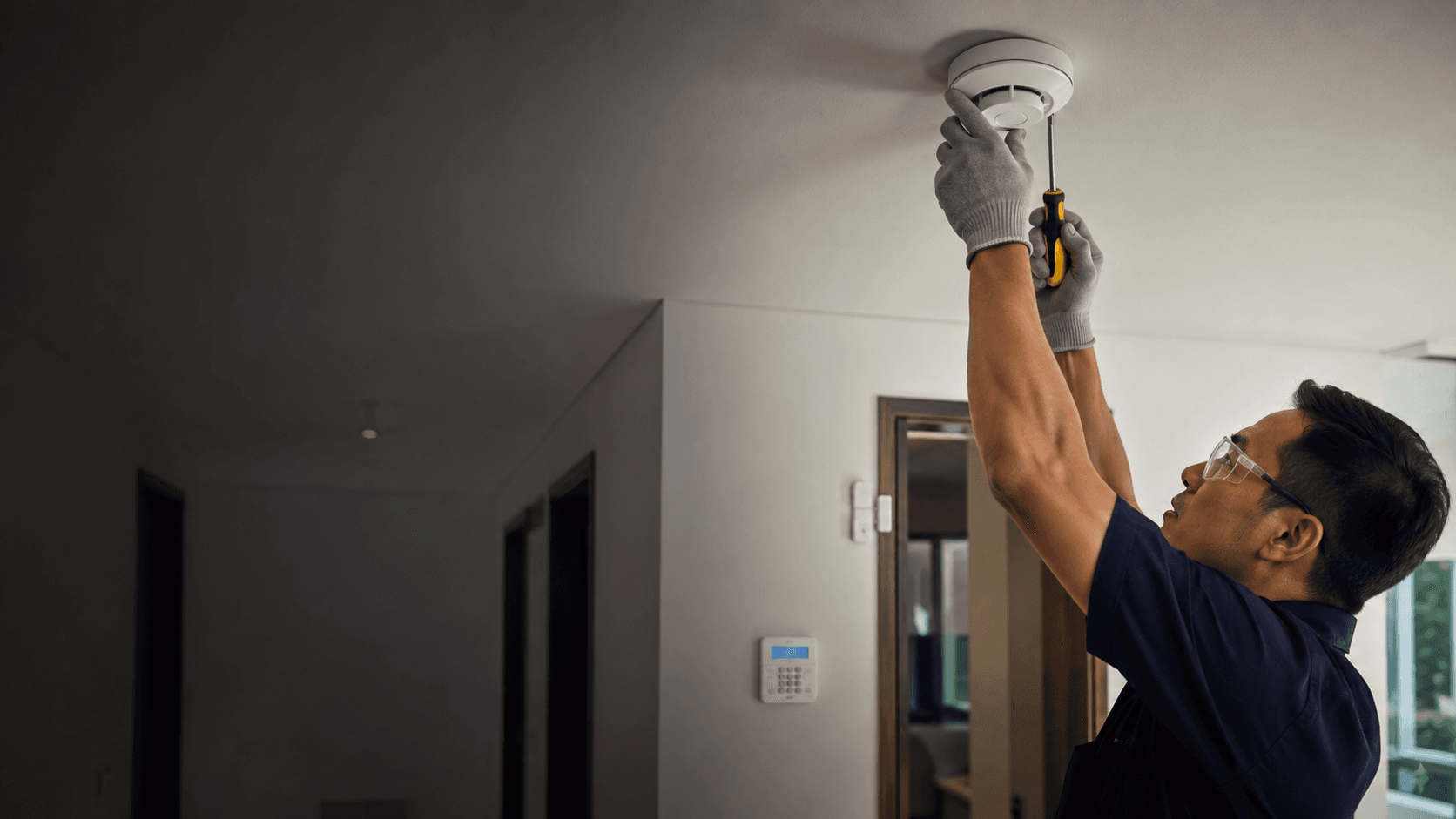
In practice it is a self-installed alarm and sensor kit controlled through the Arlo Secure app. The app handles arming and disarming, activity zones, alerts, and access to monitoring features, according to the app's own store listing. Installation is presented as wire-free for the sensors, which removes the cabling work that a wired alarm typically requires.
Self-installation is the main trade-off. It lowers the upfront cost and avoids a long installation appointment, but it also means sensor placement, hub positioning, and testing are the owner's responsibility. A sensor mounted at the wrong angle or a hub placed behind a metal door will underperform regardless of the hardware quality.
Monitoring, Plans, and What Sits Behind a Subscription
Arlo separates hardware from service. Professional monitoring, emergency response, and some detection features sit behind an Arlo Secure plan, and the product page notes that a plan is required for certain functions. Reviewers consistently flag the subscription as the element that changes the total cost of ownership over time.
The honest framing is that the hardware price is not the full picture. A household that wants 24/7 monitoring and emergency response should budget for an ongoing plan, while a household content with app alerts and self-monitoring can run the kit without one. Neither choice is wrong; they simply produce different running costs.
Where the Fits and Where It Does Not
The kit suits renters and owners who want sensor coverage without drilling and cabling, and who are comfortable managing settings in an app. It also suits households that already use Arlo cameras or a video doorbell, since the product page confirms compatibility with Arlo cameras and doorbells.
It fits less well where a fully wired, professionally installed alarm is a requirement, or where the property needs coverage across a large site with many entry points. In those cases the sensor count and the reliance on app-based control become limiting factors rather than conveniences.
Practical Considerations for Buyers
Several details decide whether the kit performs as expected after installation.
Sensor placement drives most of the real-world performance. Motion detection needs a clear line of sight across the area being watched, while open and closed detection depends on the sensor sitting correctly against the door or window frame. Tilt detection only works where the sensor can register the change in angle, which rules out some mounting positions.
Network reliability matters more than the hardware specification. A hub that loses its connection stops reporting, so the router position and the backup arrangement deserve attention before the sensors are mounted. Arlo's cellular and battery backup addresses part of this, but it is worth confirming what the backup covers in the specific kit being purchased.
Notification volume is a genuine constraint. A multi-function sensor that reports motion, temperature, light, and open and closed events can generate a high number of alerts if the sensitivity is left at default. Reviewers note that detection functions can be configured, and tuning them early prevents alert fatigue.
For readers in Malaysia comparing this kit against locally supplied and installed alarm systems, the difference is usually the service model rather than the sensor technology. A self-installed kit shifts configuration and testing to the owner, while an installed system includes a site survey, placement planning, and a handover. Eyonic, a security system supplier in Sarawak, follows a site survey, system proposal, installation, and handover sequence for its installation work, and its published Hikvision alarm system package is priced at RM 1,599 covering a control panel, sensors, siren and zone setup, and user testing and handover. That package is a different product from the Arlo kit, but it illustrates the alternative model where installation and testing are included.
Making an Informed Choice About
The decision comes down to how much of the setup and monitoring the buyer wants to own. Arlo's strength is the sensor design and the wire-free installation; the constraints are the subscription layer, the reliance on app control, and the fact that self-installation puts placement quality in the buyer's hands.
Anyone weighing the arlo alarm system against a locally installed alternative should compare total cost over several years rather than the hardware price alone, and should confirm which detection functions require a plan. For properties in Sarawak, comparing the Arlo kit with an installed alarm package makes the trade-off concrete: more self-service and lower upfront cost on one side, included survey, installation, and handover on the other.
Sharing the property type, location, and the coverage required is the practical next step for anyone comparing options, since sensor count and placement needs follow from the building rather than from the product listing.