
The Tapo range is built around Wi-Fi smart cameras rather than a traditional wired CCTV kit. That distinction shapes everything else on this page. A conventional CCTV system runs cameras back to a recorder over cable, while a Tapo setup typically relies on a wireless network, an app, and either a memory card or a cloud plan for storage. Neither approach is automatically better. They suit different sites, different budgets, and different levels of hands-on management.
What follows is a practical checklist for anyone weighing a Tapo CCTV camera purchase against a professionally installed system, written from the position of a security system supplier in Sarawak that plans, supplies and installs monitoring systems for homes, offices, shops and industrial sites.
Tapo Cctv Camera: What Matters Before You Choose
Tapo sits under TP-Link and covers smart cameras for indoor and outdoor monitoring. The line is broad enough that two buyers using the same search term can end up looking at very different products: a small pan-and-tilt unit for a living room, a battery or solar model for a gate, or a higher-resolution outdoor camera for a shopfront.
Because the range spans several form factors, the useful question is not which Tapo camera is best in the abstract. It is which category of camera fits the position being watched. A camera that pans and tilts covers a room from one corner. A fixed outdoor camera covers a doorway or a lane. A battery model removes the need for a power run but introduces charging or solar considerations. These are structural differences, not marketing ones, and they should drive the shortlist before any model number is compared.
One limitation is worth stating plainly. Model names, resolutions, power sources, weatherproof ratings and storage limits vary across the range and change over time. Those details should be confirmed against current TP-Link or Tapo documentation for the specific model under consideration, not carried over from a review written for a different unit.
Indoor and outdoor models at a glance
Indoor Tapo cameras are generally designed for a controlled environment: a room, a corridor, a counter area, a nursery. They are positioned where power and Wi-Fi are both easy to reach, and where the camera is not exposed to rain, direct sun or heavy dust.
Outdoor Tapo cameras are built for exposure. The practical differences that matter at the point of purchase are housing and mounting, how the unit is powered, and how stable the wireless signal is at that exterior position. A camera mounted under an eave behaves differently from one mounted on an open gate pillar, even if both are sold as outdoor models.
The indoor-versus-outdoor decision is therefore a site decision before it is a product decision. A position that is technically outdoors but fully sheltered is not the same as a position exposed to driving rain. Getting this wrong is one of the more expensive mistakes in a self-planned setup, because it usually surfaces months later rather than on installation day.
Lighting and placement checks before confirming a model
Lighting is the check most often skipped, and it is the one that most often changes the answer. A camera that performs well in a lit showroom may behave very differently at a gate with no street light and no porch lamp.
Eyonic's own guidance on low-light camera selection is to check the actual lighting conditions at the site before confirming placement. That advice applies directly here. The relevant question is not how much light exists during the day, but what the scene looks like at the hours when recording actually matters — typically after dark, and often in the specific spot where a person would approach.
Placement then follows from lighting. A position with a light source behind the subject produces a different result from one with light falling on the subject. A camera aimed at a reflective surface, a glass door, or a bright wall can lose detail in the areas that matter. These are physical constraints, and no amount of resolution compensates for a position that was chosen without checking them.
Before confirming a model, work through these checks in order:
- Confirm the actual lighting at each camera position, including the hours after dark when recording matters most.
- Confirm whether the position is genuinely indoor, genuinely exposed, or sheltered outdoor, and match the camera category to that exposure.
- Confirm where recordings will be stored, and how long footage needs to be retained.
- Confirm how remote viewing will be set up and handed over, including who holds the account and the login.
The order matters. Each check can eliminate options before the next one is reached, which is why starting with a model shortlist rather than a site walk tends to produce rework.
Storage, recording and remote viewing setup
Storage is the second decision that a product page cannot make for the buyer. Tapo cameras commonly support local storage on a memory card, and cloud storage is generally offered as a subscription option. The exact terms, capacities and plan details vary and should be confirmed against current Tapo documentation rather than assumed.
The practical trade-off is straightforward. Local storage keeps footage on site and avoids an ongoing subscription, but the card has a finite capacity and a finite lifespan, and footage on a card that is stolen along with the camera is gone. Cloud storage keeps footage off site and survives the loss of the device, but it carries a recurring cost and depends on the internet connection staying up.
Retention is the question that decides between them. A homeowner who wants to check what happened last night has different needs from a shop that needs to review a dispute from three weeks ago. Retention requirements should be settled before the storage method is chosen, because they determine capacity, and capacity determines cost.
Remote viewing is the third piece, and it is where handover quality shows. A camera that records correctly but that nobody can access from a phone is not delivering its value. The setup should end with the account, the app, and the viewing access confirmed working on the devices that will actually be used — not just on the installer's phone.
Where professional installation fits
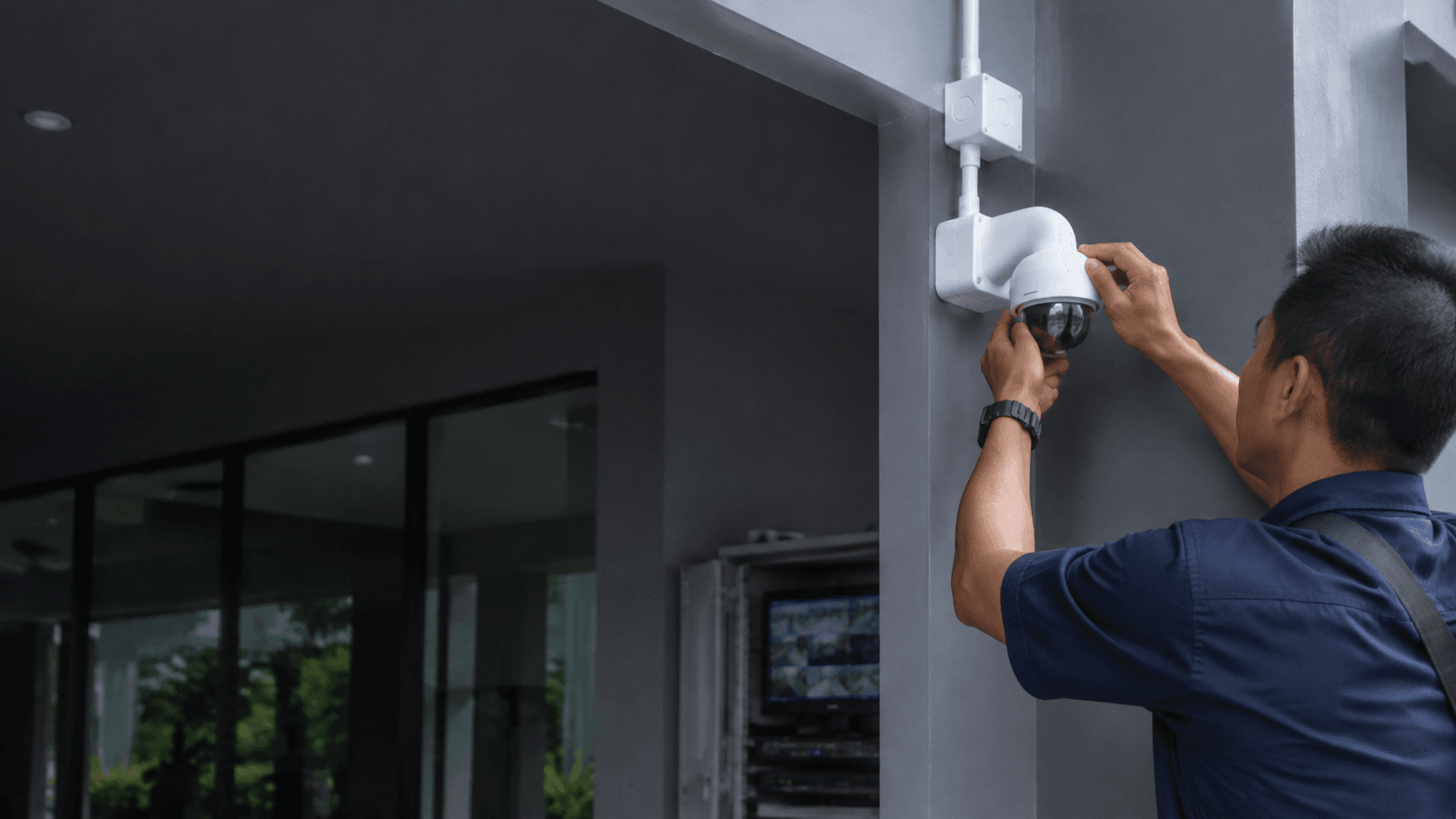
A Tapo camera can be a reasonable self-install project for a single indoor position with power and Wi-Fi already in place. The difficulty scales with the site. Multiple cameras, exterior positions, long cable or power runs, and a requirement for consistent recording across several points all move the job closer to a planned installation.
Eyonic's CCTV installation process runs through site survey, system proposal, installation and handover. That sequence exists because the decisions that determine whether a system works — camera placement, lighting, recording configuration and remote viewing — are made before hardware is confirmed, not after.
For sites where the requirement is closer to a full monitoring system than a single smart camera, the work is comparable in scope to completed projects such as the Kuching Immigration Office, where the focus was arrival flow, staff areas, visitor movement and dependable daily operation. A public office and a family home have different stakes, but the underlying questions about placement, coverage and handover are the same.
It is worth being clear about scope. Whether Tapo products fall inside a given supplier's supply and installation range is a question for that supplier, and it should be asked directly rather than assumed from a product page. A supplier that plans and installs monitoring systems may work with a different camera range entirely, and the honest answer is more useful than a forced fit.
Questions a product page will not answer
Product pages describe cameras. They do not describe the site the camera will be mounted on. That gap is where most of the risk in a Tapo CCTV camera purchase sits, and it is worth naming the specific questions that remain open after reading any specification sheet.
What does the scene actually look like at 2am? Where exactly will the camera be fixed, and what is behind and in front of that position? How long does footage need to be kept, and what happens if the memory card fills or fails? Who will hold the account, and what happens when that person is unavailable? If the internet drops, what still records?
None of these have a product-page answer, because none of them are product questions. They are site questions, and they are answered by looking at the site.
For a single indoor camera in a home, those questions can be worked through in an afternoon. For a shop, an office or a property with several entry points, the same questions multiply, and the cost of getting them wrong rises with the number of cameras involved. That is the point at which a site survey earns its place in the process, because it converts assumptions about lighting, placement and coverage into confirmed facts before hardware is ordered.
Where the requirement is a straightforward single-camera setup, a self-planned Tapo purchase can work well. Where the requirement is coverage of a property with multiple approaches, a planned system with a survey, a proposal and a handover is the more reliable route, regardless of which camera brand ends up in the specification.
Share your location, property type and required system with Eyonic on WhatsApp at +60 11-5111 7959 for the next practical step.