
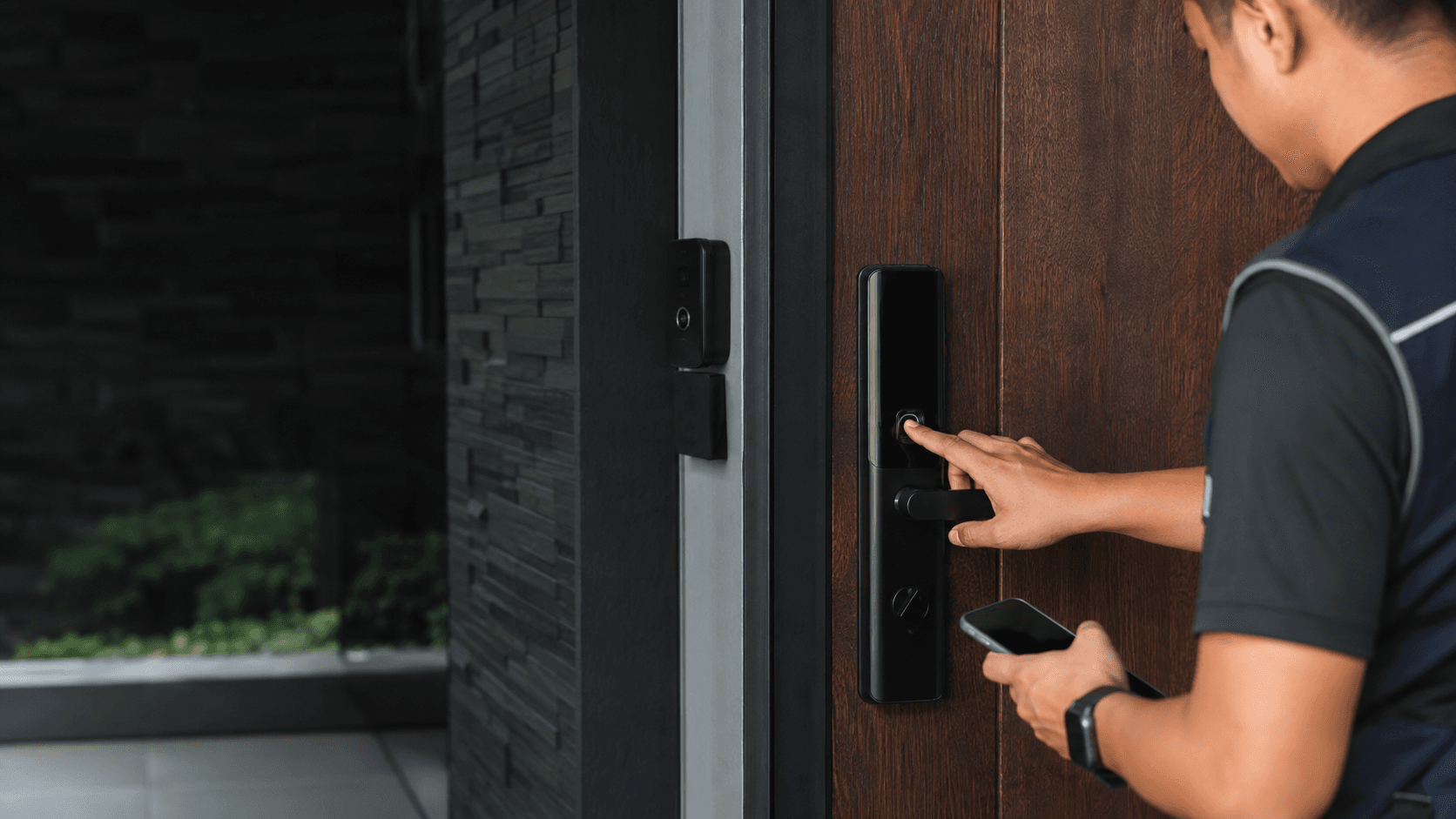
The term covers more than one product. Lockly sells a Secure Pro Latch Edition built around a lever handle and a keypad, and a separate Lockly Guard Latch family aimed at commercial or higher-traffic doors. Both sit in the same category. a smart lock that replaces a latch-style handle set instead of a deadbolt.
That distinction matters because latch locks and deadbolt locks are not interchangeable. A deadbolt needs a bored hole above the handle. A latch lock replaces the existing handle assembly. Buyers who search for lockly latch are usually trying to work out which of those two situations applies to their door, and which Lockly model fits it.
Lockly Latch. What Matters Before You Choose
Three things decide whether a Lockly Latch is the right purchase: the door's existing hardware, who needs access, and what happens when the battery or network fails.
Door hardware comes first. A latch lock is designed to replace a handle set, so the door needs the right bore and backset for that style of hardware. A door already cut for a deadbolt plus a separate passage handle is a different installation from a door with a single combined latch and handle. Getting this wrong is the most common reason a smart lock purchase has to be returned or exchanged.
Access roles come second. A household with two or three regular users has simple needs. A rental property, a small office or a shop with staff and visitors needs a way to issue and revoke access without rekeying anything. Lockly's app-based approach handles that through temporary codes and digital keys rather than physical copies.
Backup entry comes third. Every smart lock eventually runs out of battery or loses its network connection. A lock that still opens with a physical key, or with an offline code, keeps the door usable when that happens. This is a design question, not a maintenance question, and it should be settled before purchase rather than after.
Choosing the Right Lockly Latch
The practical sequence below reflects how a security installer would approach the decision. It also matches the order in which problems tend to surface if the steps are skipped.
- Confirm the door uses latch-style hardware rather than a separate deadbolt and handle.
- Measure the door thickness and check the existing bore and backset against the lock's requirements.
- Decide whether the door faces weather, and whether the lock needs to tolerate moisture and temperature swings.
- List every person who needs entry, and decide which of them should have permanent access versus temporary codes.
- Check whether remote access and notifications are required, since that determines whether a Wi-Fi hub or bridge is part of the purchase.
- Confirm the backup entry method before installation, not after the first low-battery warning.
- Decide who installs it, and whether the door's existing strike plate and frame will accept the new hardware cleanly.
Steps two and three are the ones most often underestimated. A latch lock that fits a standard interior door may not suit an exterior door exposed to direct rain, and a door that has been repainted or repaired around the old handle can need adjustment before new hardware sits flush.
What is lockly latch?
Lockly Latch refers to Lockly's latch-style smart locks, which replace a door's handle assembly rather than a deadbolt. The Lockly Secure Pro Latch Edition is the best-documented example, and LocklyPRO lists Lockly Guard Latch models in Z-Wave and non-Z-Wave versions for commercial settings.
The naming is worth reading carefully. Lockly also sells deadbolt models under names like Secure Pro Deadbolt and Secure ProHT Deadbolt. Those are different products with different installation requirements, even though they share the Secure Pro branding and much of the same access technology.
Fingerprint, Smartphone-Control Smart Locks | Lockly®
Lockly's own product pages describe the range as fingerprint and smartphone-controlled smart locks, with keypad entry, app-based control and voice assistant integration across the line. The Secure Pro Latch Edition adds a dual keypad that can switch between a randomised PIN layout and a standard numeric layout.
For a latch lock specifically, the access methods that matter most in daily use are the keypad and the fingerprint reader. Both work without a phone present, which matters for staff, cleaners, contractors and family members who should not need an app account to get through the door.
Practical Considerations for Lockly Latch
Several constraints apply to latch-style smart locks generally, and they are worth understanding before comparing models.
Latch locks suit doors where the handle and the locking mechanism are one unit. They are common on office doors, some apartment entry doors and commercial interior doors. They are less common on residential front doors in many markets, where a deadbolt plus a separate handle is the norm. That single fact determines whether a latch model is even a candidate.
Power and connectivity are separate concerns. A lock can work perfectly offline with codes and fingerprints while the app features remain unavailable until a hub or bridge is connected. Buyers who want remote unlocking, access logs or notifications should treat the hub as part of the system cost, not an optional extra.
User management is where smart locks earn their place in a business setting. Issuing a temporary code to a contractor and revoking it afterwards is faster and more auditable than lending a key. The same feature is useful in short-term rentals, where guest codes can be time-limited.
Installation quality affects reliability more than most buyers expect. A misaligned strike plate, a door that has swollen with humidity, or a frame that has shifted can all cause a smart lock to report jams or fail to latch cleanly. On exterior doors in humid climates, that alignment issue tends to appear seasonally rather than immediately.
Eyonic, a security system supplier in Sarawak, notes that smart locks work best when door condition, user roles and backup method are reviewed before installation, and that business use sometimes calls for an access-control panel rather than a standalone smart lock. That is a useful framing. a single latch lock suits a single door with a handful of users, while multiple doors and many users usually point toward a managed access-control system instead.
Making an Informed Choice About Lockly Latch
The decision usually comes down to door type and user count. A latch-style door with a small, stable group of users is a straightforward fit. A deadbolt door, or a site with several doors and rotating staff, is a different problem that a single latch lock will not solve well.
For buyers in Sarawak and across Malaysia, the practical next step is to check the door before choosing the lock. Photograph the existing handle and the edge of the door, note the door thickness, and confirm whether the frame is wood, metal or something else. Those details determine which models are even compatible.
Where a property needs more than door access alone, it is worth looking at the wider system rather than the lock in isolation. Eyonic's work on the Kuching Immigration Office project focused on arrival flow, staff areas, visitor movement and dependable daily operation, which is the same set of concerns that shapes a smart lock decision in a workplace: who comes in, how they are recorded, and what happens when something fails.
Eyonic's published packages for CCTV, alarm systems and autogate sit at RM 1,599 each, which gives a sense of the entry-level pricing for connected security work in the region. Smart lock supply and installation is quoted separately because door condition and user requirements vary so much between sites.
For a single door with straightforward requirements, a Lockly Latch model is a reasonable candidate once compatibility is confirmed. For a business with multiple entry points, the more useful question is whether a standalone smart lock or a managed access-control panel fits better, and that is a site-specific judgement rather than a product comparison.
Share your location, property type and required system with Eyonic on WhatsApp at +60 11-5111 7959 for the next practical step.