
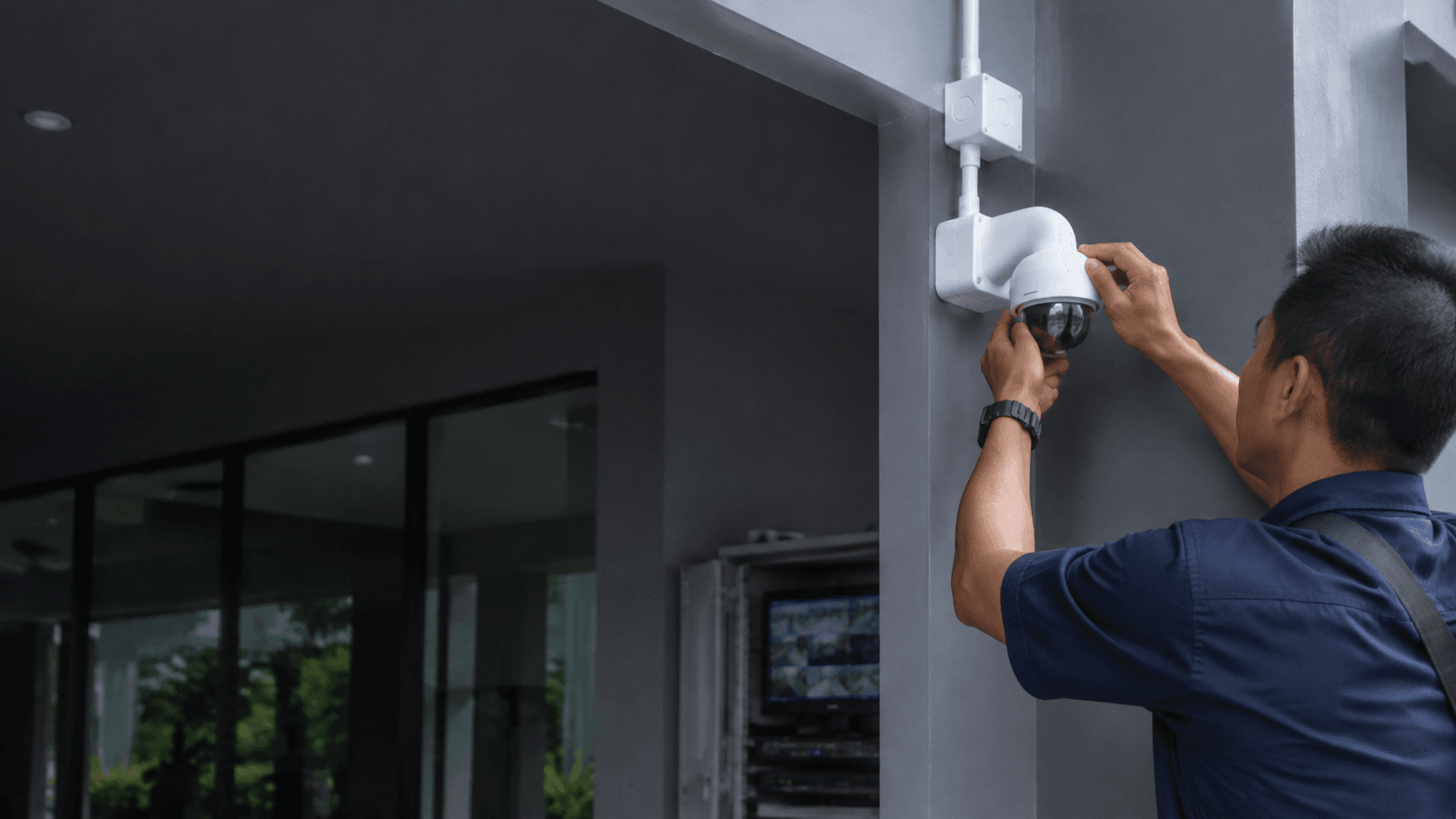
Eyonic Sdn Bhd plans, supplies and installs monitoring systems with camera placement, recording and remote viewing for homes, offices, shops and industrial sites in Sarawak. The company's own installation sequence runs from site survey through system proposal, installation and handover, which means the phone-viewing step is confirmed at the end rather than assumed at the start.
Outdoor Cctv Camera For Home With Mobile Connectivity: What Matters Before You Choose
Mobile connectivity turns a camera from a recorder into something checked during the day. That shift changes what matters at the planning stage. A camera position that records a usable wide shot may still be a poor phone view if the subject sits small in the frame, and a position that looks tidy on a wall may sit where the home network does not reach reliably.
Because the phone view is the part most people actually use, it is worth treating it as a design requirement rather than an add-on. The practical questions are where the camera points, what the scene looks like after dark, and how the recording is stored and then delivered to a device. Each of those is settled on site, not from a product listing.
Eyonic's published service scope lists camera placement, NVR setup and remote viewing as separate items, which reflects how the work divides in practice. Placement decides the picture. The recorder decides what is kept. Remote viewing decides what appears on the phone.
What to check on site before confirming camera positions
A site survey is the point where an outdoor CCTV camera for home with mobile connectivity stops being a general choice and becomes a specific plan. The survey confirms sightlines, mounting surfaces, cable routes and where the network equipment sits.
Eyonic's CCTV installation process follows a defined order:
- Site survey of the property, covering camera positions, mounting points and cable routes.
- System proposal setting out the cameras, recording setup and remote viewing arrangement.
- Installation of cameras, cabling and recording equipment.
- Handover covering the recording setup and mobile viewing.
Two checks matter most before positions are fixed. The first is what the camera must actually capture: an entrance, a gate, a parking area or a walkway each need a different angle and height. The second is whether the position can be reached for cabling and later maintenance without damaging finishes or blocking access.
Positions confirmed from a photograph or a floor plan alone tend to need revision once the property is seen. A survey resolves that before drilling begins, which is cheaper than moving a camera afterwards.
Placement questions worth settling early
Height affects both what the camera sees and how easy it is to reach. A camera mounted high enough to be out of casual reach may look down at the top of a person's head rather than their face. A camera mounted lower may capture a clearer view but sits within easier reach.
Coverage overlap is another decision. Two cameras with overlapping fields reduce the chance that a single blind spot hides movement between them, but they also add cost and cabling. The survey is where that trade-off is weighed against the property layout.
Lighting conditions and night viewing expectations
Night performance is the most common gap between what a buyer expects and what a camera delivers. Eyonic recommends checking actual lighting conditions before confirming placement for ColorVu-style cameras, because the camera's low-light behaviour depends on the light already present at that spot.
A position with a nearby porch light, street light or security lamp behaves differently from a dark corner with no ambient light. The same camera can produce a clear colour image in one position and a much weaker image in another. That is why the lighting check belongs in the survey rather than in a specification comparison.
Practical adjustments follow from what the survey finds. A position may be shifted to take advantage of existing light, or the plan may accept that a particular corner needs different treatment. What the survey avoids is confirming a position on the assumption that night viewing will match daytime viewing.
Recording, storage and remote viewing handover
Recording setup and remote viewing are separate steps, and both are confirmed at handover. Eyonic's Hikvision CCTV package at RM 1,599 covers camera supply and setup, basic recording configuration, and mobile viewing handover.
The recording configuration decides what is kept and for how long. The remote viewing handover decides what appears on a phone and how it is accessed. Treating these as one step is where confusion usually starts, because a camera can record correctly while the phone view is not yet set up, or the phone view can work while the recording settings are still at defaults.
Handover is also the point to confirm who can view the feed and on which devices. Those details depend on the system supplied and the property's network, so they are settled during the survey and installation rather than assumed beforehand.
What handover should confirm
A useful handover leaves the household able to open the live view, find recorded footage, and understand what the recording settings do. It also leaves a clear point of contact for questions that appear in the first weeks of use, when unfamiliar alerts and playback are most likely to cause confusion.
How Eyonic plans installs and hands over a home CCTV system
Eyonic Sdn Bhd is a security system supplier based in Sarawak, working across CCTV and ELV systems for homes, offices, shops and industrial sites. The company's founder, Eric Yong, has been in the industry for more than 10 years, with experience in technical installation of digital security solutions for commercial businesses in Sarawak.
The project record shows the same approach applied at larger scale. Eyonic completed work for the Kuching Immigration Office focused on arrival flow, staff areas, visitor movement and dependable daily operation, and for KTA Sarawak Sdn Bhd on a practical office setup in Kuching supporting staff movement, visitor handling, tidy cabling and clearer daily site control. Both projects point to the same priorities that apply to a home: positions that match how the space is used, cabling that is tidy, and a system that keeps working day to day.
For a home, the sequence stays the same. The survey establishes positions and lighting. The proposal sets out the cameras, recording and remote viewing. Installation follows. Handover confirms the recording setup and the mobile view.
An outdoor CCTV camera for home with mobile connectivity is therefore confirmed in stages rather than chosen from a list. The property decides the positions, the lighting decides the night expectations, and the handover decides whether the phone view works as intended.
Homeowners in Malaysia comparing options can narrow the decision by settling three things before committing: which areas must be covered, what light exists at those points after dark, and how the recorded footage should be reached. Those answers shape the package, and they are the same answers a survey is designed to produce.
Share the property location, property type and required system with Eyonic on WhatsApp at +60 11-5111 7959 for the next practical step.