
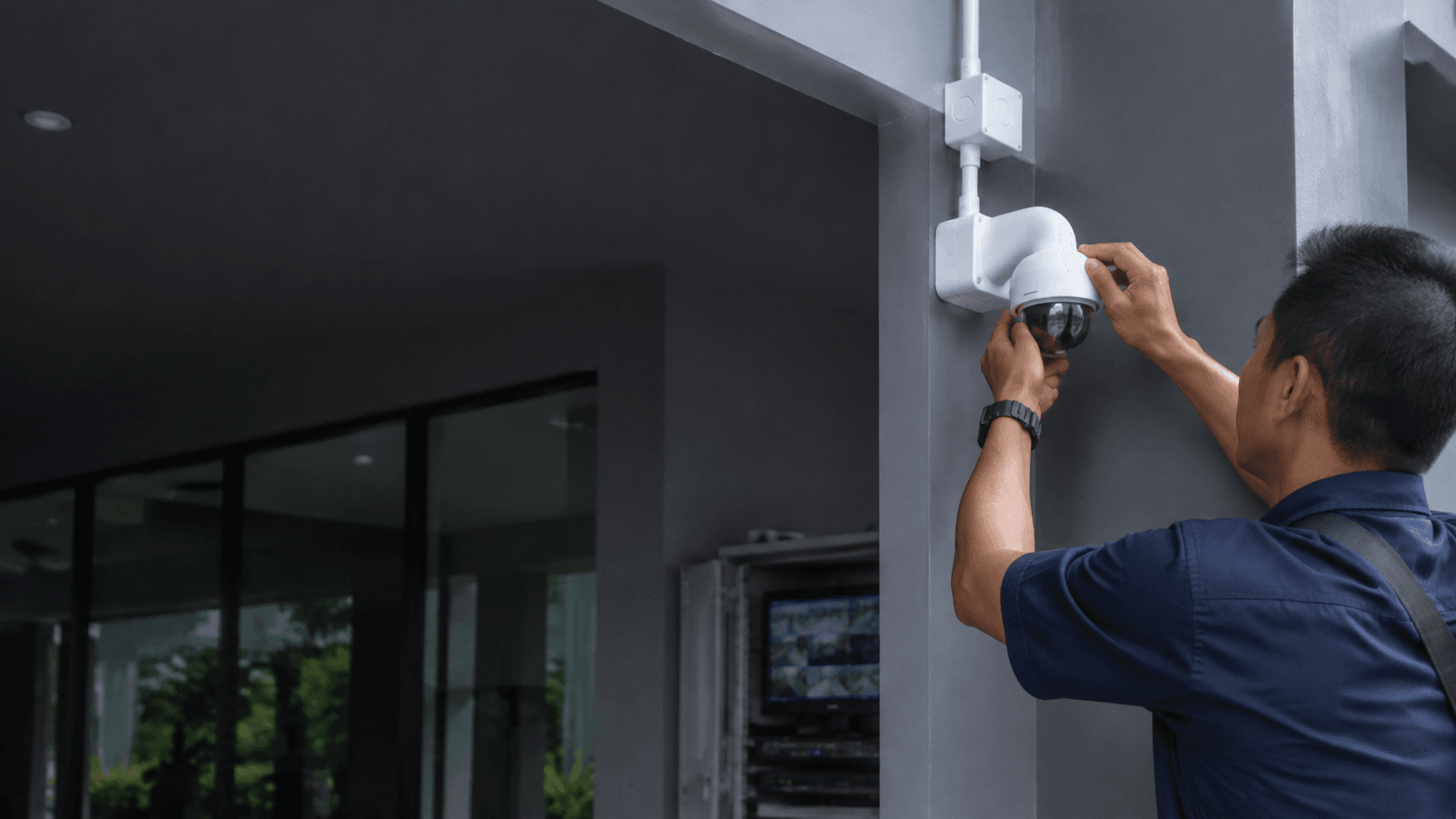
The exact-match query hikvision 16 channel dvr 5mp describes a recorder class rather than one fixed box. Hikvision builds several 16-channel recorders, and the 5MP figure refers to the resolution the unit can encode from supported cameras. Buyers in Malaysia usually arrive at this query with a camera layout already in mind, or with an existing analogue system they want to keep and upgrade.
Two things decide whether the purchase works out. The first is whether the recorder accepts the camera signals already on site. The second is whether the recorder, the cameras, and the hard disk are specified together rather than bought as separate guesses. Eyonic Sdn Bhd plans, supplies, and installs monitoring systems with camera placement, recording, and remote viewing for homes, offices, shops, and industrial sites.
Hikvision 16 Channel Dvr 5mp: What Matters Before You Choose
Channel count sets how many cameras the recorder can take. A 16-channel unit suits a shop with front, counter, storeroom, and back-door views, an office with several rooms and a lobby, or a house with perimeter and gate coverage. Sixteen channels also leave room for later additions without replacing the recorder.
The 5MP figure describes recording resolution. Higher resolution preserves more detail in a frame, which matters when a face, a plate, or a hand movement has to be identified after an incident rather than merely noticed at the time. The trade-off is storage. more pixels per frame means more data per hour, so a 5MP layout fills a hard disk faster than a 2MP layout on the same channel count.
Channel count and resolution also interact. A recorder that encodes 5MP on every channel at once behaves differently from one that reaches 5MP only on some channels or only at reduced frame rates. That distinction sits in the model datasheet, not in the product name, which is why the exact model number matters more than the phrase "16 channel 5MP".
Camera signals and compression that shape recording quality
Hikvision Turbo HD recorders are commonly described as multi-signal units, accepting HDTVI, AHD, CVI, CVBS, and IP cameras. That flexibility is the main reason a 16-channel recorder is a practical upgrade path: existing coaxial cabling and analogue cameras can often stay in place while selected positions move to higher-resolution cameras.
Signal type caps resolution. A CVBS camera records at standard definition no matter what the recorder can encode, so a 5MP recorder paired with old analogue cameras produces old analogue pictures. Reaching 5MP requires 5MP-capable cameras on the channels that need the detail.
Compression affects how much of that detail survives into storage. H.265 and H.265+ class codecs are designed to hold visual quality at lower bitrates than older H.264 encoding, which stretches the same hard disk further. The practical effect is that compression choice changes how many days of 5MP footage fit on a given drive.
Lighting is the other half of image quality, and it is decided before installation rather than in the recorder menu. Eyonic's guidance on ColorVu-style cameras is to check actual lighting conditions at each position before confirming placement, because a camera's low-light behaviour only helps where the scene genuinely needs it.
Storage, playback, and remote viewing planning
Storage is sized from three inputs: how many channels record, at what resolution, and for how many days footage must be kept. A 16-channel 5MP system recording continuously needs far more capacity than the same recorder set to motion-triggered recording on fewer active channels. Retention requirements, not drive size alone, should drive the decision.
Playback planning is about finding an event quickly. Searching by time and channel is the baseline; motion-based search and event filtering shorten the process when a review is needed. A recorder with more channels also produces more footage to sift, so search tools matter more on a 16-channel unit than on a four-channel one.
Remote viewing depends on the recorder's network connection and the site's internet service. Mobile viewing is part of Eyonic's handover, which means the app is set up and demonstrated rather than left to the buyer. Where a site has weak connectivity, that constraint is worth identifying during the survey instead of after installation.
Site survey and installation sequence
Eyonic's CCTV installation process runs through four stages, and the order matters because each stage constrains the next.
- Site survey. positions, lighting, cabling routes, and existing cameras are reviewed on site.
- System proposal. the recorder, cameras, storage, and viewing setup are specified together.
- Installation. cameras, recorder, cabling, and configuration are installed and tested.
- Handover. recording, playback, and mobile viewing are explained and demonstrated.
The survey is where most specification errors are caught. A position that looks suitable on a floor plan may face a bright window, sit beyond a practical cable run, or cover a doorway at an angle that misses faces. Checking those conditions first prevents a recorder from being bought for a layout it cannot serve.
Existing cabling is a common edge case. Where coaxial cable is already in place and in good condition, a Turbo HD recorder can often reuse it. Where cable is damaged or routed poorly, replacement becomes part of the job, and that changes both cost and timeline.
Where Eyonic fits in Sarawak and Malaysia
Eyonic Sdn Bhd is a security system supplier based in Sarawak, working on CCTV and ELV systems for homes, offices, shops, and industrial sites. The company's founder, Eric Yong, has more than ten years in the industry and works on technical installation of digital security solutions for commercial businesses in Sarawak.
Project work includes the Kuching Immigration Office, where the focus was arrival flow, staff areas, visitor movement, and dependable daily operation. A second project, KTA Sarawak Sdn Bhd, covered an office setup in Kuching supporting staff movement, visitor handling, tidy cabling, and clearer daily site control. Both are the kind of multi-camera layouts where channel count and coverage planning matter more than a single headline specification.
Eyonic's published packages start at RM 1,599 for a Hikvision CCTV package covering camera supply and setup, basic recording configuration, and mobile viewing handover. Alarm and autogate packages sit at the same figure. A 16-channel 5MP recorder is a larger specification than a basic package, so the recorder, camera count, and storage are confirmed against the site rather than assumed from the package tier.
Coverage is grounded in Sarawak project work. Buyers elsewhere in Malaysia should confirm scope directly rather than assume nationwide service.
For a 16-channel 5MP layout, the useful next step is a survey that fixes camera positions, signal types, storage days, and viewing requirements before any hardware is ordered. Share your location, property type and required system with Eyonic on WhatsApp at +60 11-5111 7959 for the next practical step.