
The exact-match query "cove security camera" points to a specific product family rather than a generic category. Cove sells its own cameras, and independent reviewers treat them as an add-on to a broader alarm and monitoring system. That distinction shapes every buying decision below.
Cove Security Camera. What Matters Before Choosing
Cove's camera lineup is small and tightly integrated. The company does not sell dozens of models with overlapping features. Instead, two cameras cover most household needs, and both connect to the same Cove Connect app used for arming, disarming, and monitoring.
Independent review coverage describes Cove as a DIY system with professional monitoring plans and no long-term contract. Security.org reports monitoring starting at $22.99 per month across three plan tiers, and notes the system lacks self-monitoring and voice assistant support. SafeHome.org describes simple setup and an in-house camera lineup. Those two observations frame the trade-off: convenience and integration on one side, fewer options and less flexibility on the other.
Before comparing specifications, work through the sequence that actually determines whether a Cove Security Camera fits a property.
- Confirm the property needs cameras as part of an alarm system, not as standalone recording devices.
- Decide whether indoor coverage, outdoor coverage, or both are required.
- Check power and network conditions at each intended camera position.
- Review how footage is stored and how long it is retained.
- Confirm who will monitor alerts and respond when they arrive.
- Verify the total cost of hardware plus any ongoing monitoring or storage fee.
Step four deserves particular attention. Camera footage is only useful if it survives the incident it recorded, and storage arrangements differ between local cards and cloud plans. That single decision often matters more than resolution figures.
Choosing the Right Cove Security Camera
The two cameras serve different jobs, and the choice usually follows from where coverage is needed rather than from a feature comparison.
Indoor Motion Activated Camera
Cove's indoor unit is marketed as a motion-activated camera with night vision. Competitor topic analysis of the product page references AI-powered object tracking, pan and tilt coverage, real-time detection of people, pets, and packages, activity zones, two-way communication, and encrypted local storage. The same page references 2560x1440 (2K) high-contrast video and support for a 256GB micro SD card.
Indoor cameras suit hallways, living areas, and entry points inside the home. Pan and tilt coverage reduces the number of units needed for an open-plan space. Motion-activated tracking means the camera follows movement rather than recording a fixed frame, which produces more useful footage but also more clips to review.
Two constraints apply. Indoor cameras depend on household power and Wi-Fi, so a power cut or network outage interrupts coverage. Privacy also matters. an indoor camera pointed at a living area records daily family activity, not just intruders.
Outdoor Security Camera
Cove's outdoor unit is marketed as a solar-powered camera. Competitor topic analysis of the product page references IP65 weather resistance, 2K QHD resolution, night vision, motion-activated deterrence, local and cloud recording, two-way audio, PIR sensing, and 2.4GHz WiFi connectivity.
Solar power removes the need to run cable to a distant position, which is the main practical advantage for gates, perimeter walls, and outbuildings. The trade-off is sunlight. A solar camera in continuous shade will not maintain charge, and night-time recording draws more power than daytime standby.
Eyonic, a Sarawak-based security system supplier, recommends checking actual lighting conditions before confirming placement for cameras that depend on low-light performance. The same principle applies to solar models: the installation position must be verified on site, not assumed from a floor plan.
What Is cove security camera?
A Cove Security Camera is a camera manufactured by Cove that connects to the Cove home security system and its app. It is not a standalone product line sold independently of the alarm platform.
That integration is the defining characteristic. Cameras appear alongside door sensors, motion sensors, glass-break sensors, smoke detectors, flood sensors, a video doorbell, key fobs, and panic buttons in review coverage of the wider system. Buyers who want cameras alone, without an alarm panel or monitoring plan, are looking at the wrong product category.
Review coverage also notes that Cove equipment is generally budget-friendly, with most items under $120 according to Security.org. Camera pricing sits within that broader equipment range rather than at a premium tier.
Practical Considerations for Cove Security Camera
Several constraints shape real installations, and they apply regardless of brand.
Network dependency is the first. Both cameras reference 2.4GHz WiFi connectivity. A weak signal at the camera position produces dropped recordings and failed live views, and the problem is invisible until an incident occurs. Signal strength should be tested at the exact mounting point.
Storage is the second. Local micro SD storage keeps footage on the device, which avoids ongoing fees but risks loss if the camera is stolen or damaged. Cloud storage survives device loss but adds a recurring cost. Review coverage of Cove's plans references cloud video storage as part of monitoring tiers, so the storage decision and the monitoring decision are linked.
Power is the third. The indoor camera needs a mains supply. The outdoor camera depends on solar charging. Neither is a battery-swap design in the conventional sense, so the installation position must satisfy the power requirement permanently.
Monitoring is the fourth. Cove's plans include professional monitoring, and Security.org notes the absence of a self-monitoring option. A household that wants alerts without a monitoring subscription should confirm current plan terms before purchasing, because the platform is built around monitored service.
For readers in Malaysia, the practical comparison is not Cove versus another camera brand. It is a subscription-based DIY system versus a locally installed and supported system. Eyonic's CCTV installation process runs through site survey, system proposal, installation, and handover, which is a different model from self-installation with remote support. Eyonic's Hikvision CCTV package is listed at RM 1,599, covering camera supply and setup, basic recording configuration, and mobile viewing handover. A completed project for the Kuching Immigration Office focused on arrival flow, staff areas, visitor movement, and dependable daily operation, with an approximate budget of RM 12,000 to RM 28,000 for that type of work.
The two approaches suit different buyers. A Cove Security Camera suits a household that wants to install equipment itself, accepts app-based management, and is comfortable with a monitoring subscription. A locally installed system suits a property that needs cabling, verified camera placement, and on-site support, particularly where lighting conditions or building structure make self-installation unreliable.
Making an Informed Choice About
The decision comes down to three questions, and each has a clear answer path.
Does the property need cameras integrated with an alarm system? If yes, Cove's lineup is coherent and the app unifies control. If no, a standalone camera system is simpler and cheaper.
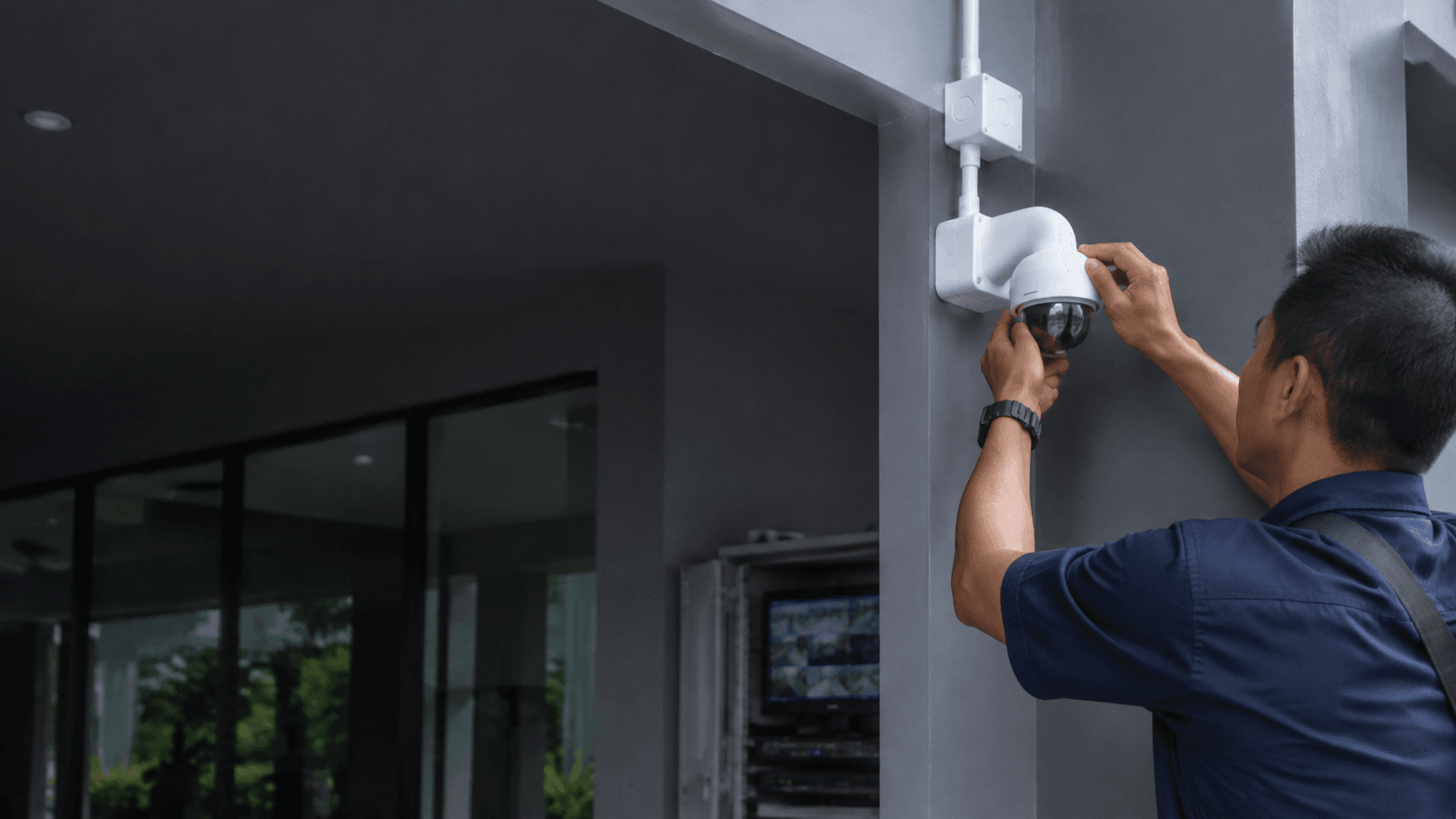
Is self-installation realistic? Solar and WiFi cameras reduce cabling work, but they still require correct positioning, signal testing, and mounting at height. A position that fails a signal test will not improve after installation.
Is an ongoing fee acceptable? Professional monitoring and cloud storage are recurring costs. Buyers who want a one-time purchase with no subscription should confirm what functions remain available without a plan.
For properties in Sarawak where cabling, lighting verification, and on-site handover matter more than self-installation convenience, Eyonic provides planning, supply, and installation for homes, offices, shops, and industrial sites. Sharing the location, property type, and required system with Eyonic on WhatsApp at +60 11-5111 7959 is the next practical step.