
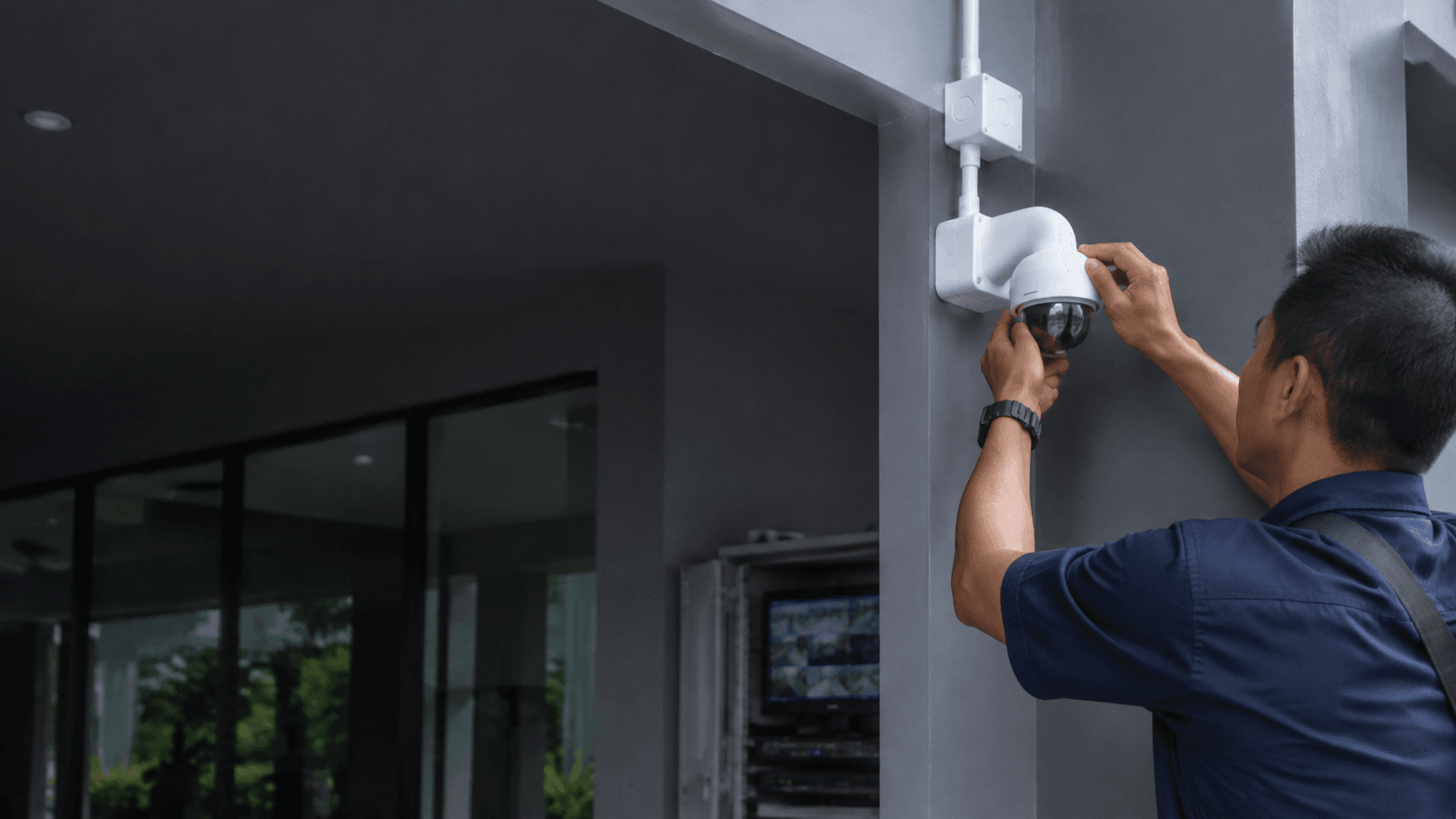
Eyonic Sdn Bhd plans, supplies and installs CCTV security systems for homes, offices, shops and industrial sites in Sarawak, with camera placement, recording and remote viewing handled as one job rather than a box of parts. The company's founder, Eric Yong, has worked in digital security installation for commercial businesses in Sarawak for more than 10 years.
Cctv Camera System For Home. What the Setup Actually Includes
A home CCTV setup is not only cameras. The working parts are the cameras themselves, the recorder that stores footage, the cabling or network path between them, and the viewing software that puts live and recorded video on a phone. Eyonic lists camera placement, NVR setup and remote viewing as separate services, which reflects how the job is actually divided on site.
Two decisions shape everything else. The first is where each camera points, because a camera aimed at a blank wall records nothing useful. The second is how footage is stored and for how long, because storage capacity sets the practical retention window. Eyonic's published package information does not state camera count, recorder channels or storage size, so those details belong in the written proposal rather than in an assumption.
Wired and wireless options both exist in the wider market. Wired cameras generally need a cable run to the recorder, which is more work during installation but avoids depending on Wi-Fi signal at the camera position. Wireless cameras are quicker to mount but inherit the reliability of the home network. The right answer depends on the property, not on a general preference.
Where Cameras Go and Why Lighting Decides the Result
Placement is the single biggest factor in whether a home system is useful. The front gate, the car porch, the main door and any side or rear access point usually matter more than interior rooms, because those are the approaches a person must cross. A camera that covers an approach gives earlier warning than one that only covers the door itself.
Lighting decides what the camera can actually record. Eyonic recommends checking actual lighting conditions before confirming placement for ColorVu-style cameras, which is a practical instruction rather than a product claim. A position that looks fine in daylight can be a dark corner at night, and a position facing a bright streetlight or a reflective surface can produce glare that washes out the frame.
Three placement constraints come up repeatedly on real sites:
- Height. mounted too high, a camera records the tops of heads rather than faces; mounted too low, it is easy to reach or block.
- Aim. cameras pointed toward a light source lose detail in the brightest part of the frame.
- Coverage overlap. two cameras covering one approach from different angles reduce the chance that a single obstruction hides everything.
Night performance is where expectations most often diverge from results. No verified low-light measurement exists for a specific camera model in this material, so the honest position is that night clarity depends on the light actually present at the chosen position, and that this is why the lighting check happens before placement is confirmed rather than after installation.
How Eyonic Plans, Installs and Hands Over a Home System
Eyonic's CCTV installation process runs in four stages, in this order:
- Site survey — the property is reviewed so camera positions, cable routes and recorder location are based on the actual building.
- System proposal — the surveyed findings are turned into a proposed system for the property.
- Installation — cameras, recorder and cabling are installed and configured.
- Handover — the system is handed over with the recording and viewing setup explained.
The survey stage is what separates a quoted system from a guessed one. Cable routes, power availability and recorder placement are all easier to settle before drilling begins. The handover stage matters just as much, because a system nobody can view remotely is only half delivered.
Eyonic's published package information describes the Hikvision CCTV Package as camera supply and setup, basic recording configuration, and mobile viewing handover. Those three items map directly onto the installation and handover stages, and they describe the scope of work rather than a specification list.
What a basic Hikvision home package costs in Malaysia
Eyonic lists the Hikvision CCTV Package at RM 1,599. The same RM 1,599 figure appears against the Hikvision Alarm System and the Autogate Package, so the number reflects a starting package tier rather than a fixed price for every property. Camera count, recorder channels, storage size and cable length are not stated in the published package information, and those variables are what move a final figure above or below the starting tier.
For scale, Eyonic's completed project pages list approximate budgets of RM 12,000 to RM 28,000 for the Kuching Immigration Office work and RM 8,000 to RM 18,000 for the KTA Sarawak Sdn Bhd office setup. Those are multi-camera commercial and office scopes, not home packages, but they show how far a project can sit above a basic home tier once coverage, cabling and site conditions grow.
Public-Office Experience Applied to Home Coverage
Eyonic completed a project for the Kuching Immigration Office, focused on arrival flow, staff areas, visitor movement and dependable daily operation. The same logic transfers to a house. Arrival flow becomes the gate and porch. Staff areas become the parts of the home that need coverage without intruding on private rooms. Visitor movement becomes the path from gate to door. Dependable daily operation becomes the requirement that the system still records next month, not just on installation day.
A second completed project, for KTA Sarawak Sdn Bhd, covered staff movement, visitor handling, tidy cabling and clearer daily site control. Tidy cabling is the detail most often undervalued in a home installation, because exposed or poorly routed cable is both a maintenance risk and the first thing to fail.
Commercial work also sets a useful expectation for homes: a system is judged by what it captures on an ordinary day, not by how it looks when it is new.
Questions Homeowners Ask Before Confirming a System
Does a home system need internet? Recording can run locally at the recorder, while remote viewing needs a network connection. The two are separate, which is why a home can keep recording during an internet outage.
How many cameras are enough? The count follows the number of approaches that need coverage, not a standard number. A single gate and door can be covered with fewer cameras than a property with side access, a rear lane and an outbuilding.
What happens at night? Night results depend on the light present at each camera position, which is why the lighting check happens before placement is confirmed. No verified low-light measurement for a specific model is available here, so night performance should be discussed against the actual property.
Who handles the work? Eyonic covers planning, supply and installation, so survey, proposal, installation and handover sit with one supplier rather than being split between a seller and a separate installer.
What is not confirmed yet? Camera resolution, lens and sensor details, storage capacity, retention period, channel count, warranty terms and after-sales response times are not stated in the published package information. Those belong in the written proposal for the specific property.
Share your location, property type and required system with Eyonic on WhatsApp at +60 11-5111 7959 for the next practical step.