
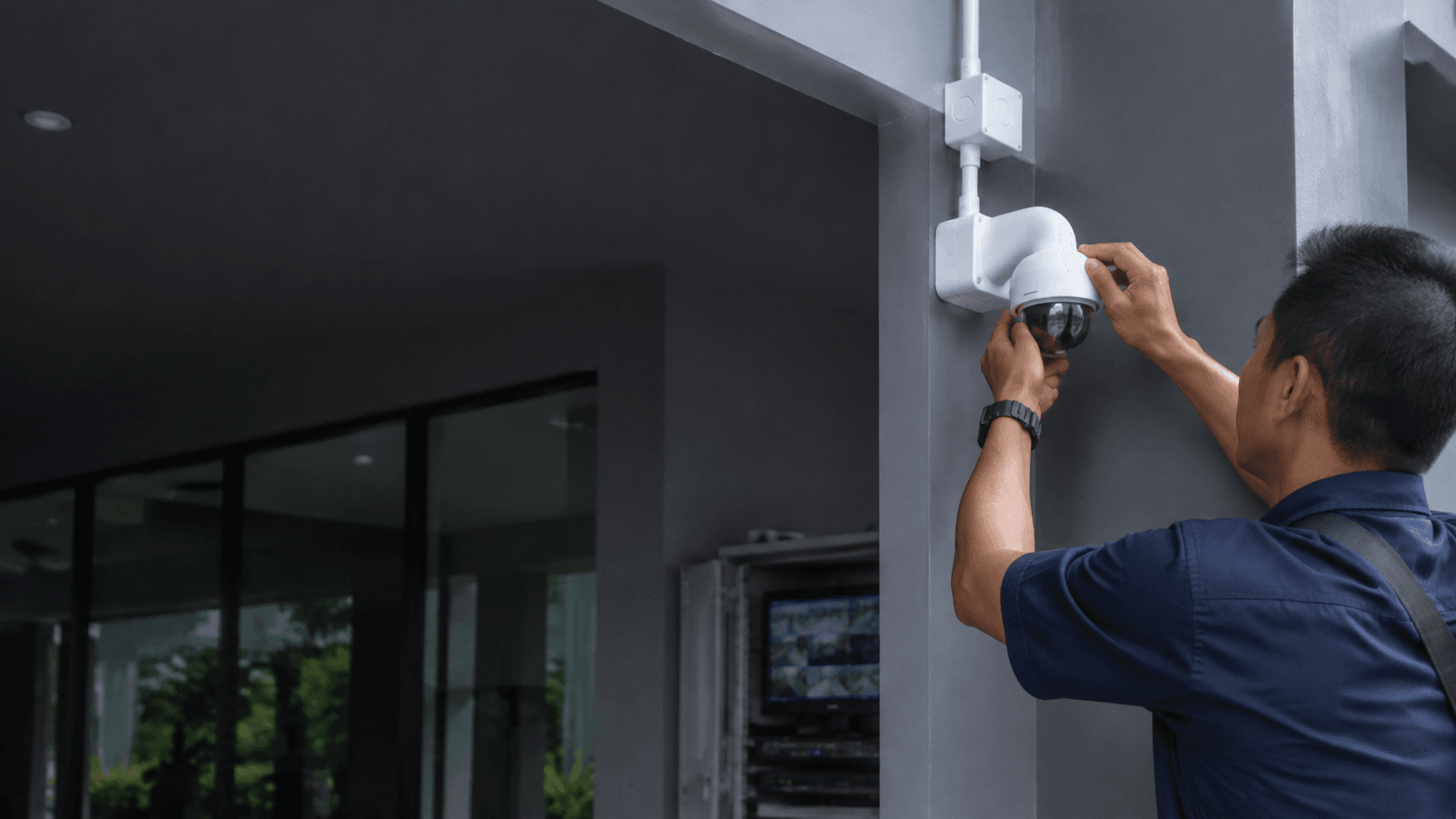
The phrase covers two different kinds of business. One is a retail counter that sells boxes: cameras, recorders, cables, hard drives. The other is a supplier that also surveys the site, proposes a layout, installs the hardware and hands over a working system. The difference matters because a camera that is well chosen but badly placed produces footage nobody can use.
Eyonic Sdn Bhd is a security system supplier in Sarawak, Malaysia, working on CCTV and ELV systems. The company plans, supplies and installs monitoring systems with camera placement, recording and remote viewing for homes, offices, shops and industrial sites. Founder Eric Yong has worked in the industry for more than 10 years, with a focus on technical installation of digital security solutions for commercial businesses in Sarawak.
Cctv Shop. What Matters Before You Choose
Buying from a shop is not the same as buying a system. A shop transaction ends at the counter. A system transaction ends when the footage is usable months later, during an incident, by someone who did not install it.
Four things decide whether that happens. Camera placement decides what is actually covered. Lighting decides whether the image is identifiable or just a silhouette. Recording capacity decides how far back the footage goes. Remote viewing decides whether anyone can check the site without travelling there.
Eyonic's CCTV installation process runs through site survey, system proposal, installation and handover. That sequence exists because placement decisions made before a survey are guesses. A survey records where people arrive, where staff work, where visitors move and where cabling can run tidily.
Placement and lighting come before model numbers
Eyonic recommends checking actual lighting conditions before confirming placement for ColorVu-style cameras. Colour night vision depends on available light. A position that looks bright during a daytime visit can behave differently after dark, and a camera moved even a short distance can change the result.
This is why a shop that only quotes model numbers is answering a narrower question than the one that matters. The model is one input. Position, angle, height and light are the others.
Choosing the Right Cctv Shop
A useful way to compare suppliers is to look at what happens after payment. The list below follows the order in which decisions usually need to be made.
- Confirm what the site needs to cover: arrival points, staff areas, visitor movement, stock, or perimeter.
- Check whether the supplier surveys the site before proposing equipment, or quotes from a description alone.
- Ask how camera positions will be tested against real lighting at the site.
- Confirm recording capacity and how many days of footage the system will hold.
- Confirm how remote viewing will be set up and who will be shown how to use it.
- Confirm what handover includes. user testing, mobile viewing, and a point of contact for faults.
Steps two and three separate a supplier from a reseller. A supplier that surveys the site can catch a placement problem before installation. A reseller cannot, because the reseller never sees the building.
What a survey actually produces
A survey produces a proposal. which cameras go where, why those positions were chosen, how recording is configured, and how the system will be handed over. It also surfaces constraints early, such as cabling routes that are difficult, ceilings that limit mounting options, or areas where lighting is genuinely poor.
Eyonic's work for the Kuching Immigration Office focused on arrival flow, staff areas, visitor movement and dependable daily operation. That is a public office with steady foot traffic, so the coverage priorities differ from a shop counter or a warehouse gate. The same survey logic applies, but the answers change with the site.
What is cctv shop?
In practice, a cctv shop is either a retail outlet selling surveillance equipment or a supplier that also installs and supports it. The label does not tell you which one is in front of you, so the useful question is what the business does beyond selling hardware.
Retail shops suit buyers who already know the specification and intend to install it themselves. Supplier-installers suit buyers who need the system to work as a whole: cameras, recorder, storage, network and viewing, all configured together and tested before handover.
There is a middle case worth naming. Some buyers purchase equipment from one place and arrange installation separately. That can work, but responsibility splits when something underperforms. If the image is poor, the equipment seller points to placement and the installer points to the camera. A single supplier removes that gap.
Where the two models overlap
Many suppliers sell equipment and install it. The overlap is not a problem. The problem is assuming installation support exists when it does not, or assuming a retail price includes configuration that it does not.
For business sites, the practical test is whether the supplier will commit to a working outcome rather than a delivered box. That commitment shows up in the proposal stage, not in the price list.
Security Cameras & Security Camera Systems CCTV Security Pros
That heading is a competitor page title, and it illustrates a common pattern: a supplier positioning itself around professional cameras and customisable systems for business, government and home. The pattern is useful as a structural reference. It is not evidence about any other company's services, pricing or support terms.
What the pattern shows is that buyers in this category are usually comparing on three axes: the equipment, the configuration, and the support arrangement after installation. A page that only lists products answers one of the three.
Equipment configuration and support
Equipment is the most visible and the least decisive. Two sites with identical cameras can produce very different results depending on where those cameras point and how recording is set up.
Configuration covers recording schedules, storage duration, motion settings and remote access. Support covers what happens when a camera drops offline, when footage needs to be retrieved, or when a site changes and coverage needs adjusting.
Eyonic's product reviews note that smart locks work best when door condition, user roles and backup entry are reviewed before installation, and that for business use the choice between a standalone smart lock and an access-control panel is worth checking. The same logic applies to cameras: the right answer depends on the site, not on the product alone.
Practical Considerations for
Cost is the first consideration and the least predictable. A single camera and a multi-camera system with recording and installation sit in different brackets. Eyonic's published package pricing starts at RM 1,599 for a Hikvision CCTV package covering camera supply and setup, basic recording configuration and mobile viewing handover. The same figure applies to a Hikvision alarm system package and an autogate package.
Larger projects scale well beyond that. Eyonic's Kuching Immigration Office project carried an approximate budget of RM 12,000 to RM 28,000, and the KTA Sarawak Sdn Bhd office project carried an approximate budget of RM 8,000 to RM 18,000. Those ranges reflect scope. more cameras, more coverage areas, more cabling, and more configuration.
Three numbers are worth holding onto when comparing quotes. The number of cameras, the number of days of recorded footage retained, and the number of viewing users who need access. A quote that does not state all three is incomplete.
Constraints that change the answer
Older buildings often have limited cabling routes, which affects both cost and camera positions. Sites with mixed indoor and outdoor coverage need different camera types for each. Sites with poor lighting need either additional light or cameras suited to low-light conditions, and that decision should follow a lighting check rather than precede it.
For multi-site businesses, the constraint is usually consistency. Different sites configured differently create confusion during an incident, when someone needs to find footage quickly and may not be the person who set the system up.
Making an Informed Choice About
The decision comes down to what the buyer needs to own. A retail purchase transfers equipment. A supplier-installer arrangement transfers a working system, along with the responsibility for making it work.
For a home with one or two cameras and a straightforward layout, either route can be reasonable. For a shop, office or industrial site where footage may need to support an incident review, the installation and handover side carries more weight than the equipment list.
Eyonic's project work for the Kuching Immigration Office and for KTA Sarawak Sdn Bhd both centred on practical daily operation rather than equipment specification: staff movement, visitor handling, tidy cabling and clearer site control. That framing is a useful test for any supplier. Ask what the system needs to do on an ordinary day, not only what it needs to do during an incident.
Share your location, property type and required system with Eyonic on WhatsApp at +60 11-5111 7959 for the next practical step.