
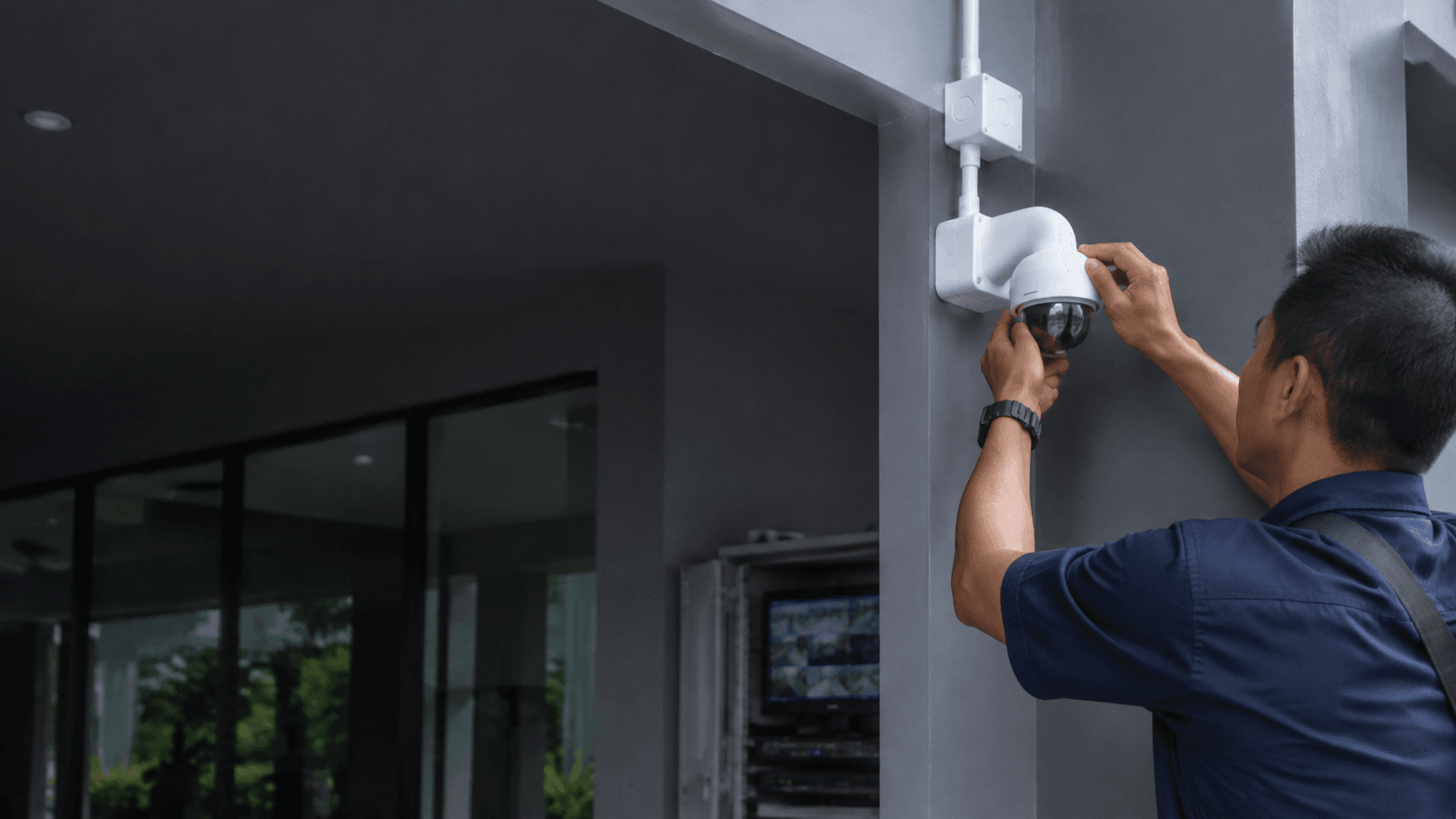
The exact-match query synology cctv describes a specific way of building a camera system: instead of a dedicated recorder box, the recording, storage and playback all live on a Synology network-attached storage device. That single design decision shapes everything else, from which cameras can be added to how footage is reviewed and how much storage the system needs.
Synology Cctv. What Matters Before Choosing
Synology Cctv is not a camera brand. Synology makes the NAS hardware and the Surveillance Station software; the cameras themselves come from other manufacturers. The practical consequence is that camera choice is open, but it is also constrained by a compatibility list that must be checked before purchase.
Three things determine whether a Synology-based system suits a site:
- Confirm the NAS model supports the required number of camera licences and recording streams.
- Check each candidate camera against the Surveillance Station IP camera support list before ordering.
- Size storage for the retention period, resolution and frame rate the site actually needs.
- Plan the network so cameras and NAS sit on the same reliable local infrastructure.
- Decide who reviews footage, on which device, and how alerts reach them.
Synology's own support list states that Surveillance Station supports over 4000 IP cameras from 90 renowned brands, and that unsupported models can be integrated through a Camera Integration Tool. That breadth is the main argument for the platform, and the main reason a compatibility check is a starting task rather than an afterthought.
What Is Synology Cctv?
Synology Cctv is a surveillance setup in which a Synology NAS runs Surveillance Station to record, store and manage footage from networked IP cameras. The NAS replaces the standalone NVR or DVR that a conventional CCTV package would use.
Surveillance Station is the software layer. It handles live viewing, recording schedules, playback, event detection and camera management. Synology also publishes DS cam, a mobile app that lets users view live streams and recordings from IP cameras set up on a Synology DiskStation.
Because the recorder is a general-purpose storage device, the same box can serve other roles on a network. That flexibility is the platform's defining trait, and it is also the source of most of its practical limits.
Surveillance Station and Camera Compatibility
Compatibility is the first filter on any Synology Cctv project. Synology maintains a published support list covering thousands of camera models, and the list is the authoritative reference rather than a retailer's claim.
Cameras that appear on the list are added through a guided process in Surveillance Station. Models that do not appear may still work through the Camera Integration Tool, which Synology provides for integrating unsupported devices. That route exists, but it is a fallback rather than a guarantee of full feature parity.
Feature depth varies by camera. Motion detection, pan-tilt-zoom control, patrols, lens control, event filtering and snapshot management are all handled inside Surveillance Station, but the extent to which each works depends on how completely a given camera model is supported. A camera that records reliably may still expose fewer controls than a fully supported model.
Licences and Camera Counts
Synology NAS devices ship with a small number of camera licences, and additional licences are purchased separately. This is a cost that does not appear in a conventional NVR package, where the recorder typically supports a fixed channel count out of the box. A site planning eight cameras should confirm the licence position before committing to the hardware.
Storage and Retention
Retention is a storage calculation, not a software setting. Resolution, frame rate, the number of recording hours per day and the number of cameras all feed into how quickly the drives fill. Continuous recording at high resolution across several cameras consumes capacity far faster than motion-triggered recording at moderate resolution. The NAS drive bays and the drives installed in them set the ceiling.
Practical Considerations for Synology Cctv
The platform rewards sites that already run networked infrastructure and penalises sites that expect a plug-in-and-forget appliance.
Setup effort is real. A Synology Cctv deployment involves configuring the NAS, installing and licensing Surveillance Station, adding each camera, tuning recording rules and testing remote access. That is a different workload from mounting cameras to a dedicated recorder.
Lighting conditions still govern image quality regardless of the recorder. Eyonic, a security system supplier in Sarawak, recommends checking actual lighting conditions before confirming placement for ColorVu-style cameras, and the same discipline applies to any camera added to a Synology system. The recorder does not compensate for a camera pointed at a scene it cannot handle.
Network reliability matters more than it does with a self-contained recorder. If the NAS is unreachable, recording stops. Wired camera connections and a stable local network reduce that exposure.
Remote access depends on the NAS being reachable from outside the local network, which introduces configuration and security considerations that a cloud-tethered consumer camera avoids.
Where the Approach Fits
Sites that already own a Synology NAS, or that want one device handling storage and surveillance together, get the most from this route. Mixed environments with cameras from several manufacturers also benefit, because Surveillance Station is built to manage heterogeneous camera fleets rather than a single brand.
Small sites that want the simplest possible path to a working camera system may find a conventional package faster to deploy. Eyonic's Hikvision CCTV package, listed at RM 1,599, covers camera supply and setup, basic recording configuration and mobile viewing handover — a scope that maps to a conventional recorder rather than a NAS-based build.
Where It Fits Less Well
Very large camera counts push against licence costs and NAS processing limits. Sites needing hundreds of cameras typically move to dedicated video management systems. Synology's own published case material describes WSDOT centrally managing hundreds of cameras with Synology Surveillance Station, which shows the platform operating at scale, but that scale also implies infrastructure planning well beyond a single small NAS.
Environments with strict appliance-style expectations, where nobody wants to administer a storage device, are a poor match. The NAS is a server, and it behaves like one.
Making an Informed Choice About
The decision turns on three questions: how many cameras, how long footage must be retained, and who will administer the system.
If the answers point to a manageable camera count, a defined retention window and someone comfortable with a NAS interface, the platform offers unusual flexibility and a wide camera choice. If the answers point to a simple, fixed installation with minimal administration, a conventional recorder package is the shorter path.
For sites in Sarawak, installation support matters as much as the platform decision. Eyonic's CCTV installation process runs through site survey, system proposal, installation and handover, and the same sequence applies whether the recorder is a dedicated NVR or a Synology NAS. A survey establishes camera positions and lighting before any hardware is specified.
Eyonic's completed work includes the Kuching Immigration Office, focused on arrival flow, staff areas, visitor movement and dependable daily operation, and KTA Sarawak Sdn Bhd, an office setup in Kuching supporting staff movement, visitor handling, tidy cabling and clearer daily site control. Both projects illustrate that camera placement and cabling discipline decide outcomes more than the recorder brand does.
Share your location, property type and required system with Eyonic on WhatsApp at +60 11-5111 7959 for the next practical step.