
The name covers a wide range of hardware rather than one fixed model. Listings under the V380 label include indoor mini cameras, dome and PTZ units, outdoor models, 4G SIM versions and even bulb or wall-lamp housings. What they share is the app. setup, live viewing, playback and alerts run through V380 or V380 Pro software rather than a dedicated recorder interface.
That breadth is the main reason a buyer needs to slow down. Two cameras sold under the same name can differ in lens count, housing, power source and network method, and the seller listing often describes only the variant in stock. The checks below are the ones that decide whether a unit works at a specific site.
What a V380 Cctv Camera Is Used For
These cameras are used for watching a space remotely and reviewing what happened later. The common uses reported across app listings and product pages are live stream viewing, video replay, motion detection alarms, voice talkback and device sharing with other household or staff accounts.
In practice that maps onto a few everyday jobs:
- Keeping an eye on a shop counter, doorway or back entrance during trading hours.
- Checking a home while the owner is away, using a phone rather than a monitor.
- Recording short clips when movement is detected in a specific zone.
- Watching a small office, storeroom or workshop where a full recorder cabinet is not practical.
The appeal is low setup friction. A WiFi camera plus the app can be running in minutes, which suits renters, small premises and anyone adding one extra viewpoint to an existing arrangement. The trade-off is that app-based cameras depend on the home or business network, the internet connection and the vendor's cloud service staying available.
V380 Cctv Camera Setup and App Considerations
Setup runs through the app, and the app is where most of the practical limits sit. Google Play and App Store listings for V380 and V380 Pro describe remote video monitoring, live stream viewing, video replay, motion detection alarms, voice talkback, device sharing and a cloud recording service. Both store pages also carry a warning about unofficial clone apps, so the download source matters before any camera is paired.
Storage is the decision most buyers underestimate. App listings reference cloud recording alongside in-app purchases, which means recorded footage may depend on a paid plan rather than sitting on a local card. Anyone who needs footage retained for a set period, or who cannot rely on a subscription continuing, should confirm the storage path before purchase rather than after.
Privacy terms deserve the same attention. App store data safety sections list categories of data collected and shared, and those disclosures vary between the V380 and V380 Pro listings. Reading them is a reasonable step for a business that handles customer or staff footage.
Network and power realities
A WiFi camera needs usable signal where the camera hangs, not where the router sits. Thick walls, metal shutters, distant gate posts and crowded 2.4GHz bands all reduce throughput, and a camera that streams fine on a test bench can stutter at an actual mounting point. Cameras that run on battery or a 4G SIM remove the cabling problem but introduce charging cycles or a data plan instead.
Where a V380 Cctv Camera Fits in a Malaysian Property
Shoplots, small offices, rented units and single-entry homes are the natural fit. These are sites where one to four viewpoints cover the important movement, where running cable to a central recorder is awkward or expensive, and where the person checking footage is doing it from a phone.
Larger or more demanding sites change the calculation. A multi-storey building, a warehouse with long aisles, or premises that need continuous high-resolution recording across many cameras will usually be better served by a recorder-based system with planned camera placement and NVR setup. Eyonic's own installation work follows that pattern: a site survey, a system proposal, installation, then handover. The Kuching Immigration Office project is an example of that approach applied to a public building, covering arrival flow, staff areas, visitor movement and dependable daily operation.
Mixed setups are common and workable. An app-based camera can cover a small side entrance while a recorder-based system handles the main areas, provided someone accepts that the two are managed separately.
What to Verify Before Choosing a V380 Cctv Camera
Verification is mostly about matching the unit to the site and the site to the network. The list below covers the checks that change the outcome.
- Confirm the exact model and variant being sold, including lens count, housing type and whether it is mains, battery or 4G powered.
- Check the lighting at the intended mounting point at the hours that matter, including after dark, before confirming placement.
- Test WiFi signal strength at the mounting height and angle, not at floor level near the router.
- Confirm where recordings are stored, how long they are kept, and whether a paid plan is required.
- Read the app's data safety and privacy disclosures for the version being installed.
- Verify the app download source against the official store listing to avoid clone software.
- Confirm warranty terms and who handles support in Malaysia, in writing, before payment.
- Decide whether the site needs app-based cameras, a recorder-based system, or both.
Two of these deserve emphasis. Lighting is the one factor most often assumed rather than measured; Eyonic's guidance on ColorVu-style cameras is to check actual lighting conditions before confirming placement, and the same discipline applies to any camera chosen mainly for night performance. Warranty and support are the other gap: V380-branded hardware reaches Malaysia through many retail channels, and the party responsible for replacement or repair is not always clear from the listing.
What cannot be confirmed from a listing
Resolution, sensor type, night vision range and power requirements vary by model and are not consistent across the V380 name. Cloud storage terms, subscription pricing and data handling practices sit with the app publisher and change over time. Pricing in Malaysia varies by seller and variant. None of these should be assumed from the brand name alone; each needs checking against the specific unit and the current app documentation.
Installation and Support in Sarawak
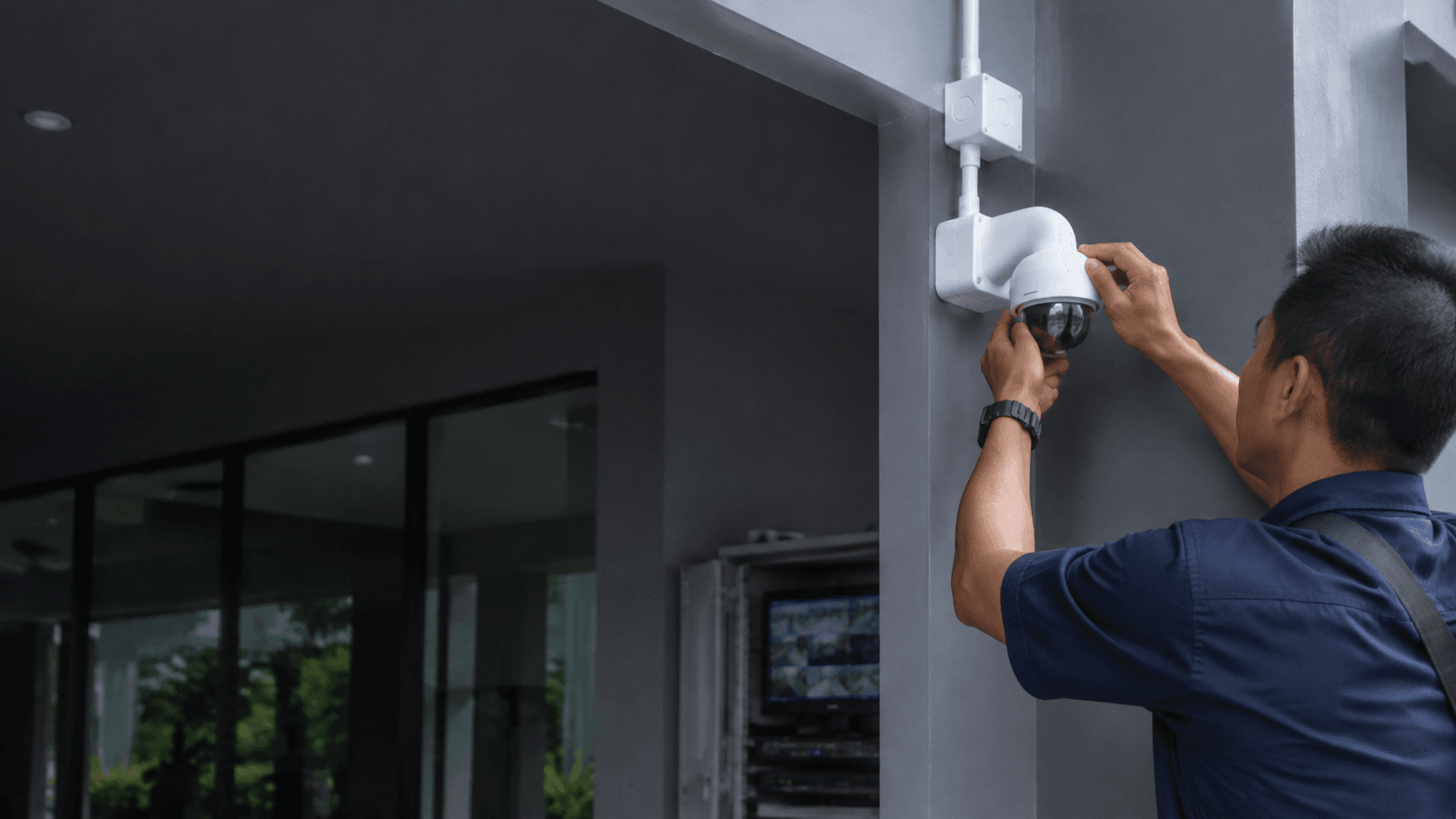
Installation quality decides whether a camera is useful six months later. Mounting height, angle, cable routing and weather exposure all affect what the camera actually captures, and a poorly aimed camera produces footage that answers nothing.
Eyonic Sdn Bhd plans, supplies and installs monitoring systems with camera placement, recording and remote viewing for homes, offices, shops and industrial sites across Sarawak. The process runs through site survey, system proposal, installation and handover, so placement is decided against the real building rather than a floor plan. Eric Yong, the founder, has worked in the industry for more than ten years, with experience in technical installation of digital security solutions for commercial businesses in Sarawak.
For buyers weighing options, Eyonic's published packages start at RM 1,599 for a Hikvision CCTV package covering camera supply and setup, basic recording configuration and mobile viewing handover. Comparable RM 1,599 packages exist for a Hikvision alarm system and for an autogate setup. These are recorder-based systems rather than app-only cameras, which makes them a useful reference point when comparing what each approach includes.
For a site in or around Kuching, the practical next step is to share the location, property type and required system with Eyonic on WhatsApp at +60 11-5111 7959. A site survey then settles the questions a listing cannot: where cameras can actually see, what the network supports, and whether an app-based camera or a recorder-based system fits the building.