
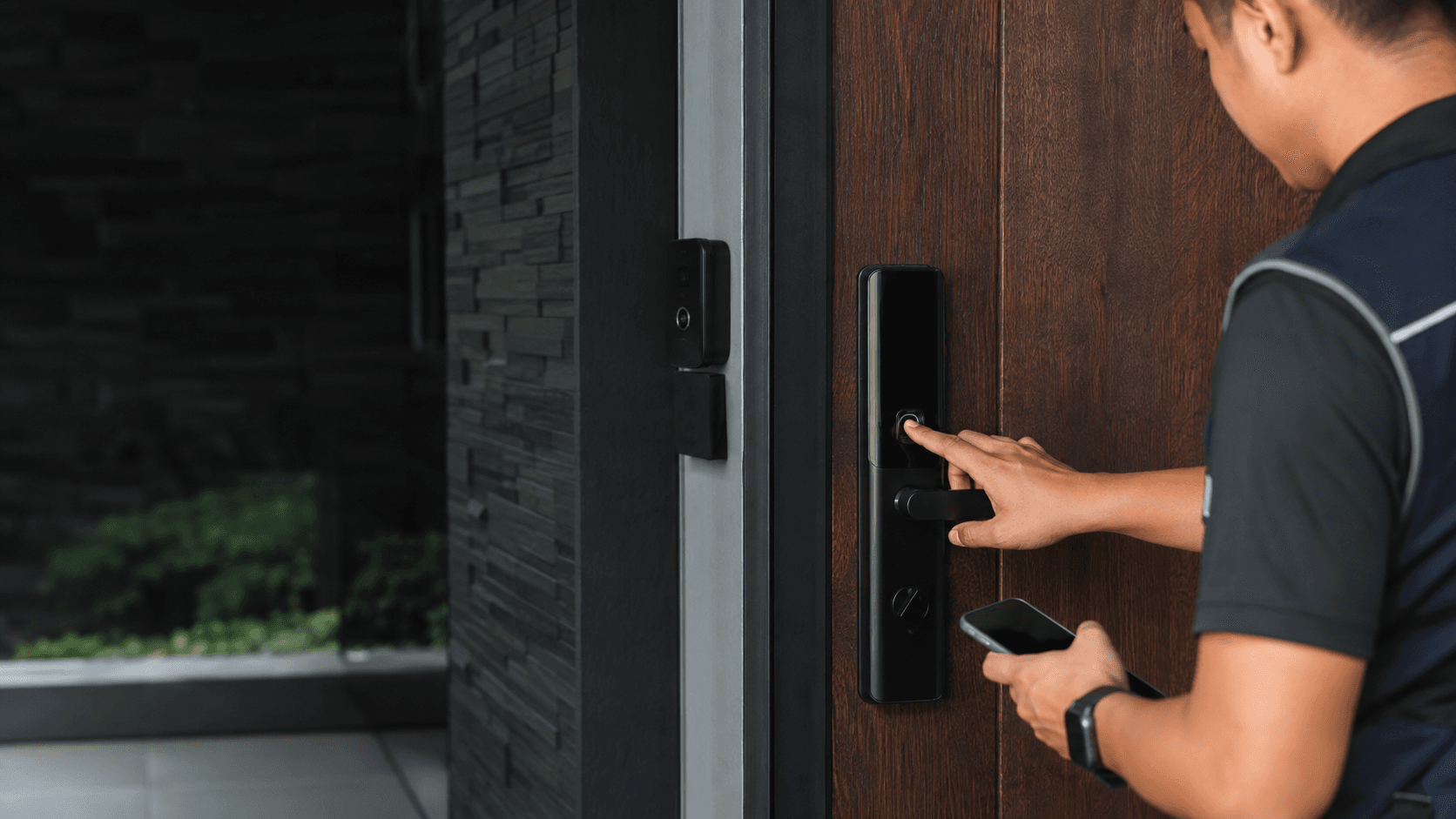
The Lockly sliding door lock question usually comes down to one thing: whether the door in front of the reader is a sliding glass door with the right hardware profile. Lockly's own smart lock collection covers deadbolts, video locks and intercom deadbolts, while the sliding-door product sits in the Guard family. Coverage from CES 2021 and later retail listings describe Guard as the model built for sliders rather than swing doors.
Lockly Sliding Door Lock. What Matters Before Choosing
Sliding doors are a different locking problem from hinged doors. A hinged door uses a deadbolt that throws into a frame. A sliding glass door typically uses a hook-bolt or mortise mechanism inside a narrow stile, and that mechanism is what a slide-edition smart lock replaces. That single difference explains why a standard smart deadbolt cannot simply be swapped onto a slider.
Lockly's sliding-door hardware appears in the Guard family. The Athena 228SL Slide Edition is described as a narrow stile double hook mortise lever set with a 1-1/8 inch backset, biometric fingerprint access, RFID, keypad entry, and Wi-Fi and Bluetooth app control. Those are the features that matter most for a slider, because the lock has to fit the existing mortise cutout before any smart feature becomes useful.
- Confirm the door is a sliding glass door with a hook-bolt or mortise mechanism, not a hinged door.
- Check the stile width and backset against the slide-edition specification before ordering.
- Decide which entry methods are needed: fingerprint, keypad PIN, RFID card, or app control.
- Plan a backup entry method, since battery-powered locks can run flat.
- Confirm whether a Wi-Fi hub is required for remote access and monitoring.
- Decide who holds credentials if the door serves staff, tenants, or visitors.
Choosing the Right Lockly Sliding Door Lock
The main choice inside the Lockly sliding door lock range is between the slide-edition hardware itself and the broader Guard ecosystem. The Athena 228SL Slide Edition is the sliding-specific product. Other Guard models, including deadbolt and interconnected versions, are built around different door types and are not direct substitutes for a slider.
Access method is the second decision. PIN Genie keypad entry, 3D biometric fingerprint access, RFID cards, and mobile app control all appear across Lockly Guard documentation. A household that wants fast daily entry may lean on fingerprint and PIN. A property with rotating users, such as a rental or a small office, may lean on app-issued codes and RFID so credentials can be added and removed without rekeying hardware.
Connectivity is the third decision. Bluetooth and app control work locally, while remote access and monitoring generally depend on a Wi-Fi hub such as the Secure Link Wi-Fi Hub. That distinction matters for anyone expecting to unlock a door from another city without additional hardware.
What is lockly sliding door lock?
It is Lockly's smart lock hardware made for sliding doors, most visibly the Guard Athena 228SL Slide Edition. The product replaces the existing hook-bolt mechanism on a sliding glass door with keyless access, so the door keeps its sliding function while gaining PIN, fingerprint, RFID, and app-based entry.
Lockly Shows Smart Locks For Sliding Doors And More At CES 2021
CES 2021 coverage is where the sliding-door product first reached a wide audience. CNET reported that Lockly showed smart locks for sliding doors and more at CES 2021, describing the Lockly Guard and Lockly Duo as the two products taking home security further. Reviewed covered the same announcement and framed Guard as a smart lock for sliding doors, noting that sliding-door smart lock options had been limited before it.
Those reports establish the product's origin and positioning. They do not establish Malaysian pricing, local stock, or installation conditions, so those details need to come from a supplier or installer rather than from launch coverage.
Practical Considerations for Lockly Sliding Door Lock
Fit is the constraint that decides most projects. Slide-edition hardware is built around a narrow stile and a specific backset, and the door must already use a compatible hook-bolt or mortise mechanism. A door with a different frame profile or a different locking mechanism may need a different approach entirely, which is why a physical check of the door before ordering avoids a costly return.
Power and weather are the next considerations. Battery-powered locks need a maintenance rhythm, and a sliding patio door that faces rain or direct sun puts more demand on the hardware than an interior door. Backup entry deserves a plan before installation, not after the first low-battery warning.
User roles change the recommendation. A home with a few residents can run comfortably on fingerprint and PIN. A business, rental, or multi-tenant property benefits from app-managed codes, RFID credentials, and a record of who entered and when. Eyonic's own product review guidance makes the same distinction: smart locks work best when door condition, user roles, and backup method are reviewed before installation, and for business use the choice between a standalone smart lock and an access-control panel should be checked first.
For readers in Sarawak, the practical path runs through a supplier who can inspect the door and confirm the mechanism. Eyonic Sdn Bhd plans, supplies, and installs security and ELV systems for homes, offices, shops, and industrial sites, and its project work has included the Kuching Immigration Office, where arrival flow, staff areas, visitor movement, and dependable daily operation shaped the design. That kind of site review is the same discipline a sliding-door lock needs: confirm the door, confirm the users, then confirm the hardware.
Making an Informed Choice About Lockly Sliding Door Lock
A Lockly sliding door lock makes sense when the door is a sliding glass door with compatible hook-bolt or mortise hardware and the household or business wants keyless entry without giving up the slider. It makes less sense when the door profile does not match, when no backup entry plan exists, or when the real requirement is a managed access-control system rather than a single smart lock.
The useful next step is a door check. Photographs of the stile, the existing mechanism, and the frame profile let a supplier confirm whether slide-edition hardware fits before anything is ordered. From there, the decision narrows to access methods, connectivity, and who manages credentials.
Share your location, property type and required system with Eyonic on WhatsApp at +60 11-5111 7959 for the next practical step.