
What Driveway Gate Repair Covers
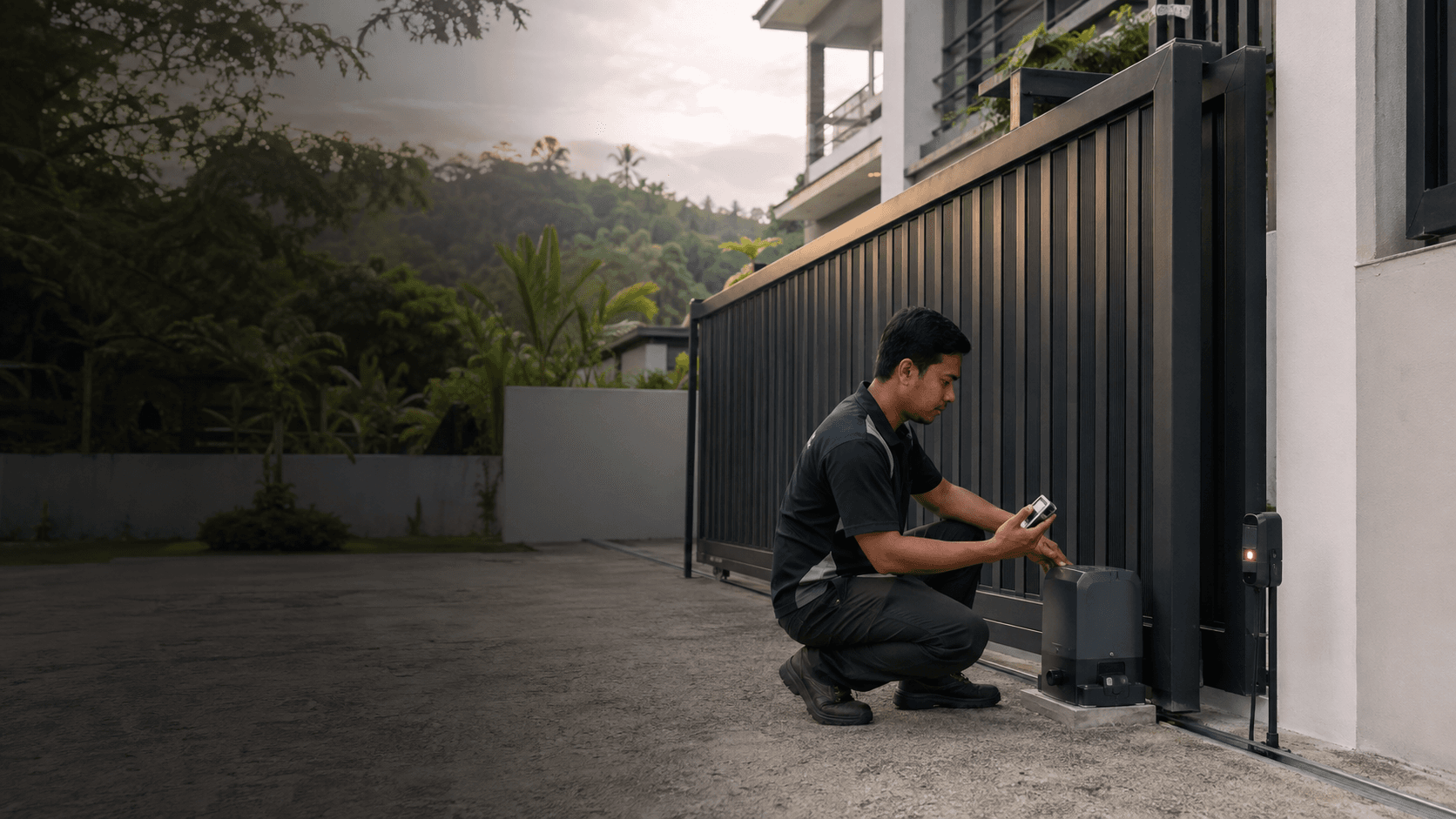
Driveway gate repair addresses the mechanical and electrical systems that let a gate open, close, and stay secure. The work typically splits into two areas: the gate structure itself and the automation that powers it. Structural repairs involve bent panels, sagging hinges, broken rollers, or tracks that have shifted out of alignment. Automation work focuses on the opener motor, control board, safety sensors, and remote or keypad access.
Most driveway gate repair jobs start with a diagnosis rather than a parts replacement. A gate that stops mid-cycle may have a failing motor capacitor, an obstructed safety beam, or simply a limit switch that needs adjustment. Identifying the actual fault before ordering parts prevents unnecessary expense and repeated callouts.
Choosing the Right Driveway Gate Repair Approach
Selecting between repair and replacement depends on the gate's age, the extent of damage, and the cost of parts relative to a new installation. A practical decision sequence helps property owners compare options without guesswork.
- Document the symptoms, including when the fault occurs and whether the gate responds to any controls.
- Inspect visible components for obvious damage such as bent tracks, broken springs, or corroded wiring.
- Check the opener's error codes or diagnostic lights against the manufacturer's manual.
- Request a site assessment that includes a written diagnosis and cost breakdown for repair versus replacement.
- Compare the repair quote against the age of the system and the availability of replacement parts.
A gate under ten years old with a single faulty component usually justifies repair. An older gate with structural rust, repeated motor failures, or discontinued parts may cost more to maintain than to replace. Property owners should also consider whether the gate serves a home or a commercial site, as usage frequency affects wear rates.
Common Driveway Gate Repair Scenarios
Swing gates and sliding gates fail in different ways, and each requires a distinct repair approach. Swing gates pivot on hinges and often develop problems with sagging, misaligned latches, or openers that lack sufficient power for the gate's weight. Sliding gates roll along a track and commonly suffer from debris buildup, worn rollers, or tracks that have shifted out of level.
Electric gate repair frequently involves the opener unit. Symptoms such as a gate that moves slowly, reverses unexpectedly, or fails to respond to remotes point to motor, board, or sensor issues. A gate that operates manually but not automatically may have a faulty receiver, dead battery in the remote, or a safety sensor that is dirty or misaligned.
Practical Considerations for Driveway Gate Repair
Safety should guide every driveway gate repair decision. Automatic gates move with significant force and can cause injury if safety features fail. Photo-eye sensors, edge sensors, and auto-reverse mechanisms must function correctly before the gate returns to automatic operation. A professional assessment should verify these safety systems as part of any repair.
Weather exposure affects repair frequency. Coastal properties face corrosion from salt air, while inland locations contend with dust and heat. Gates in Malaysia, for example, experience high humidity and frequent rain, which accelerates rust on metal components and can damage electrical connections. Regular maintenance reduces the likelihood of sudden failures.
The cost of driveway gate repair varies with the fault and the gate type. A simple sensor realignment or limit switch adjustment costs far less than replacing a motor or rebuilding a damaged track. Property owners should obtain a clear breakdown of labor and parts before authorizing work, and they should confirm whether the repair carries any warranty on the replaced components.
Making an Informed Choice About Driveway Gate Repair
A reliable driveway gate repair provider should offer a structured process that begins with understanding the property and ends with a tested, working gate. Eyonic Sdn Bhd, a security system supplier in Sarawak, Malaysia, follows this pattern for related security installations. Their CCTV installation process includes a site survey, system proposal, installation, and handover, an approach that translates well to gate automation projects where site conditions determine the right solution.
For properties considering driveway gate repair alongside broader security upgrades, the same provider can assess access control needs. Eyonic's completed project for the Kuching Immigration Office focused on arrival flow, staff areas, visitor movement, and dependable daily operation, demonstrating experience with sites where controlled access matters. Their work for KTA Sarawak Sdn Bhd addressed staff movement, visitor handling, tidy cabling, and clearer daily site control in an office environment.
A driveway gate repair decision should account for the gate's role in the overall property security plan. A gate that integrates with intercom systems, CCTV, or access control panels requires a provider who understands how these systems interact. Eyonic supplies and installs CCTV, alarm systems, autogates, keyphone intercoms, and Starlink internet connections, allowing property owners to coordinate gate repair with related security infrastructure.
Before committing to driveway gate repair, property owners should verify that the provider conducts a proper site survey rather than quoting from a phone description. Actual conditions such as gate weight, power supply location, and ground stability determine whether a standard repair suffices or whether additional work is needed. Eyonic's approach of checking actual conditions before confirming equipment placement reflects this principle, as their guidance on ColorVu camera placement demonstrates.
Share your location, property type and required system with Eyonic on WhatsApp at +60 11-5111 7959 for the next practical step.