
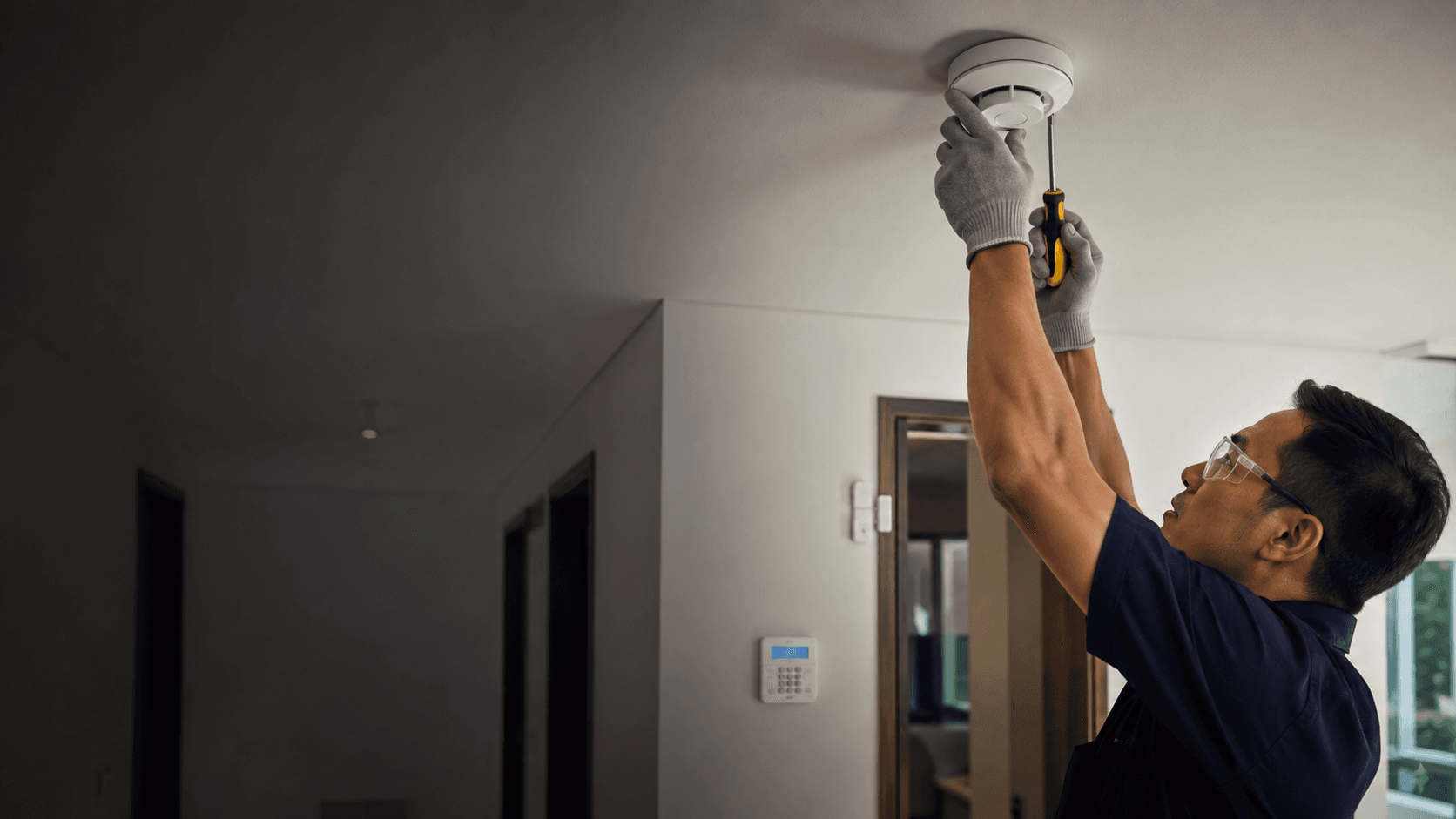
The exact-match query indoor alarm system describes equipment that watches the inside of a building rather than the perimeter alone. Most systems combine a control panel, entry sensors on doors and windows, motion detectors, and a siren. Some kits add glass-break sensors, panic buttons, and environmental sensors for smoke, flood, or temperature.
Buyers in Malaysia usually weigh four things: what the system detects, how it reports an event, who responds, and what happens when power or internet fails. The sections below work through those points in order, using evidence from published product catalogues and from Eyonic's own installation work in Sarawak.
Indoor Alarm System. What Matters Before Choosing
The most useful first step is to separate detection from response. A sensor that detects an open door does nothing on its own. The value comes from what the panel does next: sound a siren, send an app alert, call a monitoring centre, or trigger a camera recording.
Published competitor catalogues show how wide the category is. Ring sells individual sensors such as window and door contact sensors, motion detectors, glass break sensors, and panic buttons, and also sells pre-configured alarm kits with a base station. Amazon's home security listings include wireless kits with door and window sensors, PIR motion sensors, remote controls, and sirens, alongside 4G and GSM variants. That range matters because a single-room indoor alarm system and a whole-building system are different purchases.
Three practical questions shape the choice:
- Which interior zones need coverage, such as entry doors, ground-floor windows, corridors, or a stockroom?
- How should an alert travel, whether by local siren, mobile app, SMS or call, or a monitoring service?
- What backup exists if mains power or broadband drops, since cellular and battery backup change the design?
Eyonic's own installation process follows a similar sequence: site survey, system proposal, installation, and handover. That order exists because sensor placement depends on the building, not on the box contents.
Choosing the Right Indoor Alarm System
Wired and wireless systems solve different problems. Wired systems suit buildings where cabling can be run during construction or renovation, and they avoid battery replacement across many devices. Wireless systems suit finished interiors, rented premises, and buildings where chasing walls is impractical.
Detection type matters as much as wiring. Door and window contacts register opening events. Passive infrared motion detectors register movement in a field of view. Glass-break sensors register the sound pattern of breaking glass. Each covers a different failure mode, and a system with only contacts will miss an intruder who enters through an unlocked door.
Reporting method is the next decision. A local siren alerts anyone nearby. App alerts reach a phone wherever the owner is. Monitoring services route events to a response centre. Ring's published FAQ material addresses professional monitoring and what happens when power or Wi-Fi fails, which shows that continuity is a standard buyer concern rather than an edge case.
What is indoor alarm system coverage in practice?
Coverage means the set of interior points the system can detect and report. A typical small installation covers a main entry, a back door, and one or two motion zones. A larger installation adds interior doors, a stockroom, and separate zones so that one triggered sensor does not mask the rest.
Zone planning is where most installations succeed or fail. If every sensor sits on one zone, an alert gives no location. Separate zones let the panel report which area triggered, which shortens the check when an alert arrives at night.
Alarm Systems - Ring Sensors & Alarms | Ring and Comparable Options
Ring's published catalogue is a useful reference for how components are sold separately. Its listings include window and door contact sensors, motion detectors, glass break sensors, panic buttons, temperature and humidity sensors, smoke and CO listeners, and flood and freeze sensors, with individual prices shown in US dollars. Ring also sells pre-configured alarm kits with a base station, and states that its sensors can work without a base station in some configurations.
Other published sources cover different ground. CNET's tested comparison names SimpliSafe, Arlo, Ring, Abode, Vivint, and ADT across categories such as best overall, best affordable, best DIY, and best professionally installed. SafeHome.org publishes rankings with sections on equipment, pricing, contracts, and customer service. Amazon's category pages show budget wireless kits with 4G or GSM reporting and no monthly fee.
These sources describe the market, not any single recommendation. The relevant question for a Malaysian buyer is which of those models can be supplied, installed, and supported locally, and whether the reporting method works with local mobile networks.
How do indoor alarm systems handle power and connectivity loss?
Backup design determines whether an alarm still reports during an outage. Ring's published FAQ material addresses power and Wi-Fi failure directly. Systems with battery backup in the panel and cellular reporting can continue to send alerts when broadband is down; systems that rely only on mains power and Wi-Fi cannot.
This is a design decision made before installation, not after. It affects panel choice, SIM or cellular module requirements, and battery sizing.
Practical Considerations for Indoor Alarm System Installation
Placement decisions follow the same logic as camera placement. Eyonic advises checking actual lighting conditions before confirming placement for ColorVu-style cameras, and the same principle applies to motion detection: a sensor aimed at a window with passing traffic or direct sunlight will trigger more often than one aimed at an interior corridor.
Pets, ceiling fans, and air-conditioning vents are common causes of false triggers on motion detectors. Pet-immune sensors and adjusted mounting heights reduce this, but the building layout decides what is possible.
Handover matters too. Eyonic's alarm package includes control panel and sensors, siren and zone setup, and user testing and handover. Testing before handover confirms that each zone reports correctly and that users know how to arm, disarm, and check status.
What does an cost in Malaysia
Eyonic lists a Hikvision Alarm System package at RM 1,599, covering control panel and sensors, siren and zone setup, and user testing and handover. The same price applies to the Hikvision CCTV Package and the Autogate Package.
Larger projects sit in a different range. Eyonic's published project budgets include RM 12,000 to RM 28,000 for the Kuching Immigration Office work and RM 8,000 to RM 18,000 for the KTA Sarawak Sdn Bhd office project. Those figures cover broader security and ELV scope, not an alarm panel alone, and they show how much the total depends on building size and system count.
Making an Informed Choice About Setup
Eyonic's completed work gives a sense of how interior coverage is planned in practice. The Kuching Immigration Office project focused on arrival flow, staff areas, visitor movement, and dependable daily operation. The KTA Sarawak Sdn Bhd project supported staff movement, visitor handling, tidy cabling, and clearer daily site control. Both are public and commercial settings where interior zones and reliable daily operation mattered more than consumer convenience features.
For a home, the priorities are usually simpler: entry doors, ground-floor windows, and one or two motion zones, with app alerts and a local siren. For a shop or office, the priorities shift toward separate zones for stockrooms and counters, staff access control, and a reporting method that works when the premises are empty.
Eric Yong, founder of Eyonic Security Systems, has worked in the industry for more than 10 years and specialises in technical installation of digital security solutions for commercial businesses in Sarawak. That background is relevant to commercial interior coverage, where zone planning and cabling quality affect long-term reliability.
One constraint applies across all options: an indoor alarm system detects and reports, but it does not physically stop entry. Its value depends on how quickly someone responds to the alert, whether that is a neighbour, a staff member, or a monitoring service.
Share your location, property type and required system with Eyonic on WhatsApp at +60 11-5111 7959 for the next practical step.