
The eufycam3 name appears in search results alongside the eufyCam S330 label, and both point to the same hardware. Reviewers describe a system built around three ideas: high-resolution video, a local hub that stores footage, and solar panels that reduce how often a battery needs charging. The sections below set out what the product does, where it fits, and where it does not.
Eufycam3: What Matters Before Choosing
Most buying decisions come down to four questions. Does the property have enough daylight for the solar panel to keep the battery topped up? Is the Wi-Fi signal strong where the camera will hang? Is local storage on the HomeBase 3 enough, or is cloud storage needed? And does the household want face recognition processed on the device rather than in the cloud?
Answer those four first. They decide whether the system suits the site far more than any single specification does.
A short decision sequence
- Confirm the camera position gets direct daylight for most of the day, because the solar panel is the primary charging source.
- Check Wi-Fi coverage at that position, since the camera connects wirelessly to the HomeBase 3 hub.
- Decide how many cameras the property needs, because kits ship in two-camera and four-camera configurations and add-on cameras can extend the count later.
- Choose the storage approach, using the hub's local storage or adding a drive for longer retention.
- Plan the mounting height and angle so the field of view covers the entry, driveway, or yard rather than a wall.
- Test the live view and recording playback before finalising placement.
What is eufycam3?
Eufycam3 is the shorthand search term for the eufyCam S330, a battery-powered outdoor security camera that records in 4K resolution. It pairs with the HomeBase 3, a hub that stores footage locally and handles the AI processing for features such as face recognition. Each camera carries a solar panel that trickles charge into the battery during daylight.
The system is wireless in the sense that no video cable runs from the camera to a recorder. Power comes from the internal battery, topped up by the panel. Video travels over Wi-Fi to the hub. That design removes the need to run cable through walls, which is often the deciding factor on finished properties where chasing cable is disruptive or impractical.
Local storage is the other defining trait. Footage sits on the hub rather than in a subscription cloud, and reviewers consistently note the absence of a monthly fee as a reason buyers choose the system. The trade-off is that storage capacity is bounded by the drive inside the hub, so retention depends on how many cameras run and how often they trigger.
EufyCam 3 - Advanced 4K Security Camera With Solar Power - Eufy US
The manufacturer's own product line describes the eufyCam 3 as a 4K security camera with solar power, sold as a kit with the HomeBase 3. Independent reviews from outlets including Consumer Reports, SafeWise, ZDNET, and WIRED cover the same product under the S330 name, and their coverage centres on video quality, the local-storage model, and how well the solar panel sustains the battery.
Several reviews raise the same practical points. Night vision is usable but not the strongest part of the package. Continuous 24/7 recording is not the default mode, so the system records events rather than everything. And the hub's compatibility with older eufy cameras varies by model, which matters for anyone extending an existing setup rather than starting fresh.
Where the system fits well
Detached houses, shops with a lit frontage, and sites where running cable is difficult all suit this design. A property that already has strong Wi-Fi coverage and reasonable daylight exposure gets the most from it. Households that want footage stored on their own hardware rather than in a vendor cloud also fit the model well.
Where it fits less well
Positions in permanent deep shade will drain the battery faster than the panel can refill it, so those spots need either a different power approach or acceptance of periodic manual charging. Sites with weak Wi-Fi at the camera position will see dropped connections regardless of video quality. And anyone who needs continuous recording rather than event clips should confirm that requirement before committing.
Practical Considerations for
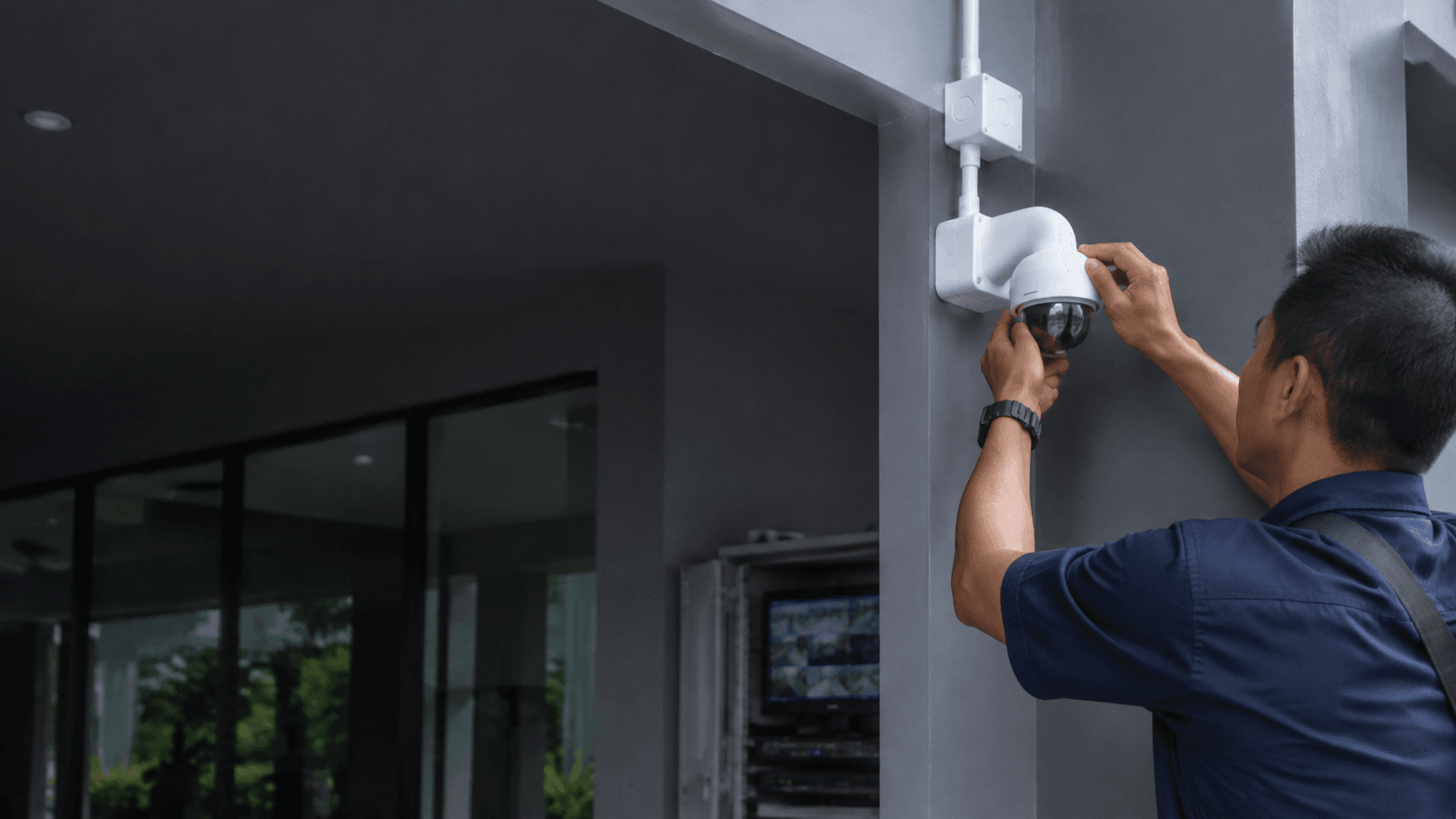
Installation is a do-it-yourself task for most buyers. Mount the camera, pair it with the hub through the app, and set the detection zones. The work that decides whether the result is good happens before mounting: choosing positions with daylight, clear sightlines, and reliable Wi-Fi.
Detection settings deserve attention. Sensitivity set too high produces constant alerts and fills local storage quickly. Sensitivity set too low misses events. Zones that exclude public footpaths and passing traffic reduce noise without reducing coverage of the areas that matter.
Storage planning is the other practical constraint. More cameras and more events mean faster use of the hub's capacity. Buyers who want weeks of retention rather than days should plan for additional storage from the start rather than after the drive fills.
For properties in Sarawak and similar markets, the same principles apply as with any camera placement decision: check the actual lighting conditions at the position before confirming it, rather than assuming from a plan. Eyonic, a security system supplier in Sarawak, applies that check as part of its site survey and camera placement work, and its installation process runs from site survey through system proposal, installation, and handover.
How this compares with wired systems
Wired CCTV systems draw power continuously and record to a dedicated recorder, which suits sites that need constant recording and have the cabling routes available. The eufycam3 approach trades continuous recording for cable-free installation and local storage without a subscription. Neither is universally better; the choice depends on whether the site can take cable and whether event-based recording covers the risk.
Eyonic's own project work illustrates the wired side of that trade-off. A completed project for the Kuching Immigration Office focused on arrival flow, staff areas, visitor movement, and dependable daily operation, and a separate project for KTA Sarawak Sdn Bhd covered staff movement, visitor handling, and tidy cabling in an office setting. Those are examples of sites where continuous, cabled coverage matched the requirement.
Making an Informed Choice About
The system rewards buyers who plan placement and storage before purchase. It suits properties where cable routes are difficult, daylight is available, and local storage is preferred over a subscription. It suits less well where positions sit in permanent shade, Wi-Fi is weak at the camera point, or continuous recording is a hard requirement.
Checking those three conditions against the actual property answers most of the decision. Where the site needs cabled coverage instead, a wired system with a dedicated recorder remains the more direct fit.
Share the location, property type, and required system with Eyonic on WhatsApp at +60 11-5111 7959 for the next practical step.