
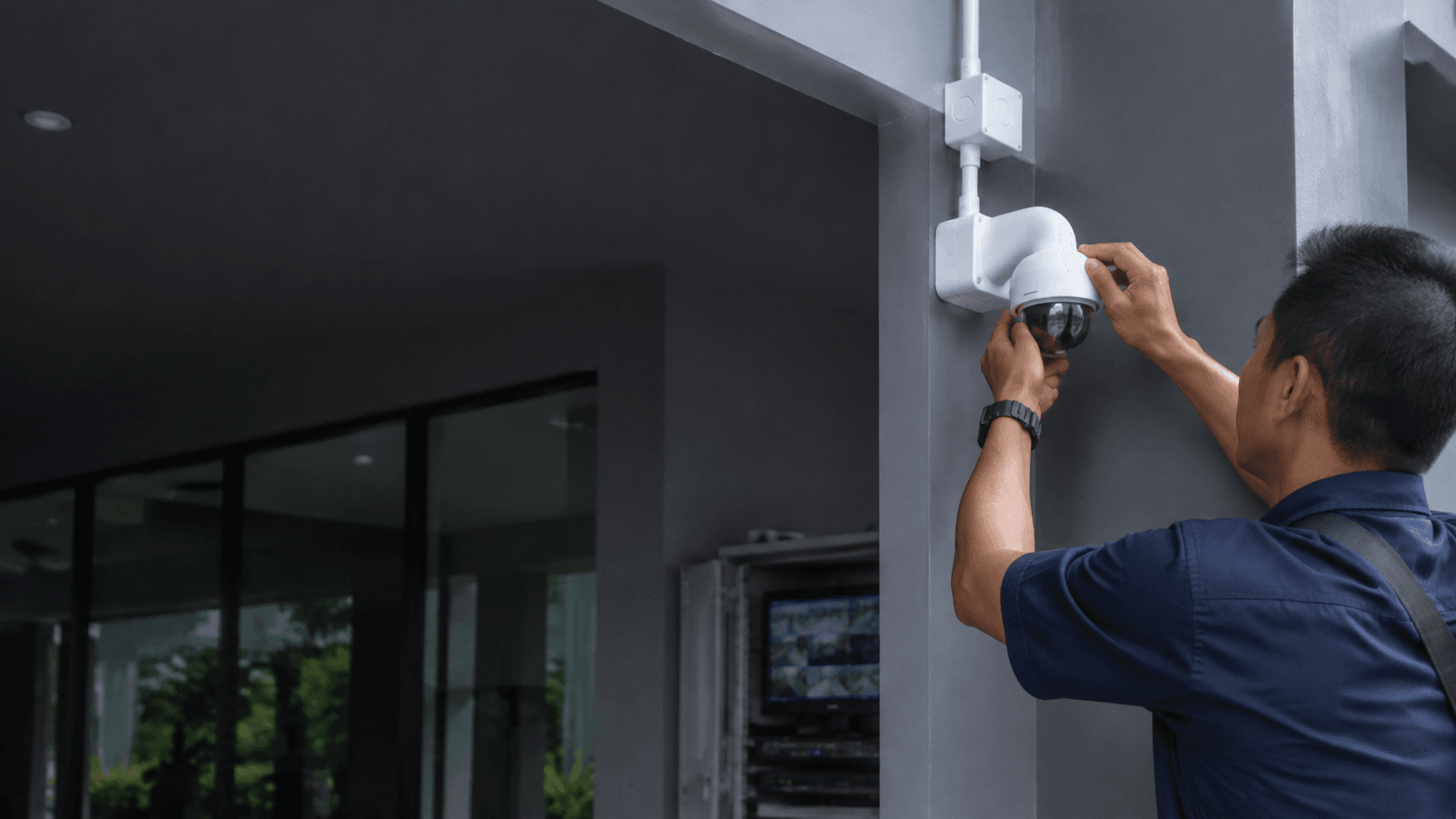
The exact-match query outdoor cctv systems describes a category of work rather than a single product. A workable setup starts with the property, not the camera box. Eyonic Sdn Bhd plans, supplies and installs monitoring systems with camera placement, recording and remote viewing for homes, offices, shops and industrial sites.
Most buyers arrive with a rough idea of how many cameras they want. The more useful starting point is what the site actually needs covered, and how the recording will be watched day to day.
What Outdoor CCTV Systems Cover in a Malaysian Property
An outdoor system is the part of a monitoring setup that faces weather, street lighting and public view. It usually includes cameras mounted on exterior walls or poles, cabling or wireless links back to a recorder, an NVR or DVR for storage, and a way to view footage remotely.
Eyonic's CCTV service covers four connected pieces of work: camera placement, recording, remote viewing and the NVR setup that ties them together. Those four items are what turn a set of cameras into a system someone can actually operate.
Coverage decisions differ by property type. A terrace house typically needs the front gate, car porch and back door covered. A shop needs the entrance, counter and stock area. An office or industrial site usually needs arrival flow, staff areas and visitor movement covered, which is the pattern Eyonic applied at the Kuching Immigration Office.
Two constraints shape almost every Malaysian outdoor installation. The first is rain and direct sun exposure on exterior mounting points. The second is night performance, because many residential streets and back lanes are dim for long stretches of the evening.
Lighting, Placement and Coverage Before Camera Choice
Eyonic recommends checking actual lighting conditions before confirming placement for ColorVu-style cameras. That guidance matters because a camera chosen for a bright porch may behave differently on a dim back lane, and the reverse is also true.
Placement is a coverage question first and a hardware question second. The practical checks are where a person would approach from, which direction the light falls at night, and whether a mounting point has a clear line to the area being watched.
Coverage gaps are usually caused by three things: a camera aimed too wide to identify anyone, a mounting height that puts faces out of frame, or an obstruction such as a tree, awning or parked vehicle that only appears at certain times of day.
Recording and viewing belong in the same conversation as placement. A camera that covers the right area but records to a device nobody can reach remotely solves only half the problem.
How Eyonic Approaches an Outdoor CCTV Systems Installation
Eyonic's CCTV installation process runs through four stages, and the sequence matters because each stage depends on the one before it.
- Site survey — the property is reviewed before any recommendation is made.
- System proposal — the recommended setup is put together based on what the survey found.
- Installation — cameras, cabling and recording equipment are installed on site.
- Handover — the system is passed over with the recording and viewing setup explained.
The survey stage is where most of the value sits. A fixed package sold before anyone has seen the property cannot account for where the light falls, where the entry points are, or how the building is wired.
Eyonic is based in Sarawak, and its published project work is concentrated in Kuching. The Kuching Immigration Office project focused on arrival flow, staff areas, visitor movement and dependable daily operation. A separate project for KTA Sarawak Sdn Bhd covered staff movement, visitor handling, tidy cabling and clearer daily site control.
Those two projects show the difference between a residential and a commercial brief. A home usually prioritises perimeter coverage and remote viewing. An office or public building usually prioritises movement through the space and cabling that stays tidy over years of daily use.
Eric Yong founded Eyonic Security Systems and has worked in the industry for more than 10 years, with experience in technical installation of digital security solutions for commercial businesses in Sarawak.
Comparing Outdoor CCTV Systems Options and Budgets
Buyers comparing outdoor cctv systems in Malaysia generally weigh three things: what the package includes, who installs it, and what happens after handover.
Eyonic's Hikvision CCTV Package is priced at RM 1,599 and covers camera supply and setup, basic recording configuration, and mobile viewing handover. That package is a starting point rather than a ceiling, because a larger site with more entry points will need more than a basic configuration.
For larger commercial work, published project budgets give a more realistic range. The Kuching Immigration Office project carried an approximate budget of RM 12,000 to RM 28,000. The KTA Sarawak Sdn Bhd project carried an approximate budget of RM 8,000 to RM 18,000. Both figures describe the scope of that type of work, not a fixed price for any other site.
The trade-off between a package and a surveyed system is straightforward. A package is faster to quote and easier to compare. A surveyed system costs more time upfront but is built around the property, which reduces the chance of a camera pointing at the wrong area after installation.
There is also a scope question worth settling early. Eyonic's wider service range includes alarm systems, autogate, keyphone intercom and Starlink internet installation, so a property that needs more than cameras can have those handled alongside the CCTV work rather than as separate projects.
Outdoor CCTV Systems Questions Buyers Ask Before Installing
Does the property need a survey before a price is given? For anything beyond a basic package, yes. The survey is what determines camera count, placement and cabling route, and those three items drive the cost more than the camera model does.
How is remote viewing handled? Remote viewing is part of Eyonic's CCTV scope, and mobile viewing handover is included in the Hikvision CCTV Package. The handover stage is where the viewing setup is explained so the system can be checked from a phone.
What happens if lighting is poor at night? Lighting conditions are checked before placement is confirmed. Where a location is dim, that finding shapes both the camera choice and where it is aimed.
Can cameras be added later? Adding cameras later depends on whether the recorder and cabling route were planned with spare capacity. Raising this during the survey stage is cheaper than raising it after installation.
What does handover actually involve? Handover closes the installation sequence. It covers the recording configuration and the viewing setup, so the person responsible for the property knows how the system behaves day to day.
For a site in Sarawak, the practical next step is to share the location, property type and required system with Eyonic on WhatsApp at +60 11-5111 7959.