
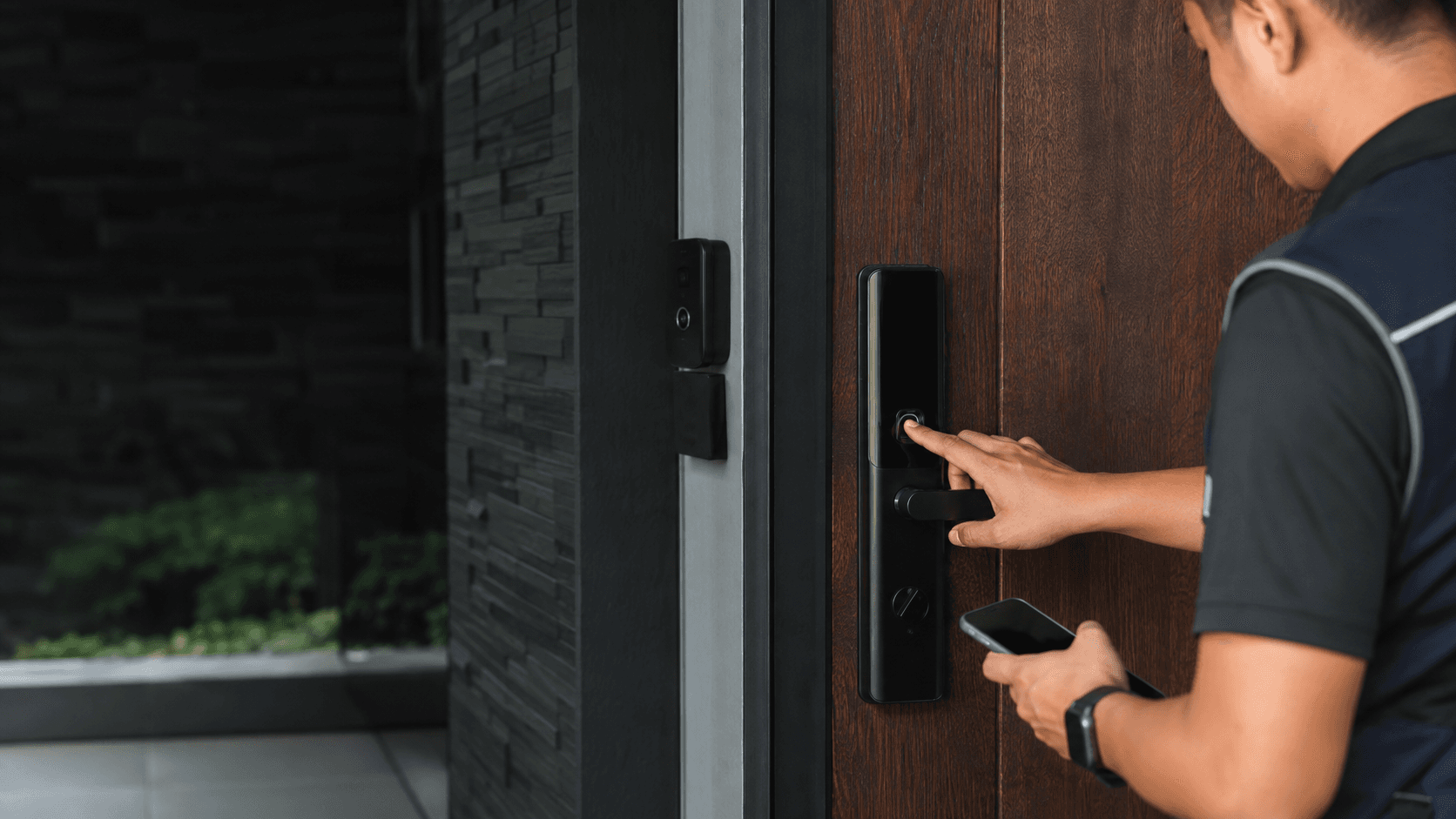
Lock Yale. What the Brand Offers for Malaysian Doors
Yale produces several lock families that suit different entry points. The Yale Assure Lock 2 and Yale Approach Lock with Wi-Fi appear frequently in smart lock comparisons, while keypad deadbolts serve as standalone options. For Malaysian homes and offices, the practical question is not which model has the most features, but which lock yale configuration matches the door construction, user count, and backup entry method already in place.
The Yale Assure Lock 2 works as a full deadbolt replacement. The Yale Approach Lock with Wi-Fi fits over an existing deadbolt, which matters for rented premises where changing the core lock is not permitted. Both connect to apps and voice assistants, but they differ in installation depth and physical footprint.
How Lock Yale Models Differ. Keypad, Smart, and Deadbolt
Yale lock models split into three functional groups. Standalone keypad deadbolts store codes locally and need no network connection. Smart locks add Bluetooth or Wi-Fi for remote control and activity logs. Full deadbolt replacements swap the entire locking mechanism, while adapter-style locks retrofit onto hardware that is already fitted.
| Model Type | Connectivity | Keypad | Typical Battery Life | Best Fit |
|---|---|---|---|---|
| Yale Assure Lock 2 | Bluetooth, optional Wi-Fi module | Backlit keypad | 6-12 months with AA batteries | Owner-occupied homes |
| Yale Approach Lock with Wi-Fi | Built-in Wi-Fi | Optional separate keypad | 3-6 months with frequent use | Renters, retrofit projects |
| Standalone keypad deadbolt | None | Touchscreen or push-button | 12+ months | Budget-focused installations |
Battery life figures come from general smart lock usage patterns rather than official Yale Malaysia specifications. Actual drain depends on how often the motor runs, Wi-Fi polling frequency, and ambient temperature.
What to Check Before Installing a Lock Yale at Your Premises
A lock yale installation succeeds when the door itself is sound. Smart locks add electronics to a mechanical system, so the door must align properly, the deadbolt hole must match the latch size, and the strike plate must sit flush. Eyonic's approach to security installations follows a similar logic to its CCTV work: assess the physical site before recommending equipment.
The evaluation process for a Yale lock installation follows a clear sequence:
- Measure door thickness and confirm the backset distance from the door edge to the deadbolt centre.
- Identify the existing lock type to determine whether a full replacement or retrofit adapter is needed.
- Decide on a backup entry method such as a physical key, mechanical keypad, or spare code.
- Define user permissions for family members, staff, or service providers.
- Check door material and edge preparation for the latch and strike plate.
- Confirm Wi-Fi signal strength at the door location for connected models.
Door thickness matters because Yale deadbolts ship with specific latch lengths. A standard Malaysian timber door usually measures 40-45 mm thick, but metal doors and fire-rated doors can differ. The lock yale model must match the door's edge bore, which is typically 54 mm or 70 mm backset.
Lock Yale Installation Process and Local Support
Installation begins with a site survey to confirm the door condition and lock compatibility. Eyonic applies the same staged method used for its CCTV installations: site survey, system proposal, installation, and handover. For a lock yale project, the survey checks the door's alignment, the existing bore holes, and whether the frame can accept the strike plate reinforcement.
A professional installation matters for smart locks because the electronic components are sensitive to misalignment. If the latch does not extend cleanly into the strike plate, the motor strains, battery life drops, and the lock may report false status. The handover stage should include testing every entry method, setting up the app, and showing the owner how to manage user codes.
For business premises, Eyonic checks whether a standalone smart lock or an access-control panel is more appropriate. A single door with a handful of users suits a smart lock. A building with many staff and shift changes needs a networked access-control system instead. This distinction prevents overspending on consumer hardware for a commercial application.
Lock Yale vs Other Smart Lock Brands: A Practical Comparison
Yale competes with Schlage, August, and Aqara in the smart lock space. Schlage Encode models offer built-in Wi-Fi and similar deadbolt replacement designs. August focuses on retrofit adapters that keep existing keys. Aqara locks add fingerprint readers and Matter support at lower price points.
The Yale Assure Lock 2 appears in CNET and Wirecutter comparisons as a strong all-rounder, particularly for Apple Home integration. The Yale Approach Lock with Wi-Fi earns attention as an adapter-style option for renters. Neither claim confirms local availability or pricing in Malaysia, so the comparison should focus on functional fit rather than awards.
The deciding factors for Malaysian buyers are usually local support, spare parts availability, and installer familiarity. A lock yale model that requires overseas shipping for replacement parts creates downtime. A brand with local distributors and technicians reduces that risk.
Lock Yale Maintenance and Battery Life Considerations
Smart locks run on batteries, and the battery type affects the maintenance routine. Yale models commonly use AA batteries or a 9V backup terminal for emergency power. Low-battery warnings appear in the app, but the physical key or keypad remains the fallback.
Battery life depends on usage frequency. A busy office door that cycles dozens of times daily drains batteries faster than a home door used a few times per day. Wi-Fi models consume more power than Bluetooth-only versions because the radio stays active. Cold weather and direct sunlight also reduce battery performance, which matters for exposed external doors.
Regular maintenance includes cleaning the keypad, checking the latch alignment, and replacing batteries before the warning becomes critical. The lock yale mechanism should be lubricated only with products recommended by the manufacturer; general-purpose oils attract dust and gum up the internal components.
Eyonic's project experience with the Kuching Immigration Office shows how access control supports dependable daily operation in a public setting. That project focused on arrival flow, staff areas, and visitor movement, which are the same considerations that apply to any commercial lock installation. The budget for such work ranged from RM 12,000 to RM 28,000, reflecting the scale of a multi-door access system rather than a single residential lock.
For a single lock yale installation, the cost is far lower, but the planning discipline remains. Share the location, property type, and required system with Eyonic on WhatsApp at +60 11-5111 7959 for the next practical step.