
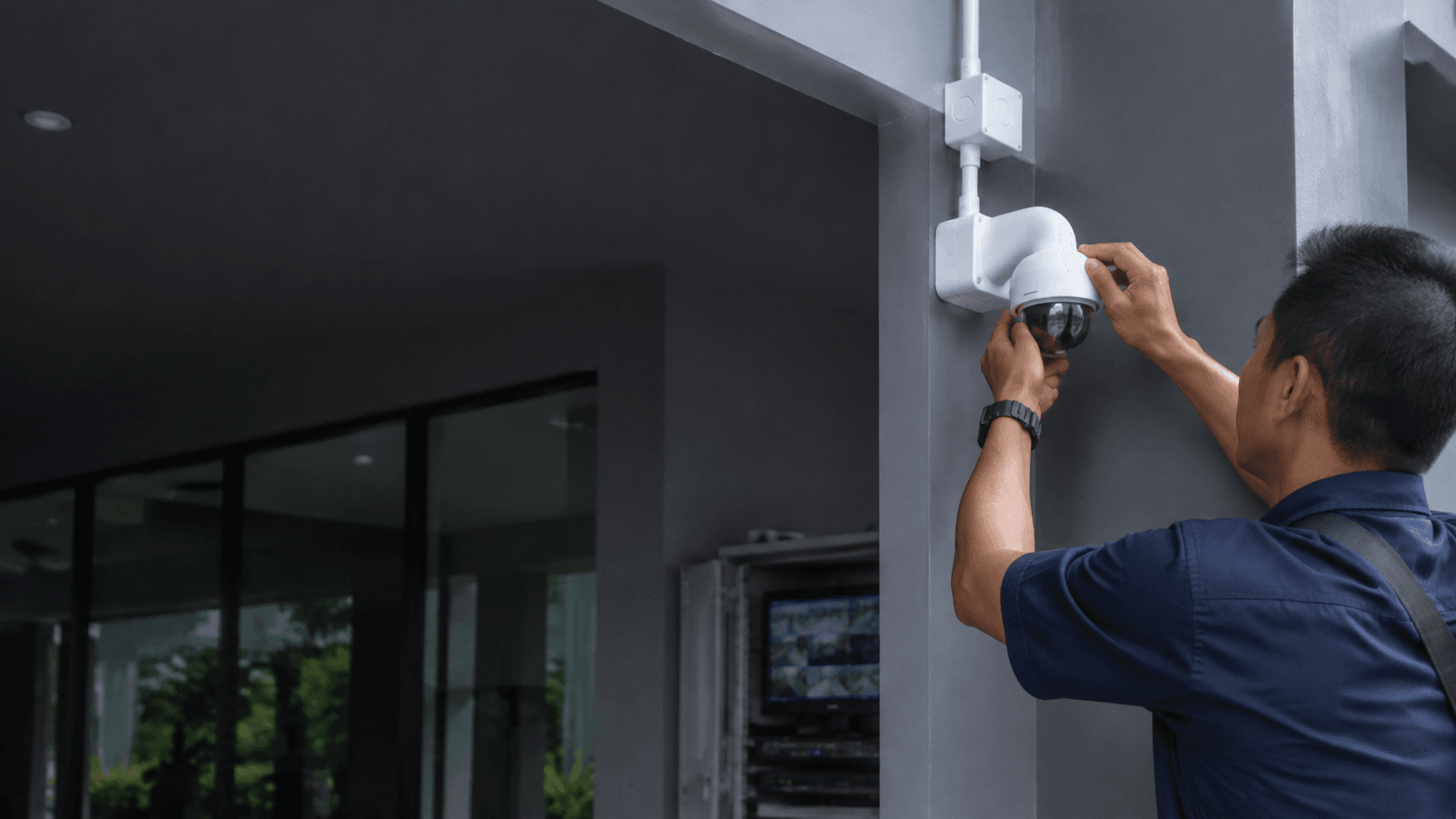
The term covers the cameras, the recording device or app that stores footage, and the network that carries video from one to the other. Eyonic Sdn Bhd plans, supplies and installs monitoring systems with camera placement, recording and remote viewing for homes, offices, shops and industrial sites.
What separates a workable wifi camera system from a frustrating one is rarely the camera box. It is whether the wireless link holds at the exact spots where cameras are mounted, whether recording continues when the internet drops, and whether anyone can still review footage a month later. Those questions get answered during planning, not after installation.
Wifi Camera System. what the term covers in practice
A wifi camera system is a set of cameras that send video over a wireless network to a recorder, hub or cloud service, rather than over a dedicated video cable to a recorder. The cameras still need power in most cases, so "wireless" usually describes the video path, not the absence of cabling.
Three parts have to work together:
- The cameras, which capture the image and encode it.
- The recording destination, which is either a network video recorder (NVR) on site or a cloud or app-based service.
- The wireless network, which carries the stream and determines whether the picture arrives intact.
Eyonic's service scope names camera placement, recording and remote viewing as separate work items, which reflects how the three parts fail independently. A camera can be positioned well and still deliver poor footage if the wireless link is weak at that corner of the building.
Where a wifi camera system fits a home, shop, or office
Wireless video suits sites where running cable is difficult, disruptive or expensive: finished interiors, rented premises, heritage buildings, and outdoor positions far from a recorder. It also suits sites that need coverage added in stages, because a new camera does not always require a new cable run back to a central point.
Wired or Power-over-Ethernet (PoE) infrastructure remains the more predictable choice where cable routes already exist, where many cameras share one recorder, or where the wireless spectrum is congested. A shop in a dense commercial row and an office in a busy building both sit in noisier radio environments than a detached house, and that difference affects reliability more than camera brand does.
Eyonic's completed work for the Kuching Immigration Office focused on arrival flow, staff areas, visitor movement and dependable daily operation. That project description shows the kind of brief where coverage of movement paths matters more than raw camera count, and where the system has to keep working every day without close attention.
Site survey and camera placement before any hardware is confirmed
Eyonic's CCTV installation process runs through site survey, system proposal, installation and handover. The order matters. the survey and proposal come before installation, so the camera list is a result of the site rather than an assumption about it.
- Site survey — walk the property, note entry points, movement paths, existing cabling, power availability and lighting at each candidate position.
- System proposal — set out the camera positions, recording approach and remote viewing arrangement that fit the surveyed conditions.
- Installation — mount and configure the cameras, recorder and network settings.
- Handover — confirm recording works, confirm remote viewing works, and walk through the setup with the people who will use it.
Camera placement is the decision that most affects what the footage is worth. A camera aimed at a gate needs to see faces and plates at the distance people actually arrive, not just the gate structure. A camera covering a corridor needs to catch movement along its length rather than across it. Positions that look obvious on a floor plan often fail on site because of a pillar, a sign, a tree or a light source directly in frame.
Placement also decides the wireless problem. Every wall, floor and metal fixture between a camera and its access point reduces signal, so the survey should test the link at the proposed mount, not at the desk where the router sits.
What the survey should record
The survey is the point where assumptions get replaced with observations. Useful things to capture include where power is available at each camera position, which surfaces can take a mount, what the field of view looks like from the actual height, and how the property's network behaves at the far corners of the site.
Recording, NVR setup, and remote viewing at handover
Recording is the part of a wifi camera system that people notice only when it fails. NVR setup covers where footage is stored, how long it is kept, and what happens when storage fills. Remote viewing covers how footage is reached from a phone or laptop away from the site.
Two practical questions belong in the proposal stage:
- Does recording continue if the internet connection drops? A local recorder keeps capturing; a cloud-only arrangement may not.
- Who can view which cameras? Staff areas, visitor areas and entry points often need different access.
Handover is where these answers get tested rather than described. Eyonic's basic Hikvision CCTV Package at RM 1,599 includes camera supply and setup, basic recording configuration and mobile viewing handover, which maps to the same sequence: install, configure recording, then confirm the viewer works before the installer leaves.
Remote viewing depends on the site's internet connection as much as on the camera system. A weak upstream connection limits how smoothly live video plays on a phone, and that limit exists regardless of camera quality.
Lighting conditions and low-light placement checks
Lighting decides whether a camera produces usable footage after dark, and it is site-specific. Eyonic recommends checking actual lighting conditions before confirming placement for ColorVu-style cameras, which is a reminder that a position chosen in daylight may behave differently at night.
Points worth checking at each candidate position:
- What light exists at that spot after dark, and whether it is steady or switched off at some hour.
- Whether a bright light sits inside the camera's field of view, which can wash out the rest of the frame.
- Whether the area that matters — a face, a plate, a doorway — is lit, not just the area around it.
Where lighting is poor and cannot be improved, placement may need to move closer to the subject, or the camera choice may need to change. This is a survey finding, not an installation adjustment, because it affects which hardware the proposal should include.
Practical next step with Eyonic
Eyonic Sdn Bhd is a security system supplier in Sarawak, Malaysia, working on CCTV and ELV systems for homes, offices, shops and industrial sites. The founder, Eric Yong, has been in the industry for more than ten years and works on technical installation of digital security solutions for commercial businesses in Sarawak.
For a wifi camera system, the useful starting information is the property location, the property type, and what the system needs to cover. That is enough to begin a site survey, which is the step that turns a general camera list into positions, recording arrangements and a remote viewing setup that match the site.
Share your location, property type and required system with Eyonic on WhatsApp at +60 11-5111 7959 for the next practical step.