
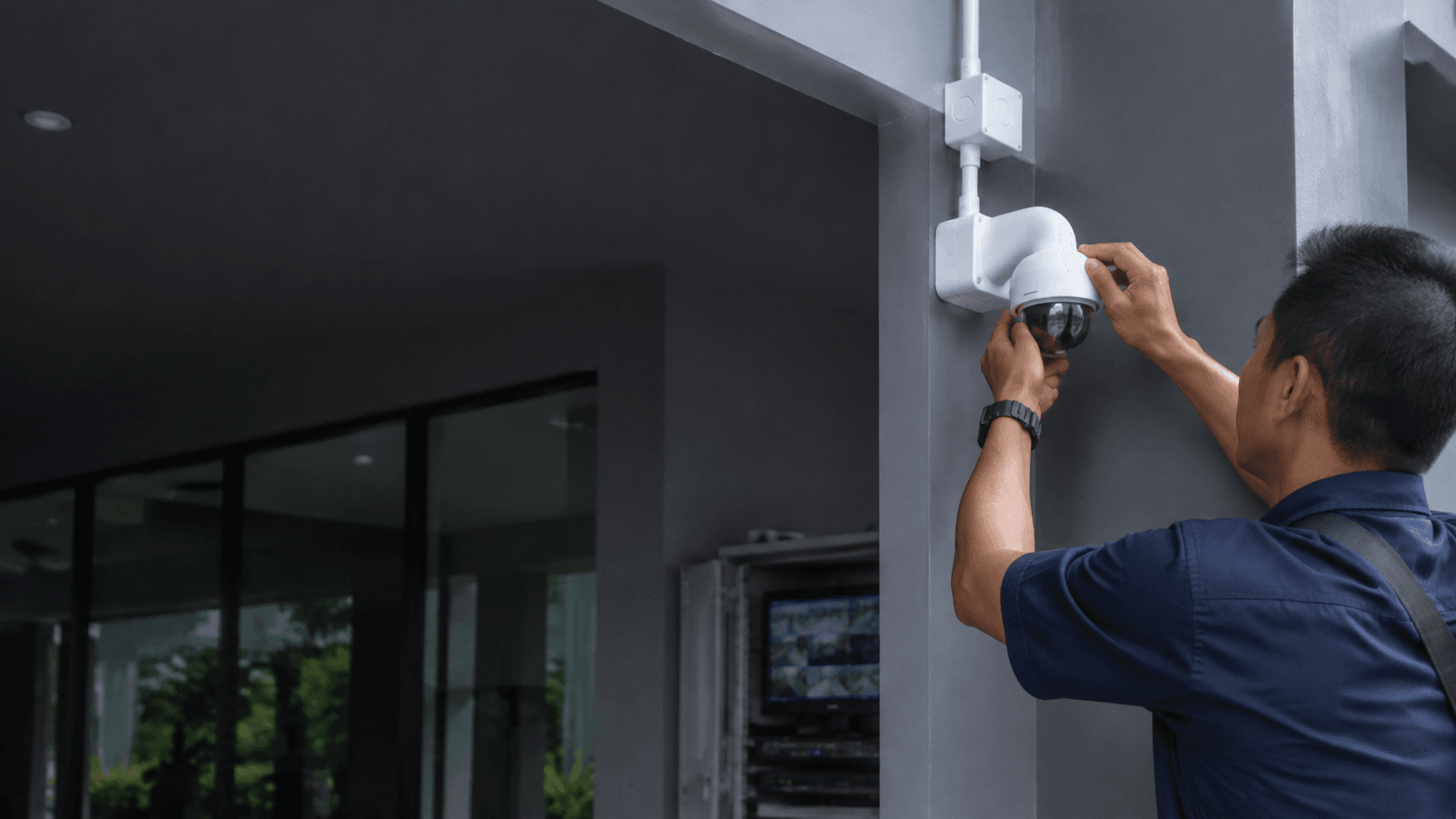
The headline number on a product page rarely matches the final invoice. A camera body is one line item. Recording hardware, cable runs, mounting, configuration and handover sit behind it, and those items change with the property. Eyonic Sdn Bhd, a security system supplier in Sarawak, plans, supplies and installs monitoring systems with camera placement, recording and remote viewing for homes, offices, shops and industrial sites.
That is why two quotations for the same building can differ by thousands of ringgit while describing similar cameras. The sections below break the figure into its parts, show what Eyonic controls during a job, and list the questions that make competing quotes comparable.
4k Cctv Camera Price: What Matters Before You Choose
A quotation is a scope document. It states what is supplied, what is installed, and what is left for the owner to arrange. When two quotes are compared line by line, the gap usually appears in the parts that were never written down.
Eyonic's published basic package, the Hikvision CCTV Package, is listed at RM 1,599 and covers camera supply and setup, basic recording configuration, and mobile viewing handover. That package is not stated as 4K, so it should be read as a baseline for what a small installed system includes rather than as a 4K price.
Larger scoped work sits well above that baseline. Eyonic's Kuching Immigration Office project, a public office focused on arrival flow, staff areas, visitor movement and dependable daily operation, carries an approximate budget of RM 12,000 to RM 28,000. The KTA Sarawak Sdn Bhd project, an engineering consultancy office in Kuching needing staff movement support, visitor handling, tidy cabling and clearer daily site control, carries an approximate budget of RM 8,000 to RM 18,000. Both figures describe whole jobs, not camera units.
Those two ranges are the most useful reference points for anyone pricing a 4K upgrade, because resolution is only one variable inside them. Camera count, cable distance, recorder channels and building type move the number more than the sensor does.
Camera resolution and recording hardware
Resolution raises the price in two places at once. The camera costs more than a lower-resolution equivalent, and the recorder and storage behind it must handle a larger data stream.
A 4K camera produces roughly four times the pixel count of a 1080p camera. More pixels per frame means more data per hour, which means either more storage or a shorter retention window on the same drive. A recorder that was adequate for a 1080p system may not accept 4K channels at all, so an upgrade can force a recorder replacement rather than a camera swap.
This is the most common hidden cost in a 4K quotation. A quote that lists cameras only, without naming the recorder model or the storage capacity, has not priced the system. It has priced the visible half of it.
Eyonic's service scope covers NVR setup and remote viewing alongside camera placement, which means the recording and viewing layers are part of the same job rather than separate purchases. That structure matters when comparing figures, because a cheap camera line paired with an undersized recorder produces a system that cannot hold the footage the cameras capture.
Where resolution actually earns its cost
4K pays for itself where identification matters: entrances, vehicle plates, cash handling points, and any area where a face or a document must be readable after the fact. In a wide open yard or a long corridor, a lower-resolution camera with a better lens and correct placement often outperforms a 4K camera aimed at the wrong angle.
Placement decisions also depend on light. Eyonic recommends checking actual lighting conditions before confirming placement for ColorVu-style cameras, because a camera specified for low-light colour performance still needs the scene assessed on site. A quotation built from a floor plan alone cannot make that call.
Installation, cabling and site conditions
Installation is where quotations diverge most, and it is the hardest part to compare without a site visit. Cable route length, ceiling type, wall material, power availability and access hours all change the labour and materials required.
A single-storey shop with an accessible ceiling and short cable runs is a different job from a three-storey office with concrete walls, long exterior runs and work restricted to after business hours. The cameras may be identical. The installation is not.
Tidy cabling is a stated outcome on Eyonic's KTA Sarawak Sdn Bhd project, which shows that cable management is treated as part of the deliverable rather than an afterthought. Exposed or poorly routed cable affects both the appearance of a site and the reliability of the system over time.
Two constraints deserve early attention. First, existing cable may or may not support a 4K upgrade, and reusing it is only safe once the condition and specification are checked. Second, power and network points at each camera location determine whether additional electrical or data work is needed, and that work is usually quoted separately by other trades.
How Eyonic scopes a 4k Cctv Camera job
Eyonic's CCTV installation process follows four stages, and each one produces information that changes the final figure.
- Site survey. The property is inspected to confirm camera positions, lighting conditions, cable routes, power availability and recorder location.
- System proposal. The survey findings become a written scope covering cameras, recording, cabling and viewing setup.
- Installation. Cameras, cabling and recording hardware are installed and configured on site.
- Handover. Recording and mobile viewing are checked and explained so the system can be operated day to day.
The survey stage is what separates a defensible figure from a guess. Camera placement, recorder capacity and cable routing are all decided there, and each decision carries a cost consequence that a proposal can state in advance.
Eric Yong founded Eyonic Security Systems and has worked in the industry for more than ten years, with experience in technical installation of digital security solutions for commercial businesses in Sarawak. That background shapes how jobs are scoped, particularly on commercial sites where downtime and access restrictions affect scheduling.
Questions to settle before comparing figures
Most price confusion comes from comparing quotes that answer different questions. Settling the following points first makes the numbers directly comparable.
Is the quote for cameras only, or a working system? A camera-only figure excludes the recorder, storage, cabling and configuration needed to record and review footage.
How many cameras, and at what resolution? A four-camera 4K system and an eight-camera 4K system are different purchases, and the recorder channel count differs with them.
How long must footage be retained? Retention targets drive storage capacity, and storage is a real line item in any 4K system.
Is installation included, and does it cover cable and mounting? Labour, cable, connectors and mounting hardware should be named rather than assumed.
Is remote viewing configured and handed over? Mobile viewing setup is part of Eyonic's package scope, and it is the feature most often left unfinished when it is not written into the quote.
What happens at handover? A system that records but cannot be reviewed by staff has not delivered its purpose.
Once these answers are on paper, the 4k Cctv Camera price becomes a comparison between defined scopes rather than between headline numbers. A lower figure that omits recording hardware is not cheaper; it is incomplete.
For a specific property, share the location, property type and required system with Eyonic on WhatsApp at +60 11-5111 7959 so the scope can be matched to the site.