
Kwikset's own support pages for the 913 SmartCode Traditional and Contemporary Electronic Deadbolts concentrate on the door handing process, deadbolt latch compatibility, latch and strike alignment, mounting plate tension, clutch disengagement, key and turnpiece operation, battery pack removal, program button operation, and status LED indicators. None of the six pages analysed for this query addresses the auto-lock behaviour of the 913 directly, and none carries the exact query in its H1. That gap is the reason this page exists: the auto-lock question is answerable, but only alongside the door conditions that decide whether it works in daily use.
What the auto-lock behaviour on a Kwikset 913 Auto Lock actually does
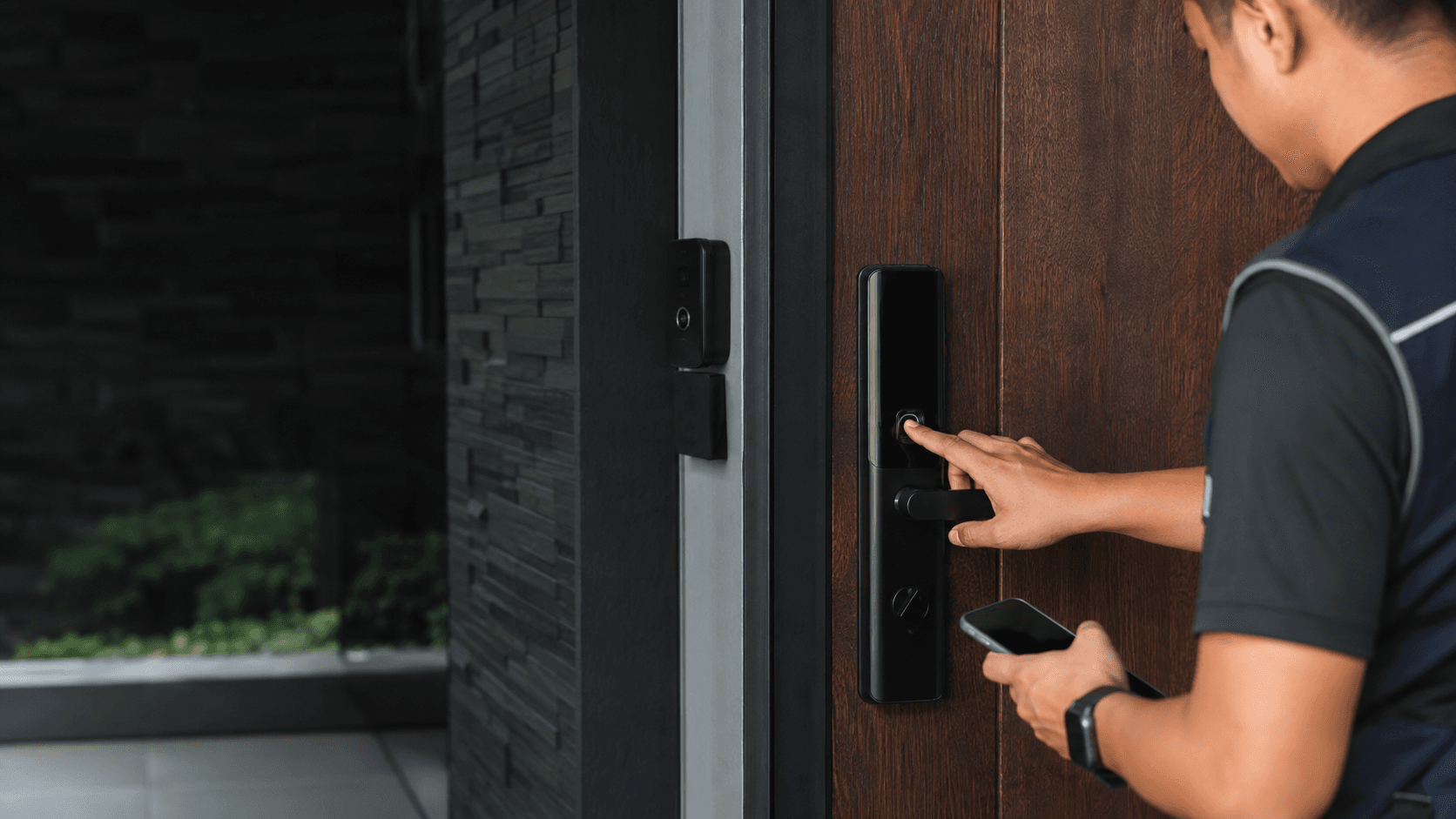
Auto-lock is a timed relock. After the deadbolt is unlocked electronically, the lock waits a set interval and then drives the bolt back out on its own, so a door that was opened and closed is not left sitting unlocked. The behaviour is a convenience layer on top of the motorised deadbolt, not a separate security device.
Two consequences follow from that. First, auto-lock only helps if the door is actually closed when the timer expires; a bolt extending into open air protects nothing and may be reported as a fault. Second, auto-lock changes the daily habit around the door. Occupants stop thinking about locking, which is the point, but it also means a misaligned strike or a swollen frame will surface as a recurring problem rather than an occasional one.
Kwikset's published auto-lock guidance covers the SmartCode 909 and 910 deadbolts and the 911 and 912 levers, where the feature is controlled by configuration switches and a 30 second auto locking interval is referenced. That material is not a 913 procedure, and no verified 913 switch position, button sequence, or timing value is available here, so the exact 913 method should be confirmed against the documentation supplied with the specific unit.
How the auto-lock setting is turned on or off
On SmartCode locks in this family, auto-lock is a configuration setting rather than a permanent trait. It is changed at the lock, not at the door frame, and the change persists until it is reversed. Because the 913 shares the SmartCode lineage with the 909, 910, 911, and 912, the setting is expected to live in the same part of the lock's configuration, but the specific control on the 913 is not documented in the evidence available for this page.
What can be stated with confidence is the shape of the decision. Turning auto-lock on suits a door that is normally closed and where the occupant wants the bolt to close the gap after entry. Turning it off suits a door that is frequently propped open, a unit where the timer fires while the door is ajar, or a site where staff need the door to stay unlocked for short periods without re-entering a code.
Two practical constraints apply either way. The setting is a lock-level setting, so it applies to everyone using that door rather than to individual users. And it is separate from user permissions: a code can be valid while auto-lock is off, and auto-lock can be on while a particular code has been deleted.
Door handing, latch and strike alignment before the lock is trusted
Door handing is the first thing to settle. The handing process tells the lock which side the interior assembly sits on and which direction the bolt must travel, and a lock set for the wrong hand will fight the door on every cycle. Kwikset's 913 support material treats the door handing process as a distinct step, which reflects how often it is the root cause of a lock that seems to misbehave.
Latch and strike alignment is the second. The latch bolt has to enter the strike cleanly, without the tapered latch being forced against the edge of the cutout. When the bolt rubs, the motor works harder, the cycle sounds different, and the lock is more likely to report a problem or stop short. Mounting plate tension matters here too: an over-tightened plate can distort the interior assembly enough to change how the clutch engages.
These are physical conditions, and no amount of programming corrects them. A door that has dropped on its hinges, a frame that swells in wet weather, or a strike that was drilled slightly high will all show up as intermittent auto-lock behaviour long before they show up as a total failure.
Battery, keypad and status feedback during daily use
The battery pack is the limiting component. Auto-lock adds a motor cycle to every entry, so the lock draws more from the same cells than a manually operated deadbolt would. A weak battery pack tends to show up first as sluggish or incomplete bolt travel, then as reduced keypad response, and only later as a lock that stops responding altogether.
The status LED and keypad feedback are the lock's way of reporting its own condition. Indicators that behave differently from normal, or a keypad that accepts a code but does not drive the bolt, point at the lock rather than at the code. The program button is the entry point for configuration changes, and the battery cover has to come off to reach the battery pack, so routine checks are best done with the interior assembly accessible rather than through the door.
Backup entry deserves a decision before installation, not after a flat battery. A keyed cylinder or a second entry route means a dead battery is an inconvenience rather than a lockout, and that choice is easier to make while the door is still on the bench.
Kwikset 913 Auto Lock in Malaysian homes, shops and offices
In Sarawak and across Malaysia, the conditions that affect auto-lock are the same ones that affect any door hardware: humidity, door movement, and how the building is actually used. A shop shutter door, an office suite entrance, and a residential front door put very different demands on the same lock.
For business premises, the more useful question is often whether a standalone smart lock or an access-control panel is the better fit. Eyonic's own product review guidance makes that distinction: smart locks work best when the door condition, user roles, and backup method are reviewed before installation, and for business use the choice between a standalone smart lock and an access-control panel is worth settling early. Eyonic's smart lock door access position is that the hardware suits controlled convenience when user permissions and backup entry are planned properly.
Local project experience is relevant to how that planning is done. Eyonic completed work for the Kuching Immigration Office focused on arrival flow, staff areas, visitor movement, and dependable daily operation, and a separate project for KTA Sarawak Sdn Bhd covering staff movement, visitor handling, tidy cabling, and clearer daily site control. Both are examples of the same principle that applies to a single auto-locking door: the access pattern decides the hardware, not the other way round.
What to confirm before installation
The checks below are sequential. Each one can change the answer to the next, so working through them in order avoids installing a lock that has to be re-hung or re-programmed later.
- Confirm the door and frame condition, including hinge drop, frame swelling, and whether the door closes fully under its own weight.
- Confirm handing and latch alignment, so the bolt travels the correct direction and enters the strike without rubbing.
- Confirm user roles and permissions, including who needs a code, who needs a key, and whether the door must ever be left unlocked.
- Confirm the backup entry method, so a flat battery or a failed code does not lock the site out.
- Confirm the auto-lock setting with the occupant present, so the interval and the on/off state match how the door is actually used.
Eyonic's installation process follows a comparable sequence of site survey, system proposal, installation, and handover, which is the same order of thinking applied to a single door. A site survey is the point at which door condition, user roles, and backup entry get settled together rather than one at a time.
One limit is worth stating plainly. No verified Kwikset 913 specification, dimension, battery life, or auto-lock timing value is available in the evidence behind this page, and no verified Malaysian price, stock, warranty, or distributor detail is available either. Those figures should come from the documentation supplied with the unit and from the supplier handling the installation.
For a property in Sarawak, sharing the location, property type, and required system with Eyonic on WhatsApp at +60 11-5111 7959 is the next practical step.