
Eyonic Sdn Bhd, a security system supplier in Sarawak, plans and installs these systems for homes, offices, shops, and industrial sites. The work follows a defined sequence rather than a product purchase, because detection outside a building depends on the site itself: where the perimeter runs, what lighting exists after dark, and which approach routes matter most.
Outdoor alarm system. what the term covers on a Malaysian property
An outdoor alarm system is the part of a security setup that watches the space outside the building envelope. That includes the perimeter fence line, gates, driveways, car porches, side lanes, and rear service areas. It is separate from indoor detection, which covers rooms and internal corridors.
On Malaysian properties, the outdoor layer usually combines three functions. Detection identifies movement. Alerting makes that movement known through a siren, a strobe light, or a notification. Deterrence comes from the visible presence of the equipment itself. A gate contact, a motion sensor, and an outdoor siren each serve a different part of that job.
Eyonic's alarm system installation service in Sarawak sits alongside its CCTV, autogate, keyphone intercom, and Starlink installation work. That matters for planning, because an outdoor alarm system often shares mounting points, cabling routes, and power sources with cameras and gate motors. Planning them together avoids running separate infrastructure for each device.
Why outdoor alarm system placement starts with a site survey
Placement decisions made from a floor plan alone tend to miss what the site actually looks like. Eyonic's installation process begins with a site survey, followed by a system proposal, installation, and handover. The survey is where the physical facts get collected.
Eyonic recommends checking actual lighting conditions before confirming placement for ColorVu-style cameras, and the same principle applies to outdoor detection. A position that looks clear in daylight may sit in a dark corner at night, or face directly into a streetlight that creates glare. Walking the site after dark reveals conditions that a daytime visit cannot.
The survey also establishes the perimeter itself. A compound with a solid wall, a compound with open frontage, and a shop lot sharing a wall with neighbours each present a different detection problem. The survey records where the boundary actually runs, which gates are used daily, and which approach paths a person would take toward the building.
Outdoor alarm system power, lighting, and false-alarm considerations
Power and lighting decisions follow the survey, not the product catalogue. Outdoor devices need a power source, and the practical options differ by site. A device near an existing outdoor circuit can draw from it. A device at a distant fence post may need its own supply or a battery arrangement. The choice affects both installation cost and how much maintenance the system needs later.
False alarms are the main reason outdoor detection gets abandoned by its owners. Movement sensors outside a building see more than people. Passing animals, moving foliage, shifting shadows, and vehicles on a nearby road can all trigger detection. Reducing that noise is a placement problem before it is a settings problem.
Three practical adjustments help. Aiming detection across an approach path rather than along a busy boundary reduces incidental triggers. Keeping sensors away from plants that move in wind removes a common source of false alerts. Separating the site into zones means a single triggered sensor does not set off the whole system, and the alert tells occupants where the movement occurred.
Alerting design follows the same logic. A siren audible across a large compound serves a different purpose from a strobe that signals which zone activated. For a shop or commercial site, the alert also needs to reach whoever is responsible outside working hours, which is why remote viewing and notification are planned alongside detection rather than added afterward.
What an outdoor alarm system installation involves from survey to handover
Eyonic's installation work follows four stages. The sequence below reflects the process used across its installation services.
- Site survey. The property is walked to record perimeter layout, gate positions, lighting conditions after dark, existing cabling, and available power points.
- System proposal. The survey findings become a proposed setup covering device positions, zone grouping, alerting method, and the work required to connect everything.
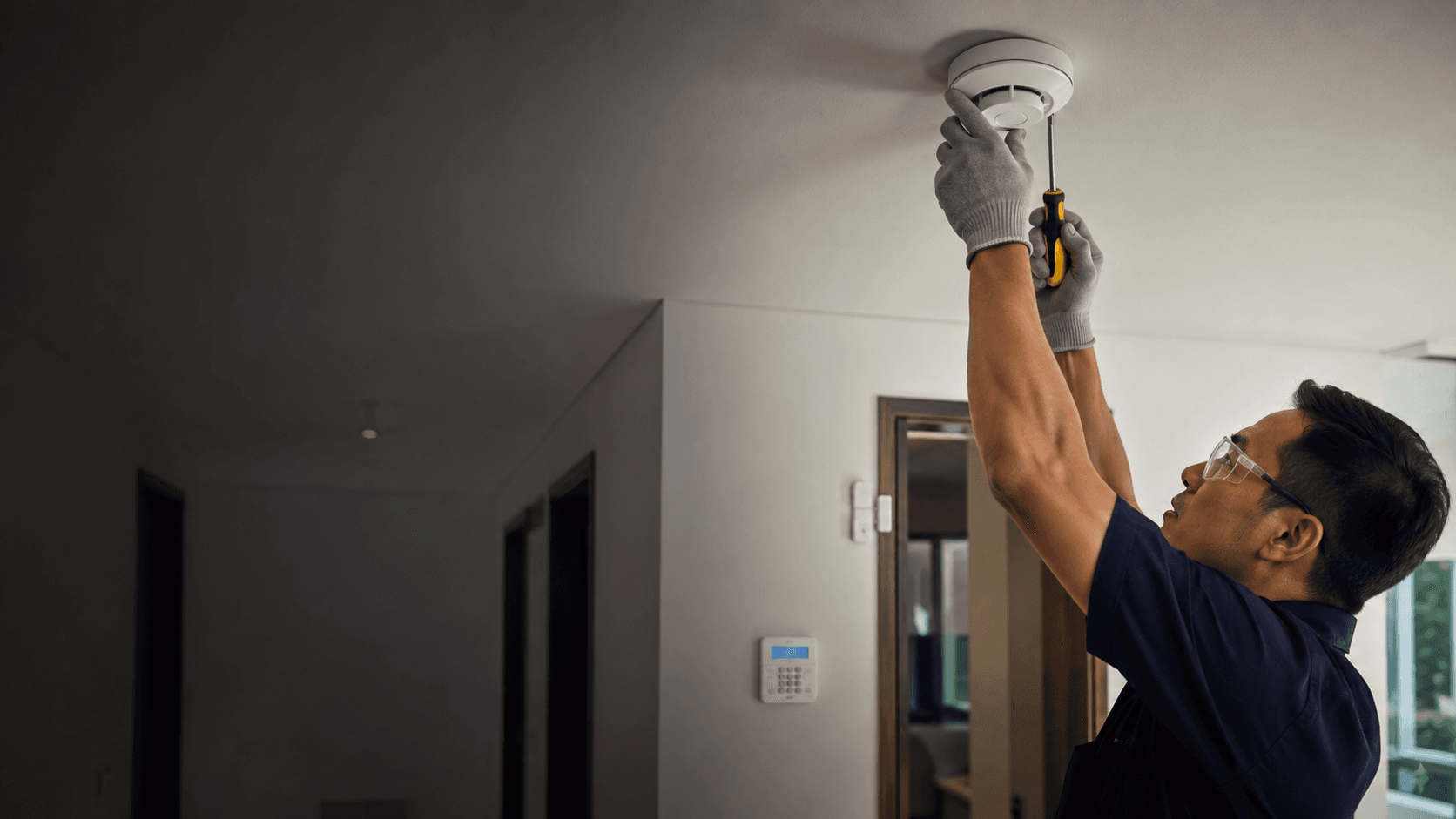
- Installation. Devices are mounted, cabling is run, and the control panel, siren, and zones are configured and tested on site.
- Handover. Users are shown how the system operates, how zones are identified, and how to test and manage alerts before the installer leaves.
Handover is the stage that determines whether the system stays useful. A user who cannot identify which zone triggered, or who does not know how to arm and disarm the system, will eventually stop relying on it. Testing during handover also surfaces placement problems while the installer is still on site.
Outdoor alarm system planning for homes, shops, and commercial sites
The same four stages apply across property types, but the emphasis shifts.
For a house, the priority is usually the gate, driveway, and rear access. Detection there gives occupants time to respond before anyone reaches a door. Alerting is typically a siren plus a notification to the occupant's phone.
For a shop, the outdoor layer often covers the frontage and any rear loading access. The alert needs to reach someone who may not be on the premises, so notification and remote viewing carry more weight than a loud local siren alone.
For a commercial compound, the perimeter itself becomes the main concern. Larger sites need more detection points, and zone grouping becomes essential so that a single alert identifies a location rather than just signalling that something moved somewhere. Eyonic's project work reflects this pattern. The Kuching Immigration Office project focused on arrival flow, staff areas, visitor movement, and dependable daily operation. The KTA Sarawak Sdn Bhd project supported staff movement, visitor handling, tidy cabling, and clearer daily site control. Both are office environments rather than pure perimeter sites, but both show how detection and monitoring get planned around how a site is actually used.
Budget expectations vary with site size and scope. Eyonic's published project budgets for office work of this kind fall in the RM 8,000 to RM 18,000 range for the KTA Sarawak project and RM 12,000 to RM 28,000 for the Kuching Immigration Office project. Eyonic also lists a Hikvision Alarm System package at RM 1,599 covering a control panel and sensors, siren and zone setup, and user testing and handover. A larger outdoor perimeter scope sits above a basic package because it involves more devices, more cabling, and more survey work.
Outdoor alarm system next step with Eyonic in Sarawak
Planning starts with the site, not the equipment list. The useful information to bring to a first conversation is the property location, the property type, and what the system needs to cover. From there, a survey establishes what is actually possible at that site.
Eyonic Sdn Bhd is based in Sarawak and handles planning, supply, and installation for homes, offices, shops, and industrial sites. Eric Yong, the founder, has worked in the industry for more than 10 years, with experience in technical installation of digital security solutions for commercial businesses in Sarawak.
Share your location, property type and required system with Eyonic on WhatsApp at +60 11-5111 7959 for the next practical step.