
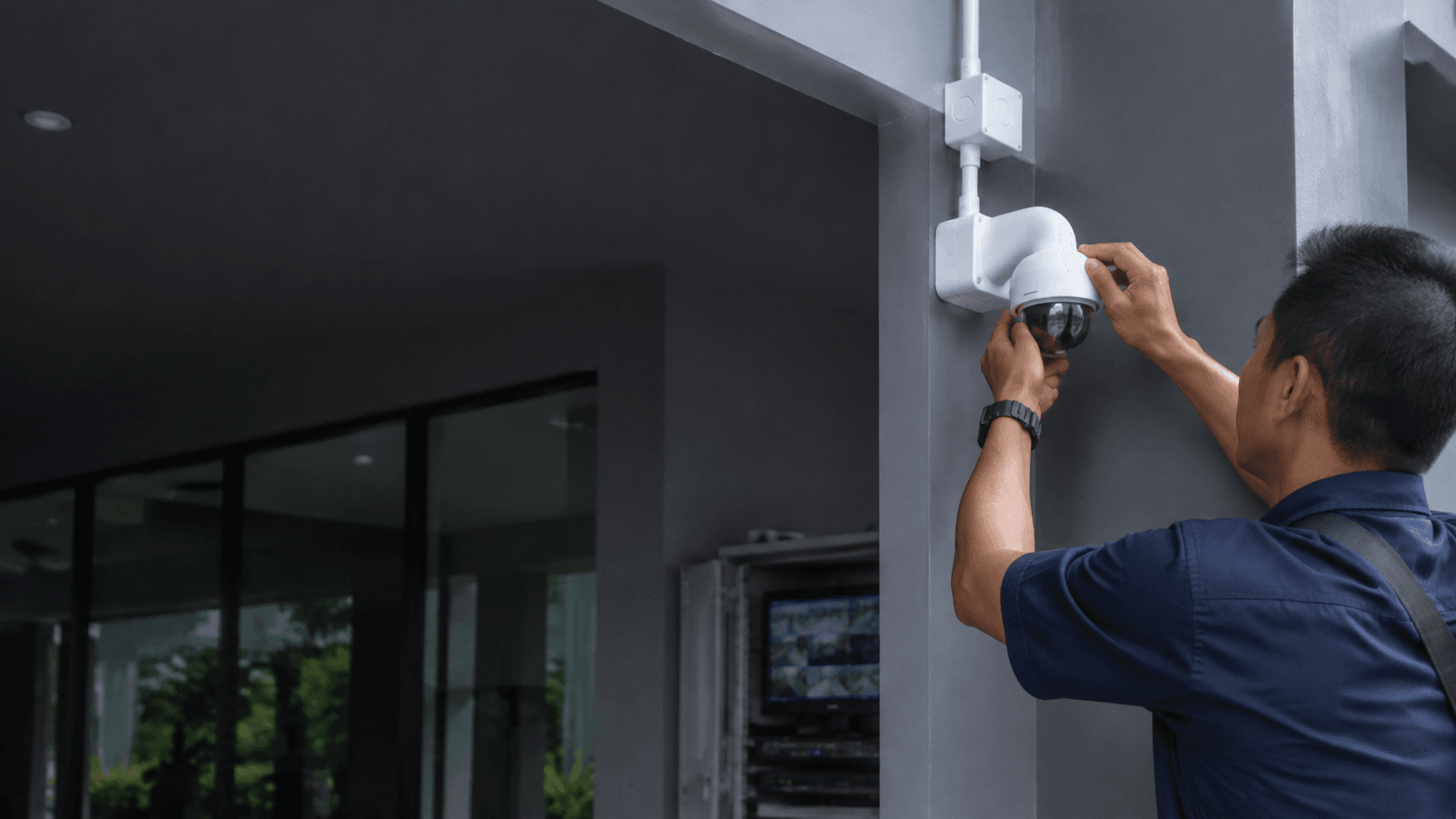
Swann is a well-known name in DIY security cameras, and 4K is the resolution tier that sits above 1080p and 2K in its range. Buyers in Malaysia researching Swann CCTV 4K usually arrive with the same practical questions: what actually comes in the box, what 4K changes in real footage, where recordings are stored, and who handles installation and support once the kit lands. This article works through those questions in order and flags where verified Swann specifications are not publicly confirmed, so expectations stay realistic.
What Swann CCTV 4K systems typically include
A Swann 4K kit is usually sold as a bundle rather than as loose parts. The common structure across the range is a set of wired cameras, a recording unit, a pre-installed hard drive, cabling, and a power supply for the cameras.
The recording unit is the part that decides how the system behaves day to day. Swann splits its wired range between DVR and NVR models, and the difference matters before purchase.
- DVR kits connect analogue-style cameras over coaxial cable and are the traditional format for Swann wired bundles.
- NVR kits connect IP cameras over network cable and are the format used for higher-resolution and network-based models.
Both formats record to a hard drive inside the recorder. Both support viewing over a phone app. Neither requires a monthly fee for basic local recording, which is the main reason buyers choose this category over subscription-based cloud cameras.
Camera count is the other variable. Swann sells kits with four, eight, and larger camera counts, and the recorder channel count usually matches or exceeds the number of cameras supplied. A four-camera kit on an eight-channel recorder leaves room to add cameras later without replacing the recorder.
How 4K resolution changes what a camera can capture
Resolution describes how much detail the sensor records in each frame. A 4K image carries roughly four times the pixel count of a 1080p image, which is the practical difference between recognising that someone walked past and being able to describe what they were wearing.
That extra detail shows up in specific situations:
- Distance identification. A face or number plate that fills a small part of a 1080p frame may be too soft to use. The same subject in a 4K frame occupies more pixels and holds more usable detail.
- Wide coverage. A single 4K camera can cover a broader area while still resolving detail, which can reduce the number of cameras needed for a given space.
- Digital zoom. Cropping into a 4K recording leaves more usable image than cropping into 1080p.
Resolution is not the only factor. Lighting, lens angle, camera height, and the direction of the subject all affect whether footage is usable. A 4K camera pointed at a poorly lit corner can produce worse evidence than a lower-resolution camera with good lighting and correct placement. This is why placement decisions should follow an actual look at the site rather than a floor plan alone.
Higher resolution also increases file size. A 4K stream writes more data per hour than 1080p, so the same hard drive holds fewer days of footage. Buyers who want a long retention window should plan for either a larger drive or motion-triggered recording rather than continuous recording.
Storage, recording, and remote viewing in practice
Swann wired systems record to a hard drive inside the DVR or NVR. Footage stays on that drive until it is overwritten by newer recordings, which means retention is a function of drive size, camera count, resolution, and whether recording runs continuously or only on motion.
Remote viewing works through Swann's mobile app. The recorder connects to the local network, and the app reaches it over the internet so live and recorded footage can be viewed away from the property. This setup depends on a stable internet connection at the recorder and a router that can reach it.
Three practical constraints shape how well this works:
- Upload speed limits remote quality. Viewing four 4K streams remotely needs more bandwidth than viewing one, and Malaysian home upload speeds vary by area and plan.
- Retention is a trade-off. Continuous 4K recording on multiple cameras fills a drive quickly; motion-triggered recording stretches the same drive much further.
- Remote access needs correct setup. Port forwarding, app pairing, and account configuration have to be done properly, or the app will not connect reliably from outside the property.
Cloud storage and subscription options exist in the Swann range, but the specific plans, prices, and terms available for Malaysia are not confirmed in the evidence reviewed here. Buyers should treat local recording as the baseline and confirm any cloud feature directly before relying on it.
What to check before choosing Swann CCTV 4K
Most disappointment with a self-installed kit traces back to decisions made before the box was opened. Working through the following checks in order reduces that risk.
- Lighting at each camera position. Check how the area actually looks at night, not how it looks at midday. Cameras that perform well in daylight can struggle in an unlit corner, and placement should follow the real lighting conditions rather than an assumption.
- Camera placement and coverage. Decide what each camera needs to see, at what distance, and from what height. A camera mounted too high loses facial detail; one mounted too low is easy to obstruct.
- Recording and storage expectations. Work out how many days of footage are needed, then match that against camera count, resolution, and drive size. Continuous 4K recording and long retention pull in opposite directions.
- Remote viewing requirements. Confirm the internet upload speed at the property and how many people need simultaneous access to the app.
- Cabling route and power. Wired cameras need a cable path from each camera back to the recorder and a power source. Existing conduit, ceiling voids, and wall construction determine how much work this involves.
- Who handles installation and support. Decide in advance whether the kit will be installed personally, by a general contractor, or by a security system supplier, and confirm who is responsible if a camera fails or the app stops connecting.
Two of these checks carry more weight than the rest. Placement determines whether footage is usable at all, and support determines what happens when something stops working. A kit with excellent specifications and no local support path can leave a property with cameras that record nothing useful for weeks.
Local installation and support in Sarawak
Buying a Swann CCTV 4K kit online and installing it personally is a legitimate route for a technically confident owner with a simple property. The trade-off appears when the property has multiple buildings, existing cabling, or a requirement that footage be dependable every day.
In Sarawak, Eyonic Sdn Bhd plans, supplies, and installs monitoring systems with camera placement, recording, and remote viewing for homes, offices, shops, and industrial sites. The process runs through a site survey, a system proposal, installation, and handover, which means placement decisions are made after seeing the actual lighting and structure rather than from a description.
That approach has been applied to public and commercial sites. Eyonic completed a project for the Kuching Immigration Office focused on arrival flow, staff areas, visitor movement, and dependable daily operation. A separate project for KTA Sarawak Sdn Bhd covered a practical office setup in Kuching supporting staff movement, visitor handling, tidy cabling, and clearer daily site control. Both are examples of the same pattern: the camera plan follows how the site is actually used.
For buyers weighing a Swann CCTV 4K kit against a locally supplied and installed system, the honest comparison is not resolution against resolution. It is self-installation against a surveyed installation with a defined handover, and online support against a supplier who can attend the site. Neither is automatically correct. A single shop with clear sightlines and an owner comfortable with cabling may be well served by a kit. A site with multiple entry points, mixed lighting, and a need for reliable daily recording is usually better served by a surveyed installation.
Eyonic's founder, Eric Yong, has worked in the industry for more than ten years and is experienced in the technical installation of digital security solutions for commercial businesses in Sarawak. Eyonic also publishes product reviews, including a Hikvision ColorVu camera review that recommends checking actual lighting conditions before confirming placement for ColorVu-style cameras — the same principle that applies to any 4K camera, Swann included.
Eyonic's published packages start at RM 1,599 for a Hikvision CCTV package covering camera supply and setup, basic recording configuration, and mobile viewing handover. Alarm system and autogate packages are listed at the same starting figure. These are Eyonic's own package prices, not Swann pricing, and no verified Swann 4K pricing for Malaysia was available for this article.
Buyers who want to discuss a specific property can share the location, property type, and required system with Eyonic on WhatsApp at +60 11-5111 7959.