
What Outdoor Cameras for Home Buyers Should Check First
Malaysian homes face distinct conditions that shape outdoor camera choices: heavy rain during monsoon seasons, intense afternoon heat, and property layouts that range from terrace houses to gated bungalows. The right outdoor cameras for home use must survive these conditions while covering the actual entry points that matter.
A common mistake is buying cameras before mapping the property. Eyonic's CCTV installation process starts with a site survey, then moves through system proposal, installation, and handover. That sequence exists because camera placement depends on what each home actually looks like, not on what a spec sheet promises.
- Walk the property and list every entry point, gate, driveway, and blind spot where someone could approach unseen.
- Check power availability at each proposed location, since wired cameras need a cable run and wireless models need reliable Wi-Fi signal strength.
- Confirm lighting conditions at night, because areas with streetlights, porch lights, or complete darkness each need different camera capabilities.
- Match resolution and night vision to the distance the camera must cover, not to the highest number on the box.
- Decide where footage will be stored, comparing local recording on an NVR against cloud subscriptions for ongoing costs.
- Schedule professional installation so angles, heights, and cabling are handled before final placement is locked in.
Key Features That Matter for Outdoor Cameras for Home
Resolution determines how clearly a face or number plate can be identified later. Most modern outdoor cameras for home offer at least 1080p, with 4K models providing sharper detail across wider areas. Higher resolution also means larger video files, so storage planning must keep pace.
Night vision separates useful cameras from decorative ones. Infrared (IR) night vision produces black-and-white footage in darkness, while full-colour night vision captures colour images without visible light. Eyonic recommends checking actual lighting conditions before confirming placement for ColorVu-style cameras, which are designed to produce colour footage in low light. A camera that performs well under a bright porch light may struggle in a completely dark side lane.
Weatherproofing is non-negotiable in Malaysia. Look for an IP rating that indicates protection against rain and dust; IP66 or higher is common for outdoor units. The housing material also matters, since direct sun can degrade cheap plastic over time.
Motion detection and alerts determine whether the camera is proactive or merely a recording device. Some systems distinguish between people, vehicles, and animals, reducing false alarms from stray cats and passing traffic. Two-way audio allows spoken warnings to visitors or delivery personnel.
Wired vs Wireless Outdoor Cameras for Home
Wired outdoor cameras for home connect to a network video recorder (NVR) through Ethernet cables. This setup delivers a stable connection, continuous power, and no reliance on home Wi-Fi strength. Video quality stays consistent because data travels over cable rather than competing with streaming and browsing traffic. The trade-off is installation complexity, since cables must be routed through walls, ceilings, or conduit.
Wireless cameras connect over Wi-Fi and run on battery or a power adapter. Battery models offer flexible placement because they do not need a cable run, making them suitable for rental properties or spots where wiring is impractical. The trade-offs include periodic battery charging, potential signal dropouts, and motion-triggered recording that can miss events if the camera sleeps between detections.
For Malaysian homes, the decision often comes down to property type. A terrace house with a small compound may suit wireless cameras placed at the front door and rear gate. A larger property with multiple outbuildings typically benefits from wired cameras connected to a central NVR, ensuring every corner records continuously without Wi-Fi dead zones.
How to Choose Outdoor Cameras for Home in Malaysia
Start with the number of cameras needed. A typical Malaysian home requires coverage of the front entrance, rear access point, and car porch at minimum. Larger properties with side lanes or garden access need additional units to eliminate blind spots.
Storage strategy affects both cost and reliability. Local storage on an NVR keeps footage on-site and avoids monthly fees, but a thief could remove the recorder. Cloud storage preserves footage off-site but adds recurring costs. Some systems offer both, with local recording as the primary method and cloud backup for critical events.
Consider how the system will be monitored. Remote viewing through a mobile app is standard, allowing homeowners to check live feeds while away. Eyonic's CCTV services include remote viewing as part of the setup, which matters for frequent travellers or those who spend long hours at work.
Power reliability is a practical concern in Malaysia, where thunderstorms can cause brief outages. A camera system without battery backup stops recording during an outage, leaving a gap exactly when storms bring both power cuts and potential intruders. Discussing backup options during the site survey prevents this vulnerability.
Installation and Maintenance of Outdoor Cameras for Home
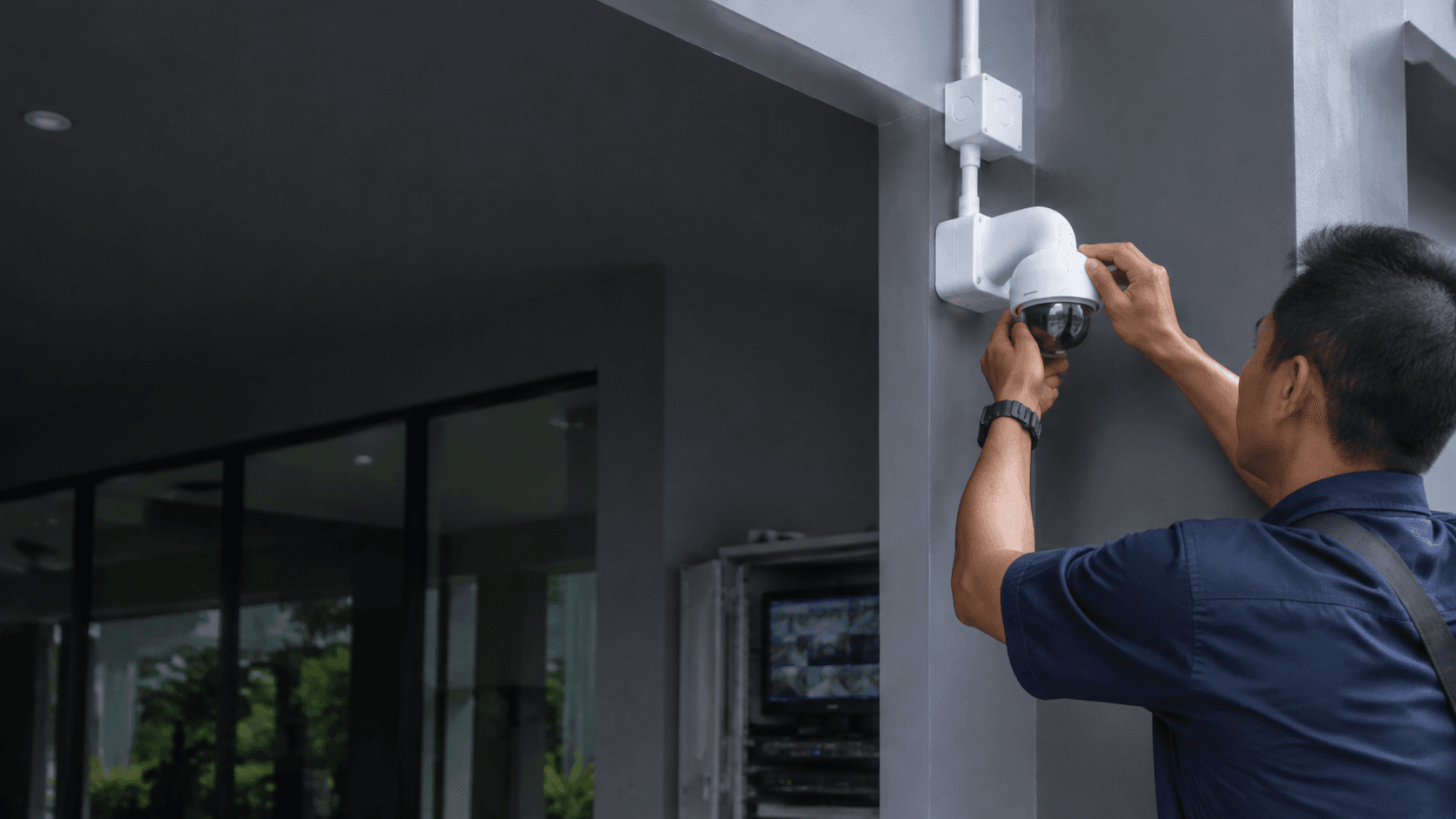
Professional installation matters more than camera brand for most homeowners. Eyonic's process demonstrates why: a site survey identifies the right locations, the system proposal matches equipment to the property, installation handles the physical mounting and cabling, and handover ensures the owner understands how to use the system.
Camera height and angle determine effectiveness. Cameras mounted too high capture the tops of heads rather than faces. Cameras angled directly into the afternoon sun produce washed-out footage. Eyonic's guidance to check actual lighting conditions before confirming placement applies here, since a location that looks ideal during the day may face glare or darkness at night.
Maintenance is straightforward but often neglected. Camera lenses collect dust and spider webs, which blur footage over time. In Malaysia, heavy rain can leave water spots on lenses, and direct sun can degrade rubber seals. A monthly cleaning routine with a soft cloth keeps footage clear. Checking that night vision activates properly and that recordings are being saved should happen quarterly.
The Kuching Immigration Office project completed by Eyonic illustrates the importance of dependable daily operation. That project focused on arrival flow, staff areas, and visitor movement, requiring cameras that worked consistently rather than merely being installed. Home systems demand the same reliability, since a camera that fails during a security incident provides no protection.
Outdoor Cameras for Home. Frequently Asked Questions
**How many outdoor cameras does a typical Malaysian home need?**
Most homes need at least three cameras: one covering the front entrance, one for the rear access point, and one for the car porch. Properties with side gates, garden access, or long driveways require additional coverage. A site survey provides a definitive answer based on the actual layout.
**Can outdoor cameras work during heavy rain and thunderstorms?**
Weatherproof cameras with appropriate IP ratings operate in rain, but heavy downpours can reduce visibility and trigger false motion alerts. Thunderstorms can cause power outages that interrupt recording unless the system has battery backup. Placement under eaves or awnings reduces direct rain exposure while maintaining coverage.
**Do outdoor cameras for home require a monthly subscription?**
Not necessarily. Systems with local storage on an NVR or microSD card record without subscription fees. Cloud storage plans add monthly costs but preserve footage off-site. Some hybrid systems offer local recording with optional cloud backup for specific events.
**How long do outdoor camera batteries last?**
Battery life varies widely based on recording frequency, motion activity, and temperature. Cameras that record continuously drain batteries quickly, while motion-triggered cameras can last months between charges. High-traffic areas near roads generate frequent motion events and reduce battery life accordingly.
**What is the difference between a camera and a complete CCTV system?**
A standalone camera records to its own storage and operates independently. A complete CCTV system connects multiple cameras to a central NVR, enabling continuous recording, unified remote viewing, and coordinated coverage. For homes needing more than two cameras, a complete system typically provides better management and reliability.
For homes in Sarawak and across Malaysia, Eyonic CCTV supplies and installs Hikvision camera systems with planning, placement, and remote viewing support. Sharing location, property type, and required system details with Eyonic on WhatsApp at +60 11-5111 7959 provides the next practical step toward a working outdoor camera setup.