
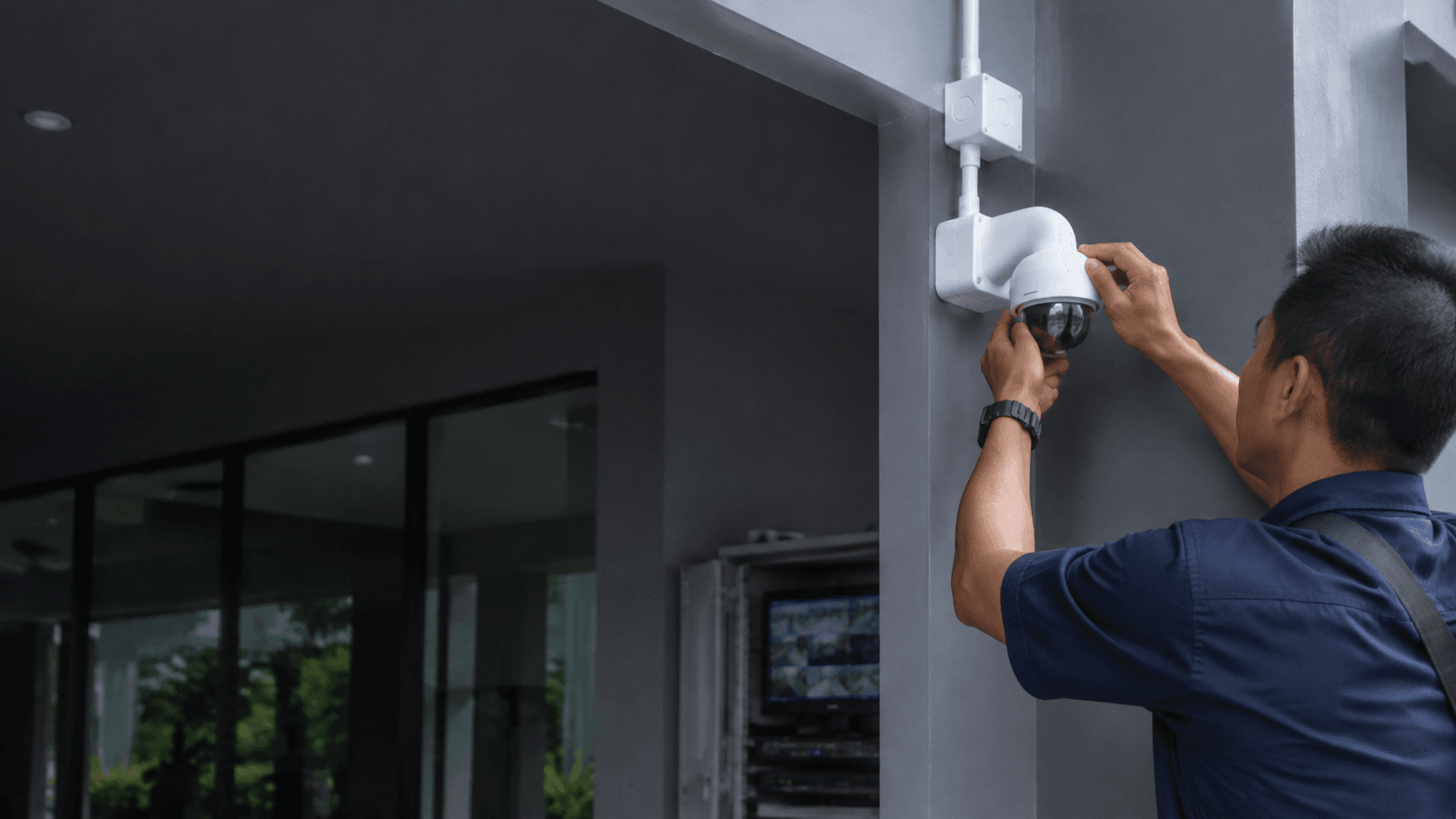
The 2MP figure describes a sensor that captures roughly two million pixels per frame, which is the same class of image as 1080p. That resolution has been in wide use for years, so the hardware is mature, the recording load is modest, and network video recorders handle multiple streams without strain. Dahua builds these cameras in dome, bullet, and pan-tilt-zoom bodies, and the network connection carries both power and data over a single cable in most installations.
Buyers comparing a dahua 2mp ip camera against 4MP or 8MP alternatives are usually weighing storage cost and bandwidth against fine detail. The honest trade-off is straightforward: more pixels capture smaller objects at distance, but they also multiply the storage and processing burden. For a shopfront, an office corridor, or a home gate, 2MP frequently covers the requirement at lower cost.
What a 2MP IP camera delivers in practice
Two megapixels produces a 1920 by 1080 image. At close and medium range, that is enough to recognise a face or read a vehicle plate under good light. The limit appears when the subject is far from the lens or when the scene is wide: each pixel then represents a larger slice of the real world, and detail thins out.
Network cameras in this class typically support infrared illumination for night recording, wide dynamic range for scenes with bright and dark areas together, and video compression that reduces file size. Dahua's own product catalogue groups network cameras into series tiers, and the entry and mid tiers carry the 2MP models. Compression matters more than most buyers expect, because it decides how many days of footage a recorder can hold.
Remote viewing is standard. Dahua's mobile app lets a user open a live or recorded stream from a phone, which is the feature most buyers actually test first. The camera needs a working network path and a recorder or cloud service configured to reach it.
Where 2MP IP cameras fit in Malaysian premises
Shophouses, offices, clinics, and residential gates are the common settings. A single camera covering an entrance, a corridor, or a parking bay does its job at 2MP. Multi-camera systems covering a whole building also work, because the lower per-stream load keeps the recorder and the network comfortable.
Sarawak installations bring their own considerations. Heavy rain, high humidity, and strong afternoon sun all affect how a camera performs over years rather than weeks. Housing quality and mounting position matter as much as the sensor. A camera under a deep eave stays cleaner and lasts longer than one fully exposed, and a position that avoids pointing directly into the setting sun produces a more usable image.
Lighting is the variable most often misjudged. Eyonic advises checking actual lighting conditions on site before confirming placement, particularly for cameras that rely on colour imaging at night. A location that looks adequately lit during a daytime visit can be almost dark at 2am, and the camera's behaviour changes accordingly.
What to confirm before selecting a Dahua 2MP IP camera
Model numbers in this range vary widely in lens angle, housing rating, and night behaviour, so the specification sheet for the exact model matters more than the brand name. The checks below are the ones that change the outcome.
- Confirm the field of view needed at the mounting height, since a wide lens covers more area but shows less detail per person.
- Confirm the housing rating suits the position, especially where the camera faces direct rain.
- Confirm the recorder can accept the camera's resolution and compression format.
- Confirm the network path reaches the camera position, whether by cable or another supported method.
- Confirm who will hold the recording, and for how long footage must be retained.
Two further points deserve attention. First, the recorder and the camera must be compatible; a mismatched pair can leave a buyer with hardware that will not talk to each other. Second, retention length is a storage decision, not a camera decision, and it is usually the item that forces a budget revision after installation.
Pricing is where most online comparisons break down. Published Dahua price lists circulating online are frequently tied to other markets and other currencies, and they rarely reflect what a Malaysian buyer pays for supply and installation together. Eyonic's published packages start at RM 1,599 for a Hikvision-based CCTV package, an alarm system, or an autogate package, which gives a realistic sense of entry-level system cost in this market. A Dahua 2MP IP camera system would be quoted on the same basis: cameras, recorder, cabling, configuration, and handover as one scope.
Installation sequence from survey to handover
Eyonic's documented process runs through four stages, and the order matters because each stage constrains the next.
- Site survey, where the property is inspected and camera positions are assessed against actual lighting, structure, and cable routes.
- System proposal, where the camera count, recorder, storage, and scope are set out for the buyer to review.
- Installation, covering mounting, cabling, recorder configuration, and network setup.
- Handover, where recording, playback, and mobile viewing are demonstrated and tested with the user.
The survey stage is where most problems are prevented. A position chosen from a floor plan alone often turns out to face a wall, a reflective surface, or a light source that ruins the image at night. Walking the site at the hour that matters is more reliable than any specification.
Handover is the stage buyers undervalue. A system that records correctly but cannot be reviewed by the person who needs it has not solved the problem. Testing playback and remote access before the installer leaves avoids a return visit later.
Public and commercial deployments follow the same logic at larger scale. Eyonic's work for the Kuching Immigration Office focused on arrival flow, staff areas, visitor movement, and dependable daily operation, which is the same set of concerns a smaller premises has, expressed across more cameras and more users.
Common questions about Dahua 2MP IP cameras
Is 2MP still worth buying? Yes, where the subject is close enough to the lens and the priority is cost, storage, and reliability rather than maximum detail. It stops being the right choice when the requirement is identifying faces or plates at long distance across a wide area.
How much footage can be stored? That depends on the recorder's drive capacity, the number of cameras, the compression setting, and whether recording runs continuously or on motion. These are configuration decisions made at proposal stage, not fixed properties of the camera.
Does a Dahua camera work with another brand's recorder? Compatibility depends on the specific models and the protocols they support. This is worth confirming before purchase rather than after, because it is the most common source of avoidable frustration.
What affects night image quality? Available light, the camera's infrared capability, the mounting position, and nearby reflective surfaces. A camera pointed at a white wall or a shiny sign will produce glare that no specification can fix.
Can the camera be viewed from a phone? Remote viewing is a standard feature, provided the network path and recorder are configured for it. Setup is part of installation and should be tested at handover.
For buyers in Sarawak weighing a dahua 2mp ip camera against higher-resolution options, the deciding factors are usually distance to the subject, lighting at night, and how long footage must be kept. Those three answers settle most of the specification question before price enters the conversation. A dahua 2mp ip camera chosen against those criteria will outperform a higher-resolution model placed badly.
Share the location, property type, and required system with Eyonic on WhatsApp at +60 11-5111 7959 for the next practical step.