
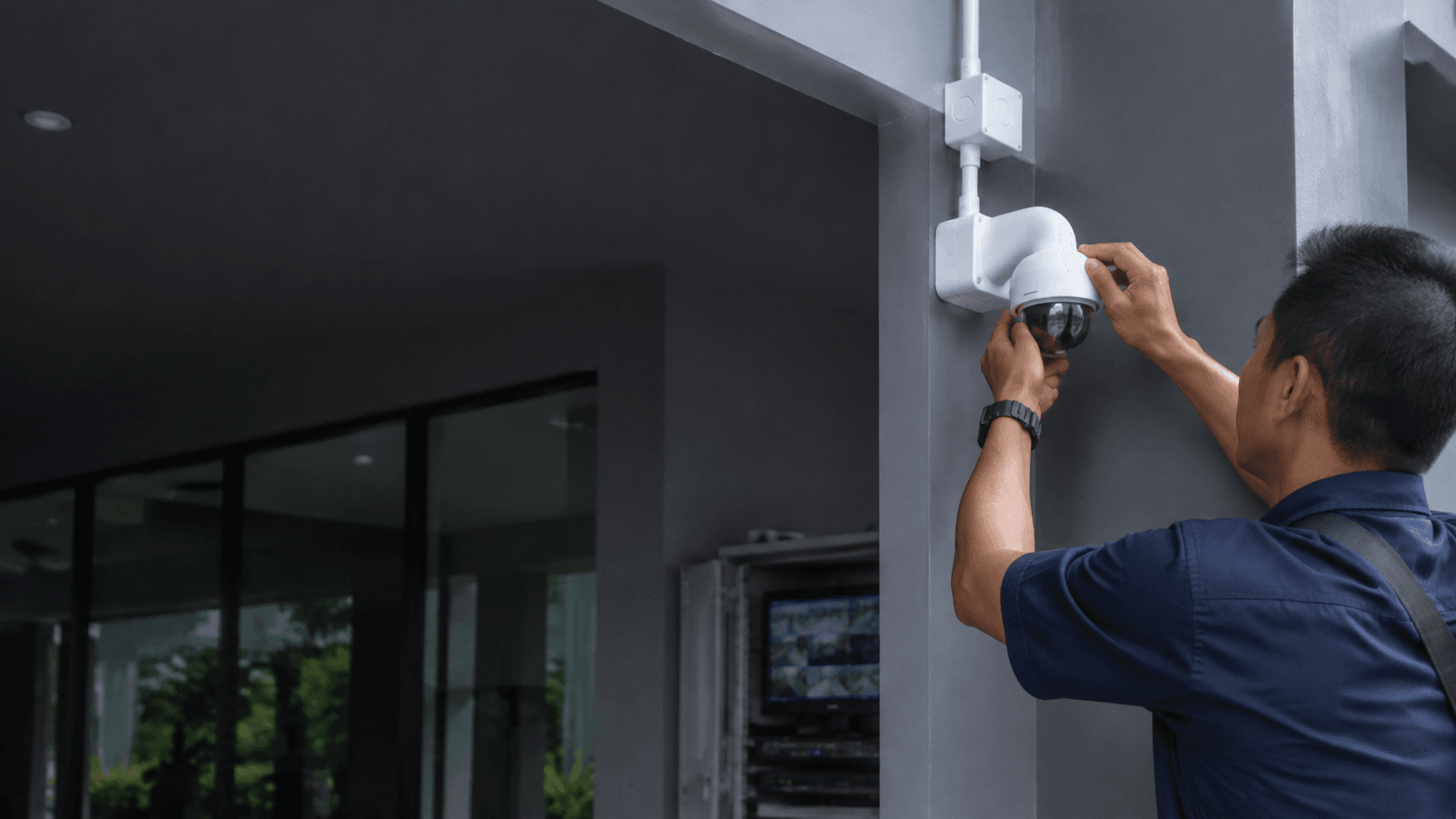
The exact-match query trueview 4g camera price is a shopping-research question, not a single number. Trueview sells 4G cameras in several physical shapes, and the price moves with resolution, lens count, storage, and whether the unit runs on a SIM card alone or on SIM plus Wi-Fi. Buyers in Malaysia also face a second cost layer that Indian catalogue pages rarely show: installation, mounting, cabling, and the recurring data plan that keeps the camera online.
Trueview 4g Camera Price: What Matters Before You Choose
Price on a Trueview 4G camera is set by four things that appear in the product name itself. Resolution (2MP, 3MP, 4MP, or 5MP) sets the image detail. Lens count sets coverage. a single-lens bullet sees one direction, while a dual-lens pan/tilt unit covers a wider arc. Connectivity sets the running cost, because a SIM-based camera needs a data plan while a Wi-Fi camera leans on an existing router. Storage sets the one-off cost, since most units record to a micro SD card and some also support cloud storage.
Because Trueview publishes prices in Indian rupees on its own catalogue and through marketplaces such as Flipkart and Moglix, a Malaysian buyer is comparing across currencies, tax treatment, and warranty regions. That is the practical reason a single "trueview 4g camera price" figure is hard to pin down: the same model name can appear at different prices on different storefronts, and some reseller listings hide the price behind a login.
Why the Same Model Shows Different Prices
Marketplace listings bundle accessories, offer launch discounts, or show a struck-through list price next to a sale price. Brand-owned catalogue pages often show a category price band rather than a fixed figure. Reseller sites sometimes require an account before revealing pricing at all. None of these differences mean the camera itself changed; they mean the commercial wrapper did.
Choosing the Right Trueview 4g Camera
Match the camera to the site before matching it to a budget. A 4G camera earns its place where fixed broadband is unreliable or absent, which is why construction sites, remote gates, and temporary setups are common uses. Where a stable router already exists, a Wi-Fi camera usually costs less to run.
- Confirm whether the site has usable Wi-Fi or needs a SIM-based camera.
- Check the mobile signal strength at the exact mounting point, not at the gate.
- Decide the coverage shape. fixed bullet, pan/tilt, or dual-lens.
- Choose resolution against the distance being watched, not against the spec sheet.
- Plan storage. micro SD capacity, or cloud, or both.
- Confirm power at the mounting point, since 4G removes the cable but not the plug.
- Price the data plan alongside the hardware.
What is trueview 4g camera?
A Trueview 4G camera is a surveillance camera that connects to the internet through a cellular SIM card instead of a wired network. Many models also accept Wi-Fi, and the range includes bullet, dome, pan/tilt, PTZ, cube, and dual-lens bodies. Common features across the range include motion and human detection, two-way audio, night vision, micro SD recording, and mobile app viewing.
4G/5G Cameras - Trueview
Trueview's own 4G/5G camera category is the primary reference point for model names and feature sets. The catalogue groups cameras by body type and by connectivity, and the product names carry the resolution and lens configuration directly. That naming convention is useful when comparing prices, because two listings with similar names usually differ in only one variable.
Practical Considerations for Trueview 4g Camera
Signal quality decides whether a 4G camera works at all. A camera mounted at a boundary wall, a basement car park, or the far end of a warehouse may sit in a weak coverage pocket even when a phone shows full bars at the entrance. Testing at the mounting point before purchase avoids paying for hardware that cannot stay online.
Power is the second constraint. A 4G camera removes the network cable, not the power cable, unless the model is solar-assisted. Solar models trade a larger upfront cost for independence from mains power, and their reliability depends on how much direct sun the panel receives through the year.
Lighting is the third. Cameras marketed for full-colour night vision need enough ambient light to produce colour rather than infrared black-and-white. Eyonic advises checking actual lighting conditions before confirming placement for ColorVu-style cameras, and the same caution applies to any camera sold on colour night performance.
Storage and retention form the fourth. A micro SD card keeps recording local and private but caps how far back footage reaches. Cloud storage extends retention but adds a subscription and depends on the same cellular link the camera already uses.
Making an Informed Choice About
Treat the hardware price as one line in a larger budget. A single 4G camera on a wall is a small job; a multi-camera site with recording, remote viewing, and structured cabling is a project. Eyonic's published project budgets illustrate the spread: the KTA Sarawak Sdn Bhd office setup in Kuching sat in an approximate range of RM 8,000 to RM 18,000, while the Kuching Immigration Office project sat in an approximate range of RM 12,000 to RM 28,000. Both covered camera placement, recording, and daily operational use rather than hardware alone.
Eyonic's CCTV installation process runs through site survey, system proposal, installation, and handover. That sequence matters for 4G work specifically, because the survey is where signal strength, power availability, and camera angle get settled before any hardware is ordered.
For buyers comparing a Trueview 4G camera against a wired alternative, the honest trade-off is this: 4G buys placement freedom and independence from broadband, and it costs a recurring data plan plus a dependency on cellular coverage that no camera specification can override.
Eyonic Sdn Bhd is a security system supplier in Sarawak, Malaysia, working across CCTV and ELV systems for homes, offices, shops, and industrial sites. Founder Eric Yong has more than ten years in the industry, with technical installation experience for commercial businesses in Sarawak. Published package pricing includes a Hikvision CCTV package at RM 1,599, a Hikvision alarm system at RM 1,599, and an autogate package at RM 1,599, each covering supply, setup, and handover.
Share your location, property type and required system with Eyonic on WhatsApp at +60 11-5111 7959 for the next practical step.