
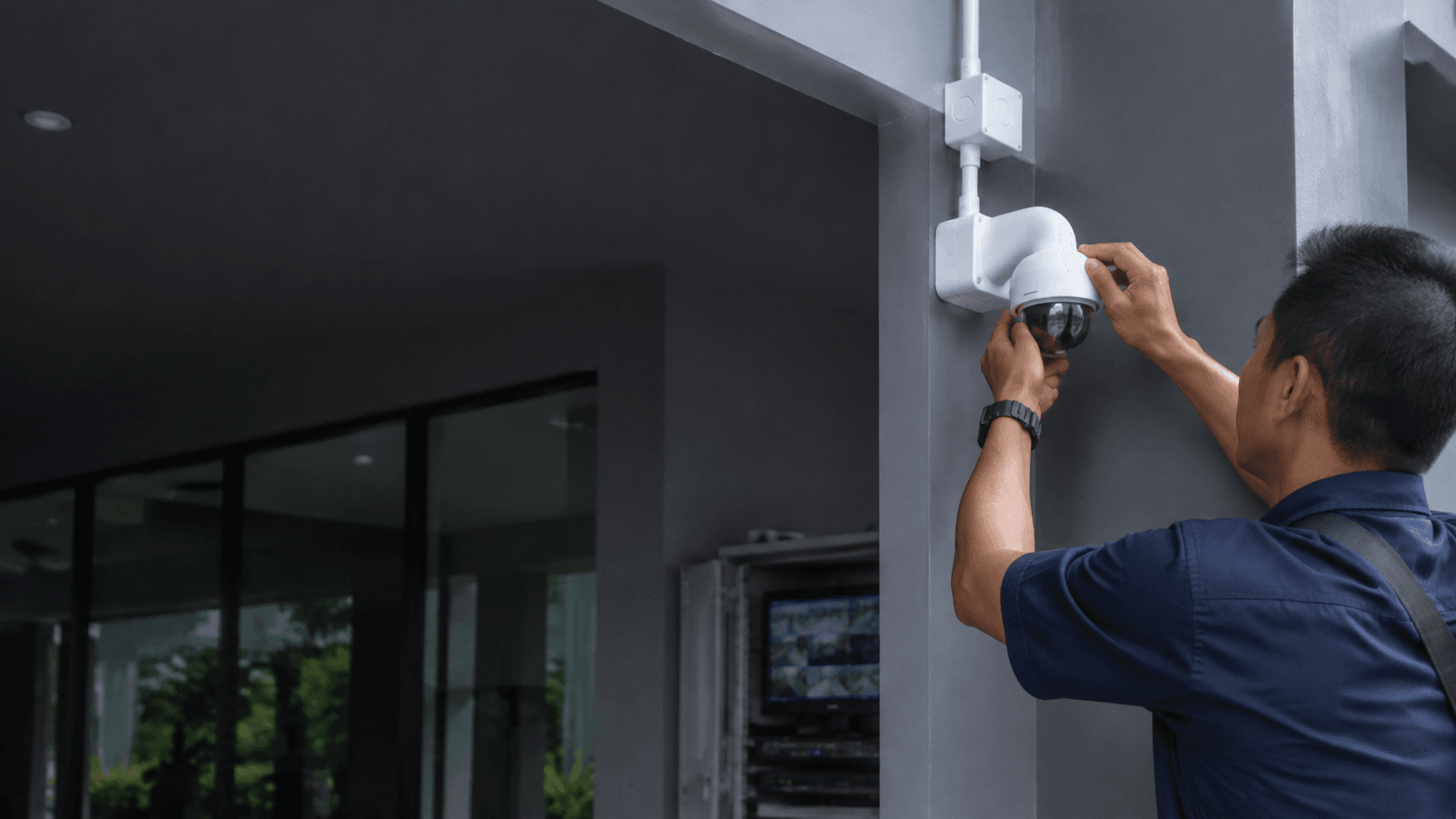
The exact-match query nvr 8 channel price is a shopping question, not a specification question. Buyers searching it usually already know they want eight camera inputs; what they lack is a way to tell why one eight-channel recorder costs a fraction of another. The gap is almost never the channel count itself. It is the ports, the decoding ceiling, the storage bay and the software layer sitting on top.
Eyonic Sdn Bhd, a security system supplier in Sarawak, Malaysia, plans, supplies and installs monitoring systems with camera placement, recording and remote viewing for homes, offices, shops and industrial sites. That installation context matters here, because a recorder bought on price alone often needs rework once camera placement and lighting are checked on site.
Nvr 8 Channel Price: What Actually Moves the Number
Four hardware features separate a budget eight-channel recorder from a professional one, and each one adds cost.
- PoE port count. A recorder with eight built-in PoE ports powers and connects eight cameras over one cable run. A recorder with no PoE ports needs a separate switch, which adds hardware and a second point of failure.
- Decoding and resolution ceiling. Recorders differ in the resolution they can record and play back, from 1080p-class units up to 4K and 12MP-class models.
- Storage bays and drive inclusion. Some units ship with a pre-installed surveillance drive, some ship with none, and some accept two drives for longer retention.
- Analytics and app layer. Human and vehicle detection, ONVIF third-party camera support and the quality of the mobile app are software differences that carry real price weight.
Two recorders can both be described as eight-channel and still differ on every one of those four points. That is why a single headline figure for the category is misleading.
Why the Same Eight Channels Cost Different Amounts
A no-drive recorder is the cheapest configuration because the buyer supplies storage separately. A recorder bundled with a multi-terabyte surveillance drive costs more up front but removes a compatibility decision. A recorder with eight PoE ports and 4K decoding costs more again, because the power budget, the network throughput and the processor all have to be sized for it.
Buyers comparing listings should read the storage line first. A recorder advertised without a hard drive is not a cheaper version of the same product; it is an incomplete one until a drive is added.
Choosing the Right Nvr 8 Channel Setup
Eight channels suits a small office, a shop, a clinic or a home with coverage across entry points, a service counter and a rear access route. It stops being the right size when camera count grows past eight, or when a site wants to keep spare channels for future expansion without replacing the recorder.
Three constraints decide the fit.
Camera count against channel count. Eight channels means eight camera inputs. A site planning nine or ten cameras needs a larger recorder or accepts that not every camera records continuously.
Power and cabling. PoE ports remove the need for separate power at each camera, but they also set a power budget. Cameras with heaters, pan-tilt motors or long cable runs draw more than a basic fixed dome.
Retention. How long footage must be kept drives drive size, and drive size drives cost. Retention is a policy decision before it is a hardware decision.
Where Eight Channels Fits and Where It Does Not
For a single shopfront with a counter, a stockroom and a back door, eight channels leaves room for a camera at each point plus a spare. For a multi-floor office with visitor handling and staff movement across several zones, eight channels can be consumed quickly, and the recorder becomes the bottleneck rather than the cameras.
Eyonic's work for the Kuching Immigration Office focused on arrival flow, staff areas, visitor movement and dependable daily operation. That kind of brief is about coverage of movement paths, not about maximising camera count, and it is the pattern most eight-channel buyers are actually trying to solve.
What Is an NVR 8 Channel Recorder?
An NVR 8 Channel recorder is a network video recorder with eight camera inputs. It receives video over the network from IP cameras, writes it to local storage, and serves live and recorded footage to a monitor or a mobile app. It is not an analog DVR; the cameras are IP devices, and the recorder manages them over Ethernet.
The practical difference from a DVR is cabling and camera choice. An NVR accepts IP cameras, which is why PoE ports matter so much on this class of device. A DVR accepts analog cameras over coax. Buyers who already own analog cameras are usually looking at a hybrid or DVR path, not an eight-channel NVR.
ONVIF support is the other defining feature. A recorder that supports ONVIF can generally accept third-party IP cameras; a recorder locked to one brand's ecosystem usually cannot. That single line in a specification sheet determines whether the recorder can be expanded with cameras bought later from a different supplier.
Practical Considerations Before Buying
Price is the last thing to settle, not the first. The sequence below reflects how an installation actually gets scoped.
- Count the camera positions the site genuinely needs, then add one or two for coverage gaps found on site.
- Check lighting at each position before confirming camera type and placement, since a camera chosen for a bright entrance behaves differently in a shaded corridor.
- Decide retention length, then size the drive from that rather than from the largest drive available.
- Confirm whether the recorder needs built-in PoE ports or whether a separate switch is already planned.
- Confirm ONVIF support if cameras from more than one brand are likely.
- Price the recorder, the drive, the cameras, the cabling and the installation as one system, not as separate line items.
Step four is where budget recorders most often fail a site. A recorder without PoE ports forces a switch into the design, and that switch needs its own power and its own enclosure.
Installation and Handover Costs
Hardware is only part of the total. Eyonic's CCTV installation process runs through site survey, system proposal, installation and handover, which means the labour and configuration portion is scoped against the actual site rather than a flat rate.
For reference on how project scale affects budget, Eyonic's Kuching Immigration Office project carried an approximate budget of RM 12,000 to RM 28,000, and the KTA Sarawak Sdn Bhd office project carried an approximate budget of RM 8,000 to RM 18,000. Both are multi-camera commercial installations rather than single-recorder purchases, and both include the survey, cabling and handover work that a bare recorder price excludes.
Eyonic's published package pricing starts at RM 1,599 for a Hikvision CCTV package covering camera supply and setup, basic recording configuration and mobile viewing handover. That figure describes a package, not an eight-channel recorder on its own, and the two should not be compared directly.
Making an Informed Choice on
The useful comparison is not recorder against recorder. It is complete system against complete system, with the same camera count, the same retention target and the same installation scope on both sides.
A buyer who compares a no-drive recorder against a bundled kit is comparing two different products. A buyer who compares a PoE recorder against a non-PoE recorder without adding the switch is comparing an incomplete design against a complete one. Both comparisons produce a price difference that looks like a bargain and is actually a missing component.
Three checks resolve most of the ambiguity. Confirm whether a hard drive is included. Confirm whether PoE ports are built in. Confirm whether the recorder accepts third-party cameras over ONVIF. Those three answers explain most of the spread within the category.
For sites in Sarawak, the practical next step is scoping the recorder against the actual building rather than against a listing. Camera placement, lighting conditions and cable routes change the specification, and a recorder chosen before those are checked often ends up undersized on ports or storage.
Share the location, property type and required system with Eyonic on WhatsApp at +60 11-5111 7959 to move from a headline price to a scoped one.