
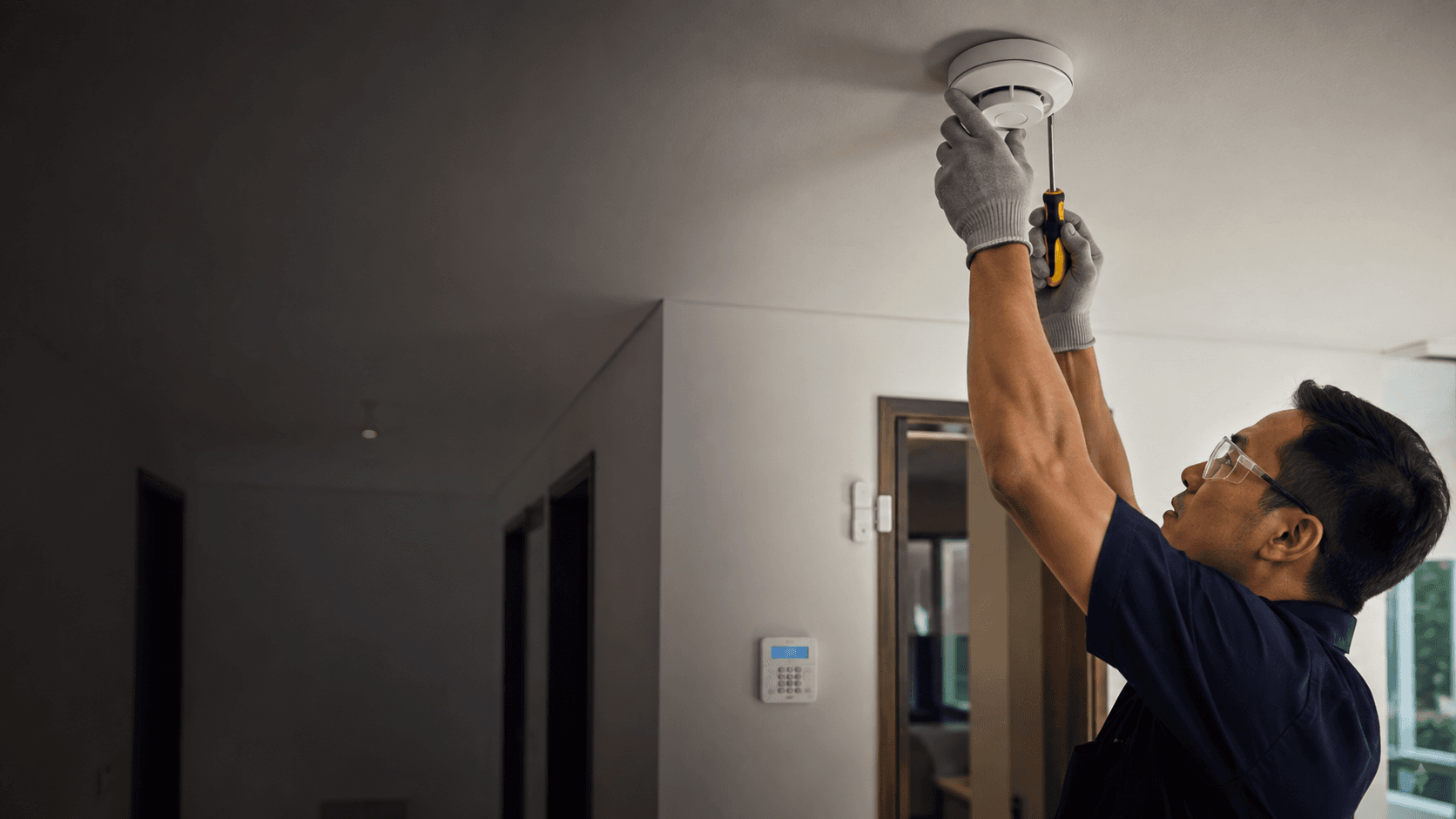
Fire Detector Installation Basics for Malaysia Homes and Offices
Fire detector installation starts with understanding what each device type detects. Smoke detectors respond to visible combustion particles, while heat detectors trigger on rapid temperature rise. A complete fire detector installation plan usually combines both types because cooking steam or dust can cause false alarms in smoke-only setups.
For Malaysian properties, the practical difference between residential and commercial fire detector installation matters. A single-storey terrace house needs fewer detection points than a multi-level office with enclosed rooms, corridors, and a kitchen. The building layout determines how many detectors are required and where they should sit.
The planning phase for any fire detector installation should consider ceiling height, air movement from air conditioning, and the location of potential fire sources. These factors influence detector response time more than the brand of equipment chosen.
Malaysia Fire Detector Installation Requirements and Wiring
Malaysia does not publish a single national code that applies uniformly to every building type, so fire detector installation requirements vary by property classification and local authority jurisdiction. Commercial premises typically fall under stricter rules than private residences, and the local fire department or building authority may impose additional conditions during plan approval.
Wiring choices divide fire detector installation into two broad categories. Hardwired systems connect detectors to the mains electrical supply with a backup battery, which suits permanent installations in new buildings or major renovations. Battery-operated detectors run independently and work well for retrofitting existing homes where running new cables would be disruptive.
A wired fire detector installation usually involves a dedicated circuit from the distribution board. This separation prevents a tripped general circuit from disabling the detection system. The wiring should also include an interconnect line so that when one detector activates, all connected units sound together.
Smoke Detection Point Placement and Interconnect Planning
Ceiling placement remains the preferred position for smoke detectors because smoke rises and accumulates at the highest point of a room. A fire detector installation that mounts units on the ceiling should keep them at least a short distance from walls and corners, where dead air spaces can delay detection.
Interconnected smoke detectors form the backbone of an effective fire detector installation for multi-room properties. When units are wired or wirelessly linked, activation of any single detector triggers the entire network. This design gives occupants early warning even when the fire starts in a remote part of the building.
Kitchens and bathrooms need careful treatment during fire detector installation planning. Steam from cooking or showering can trigger nuisance alarms, so detectors should sit several metres away from these areas rather than directly inside them. Heat detectors offer a better fit for kitchen spaces where smoke detectors would false-alarm regularly.
Battery, Wired, and Mains-Powered Detector Options
Battery-powered detectors deliver the simplest fire detector installation path. Units mount with screws or adhesive backing, and the battery powers the sensing chamber and alarm. Modern sealed-battery designs remove the need for annual battery changes, though the entire unit requires replacement when the battery depletes.
Mains-powered detectors with battery backup provide continuous operation during power outages. This configuration suits a permanent fire detector installation in buildings where electrical access is available. The installation work involves connecting to the mains supply, which typically requires an electrician's involvement under local wiring regulations.
The choice between battery and wired fire detector installation depends on building age and renovation scope. Older homes without accessible ceiling wiring favour battery units, while new construction or major renovations can accommodate the cabling needed for interconnected mains-powered systems.
Common Installation Steps and Testing Checklist
A structured fire detector installation follows a logical sequence from site assessment through final verification. The process below outlines the core actions for a typical installation project.
- Survey the property to map room layouts, ceiling heights, air conditioning outlets, and potential false-alarm sources before any fire detector installation work begins.
- Select detector types and quantities based on the survey, then confirm the placement plan accounts for interconnect wiring or wireless signal range between units.
- Mount each detector at the planned ceiling position, secure the base plate, and complete the wiring connections or insert the battery according to the manufacturer's instructions.
- Test every detector individually with the test button, then trigger one unit to confirm the entire interconnected fire detector installation sounds together.
Testing should continue after the initial fire detector installation. Monthly test-button checks confirm each unit responds correctly, and cleaning the detector vents prevents dust buildup from dulling sensitivity. Detectors have a finite service life, so replacement schedules should follow the manufacturer's guidance rather than waiting for visible failure.
Fire Detector Installation Project Examples and Local Support
Eyonic Sdn Bhd operates as a security system supplier in Sarawak, Malaysia, delivering planning, supply, and installation services for homes, offices, shops, and industrial sites. The company's project history includes work for the Kuching Immigration Office, where practical support focused on arrival flow, staff areas, visitor movement, and dependable daily operation. That project centred on CCTV and ELV systems rather than fire detector installation specifically, but it demonstrates the site-survey-to-handover approach Eyonic applies across security and low-voltage work.
The company's CCTV installation process follows a clear sequence of site survey, system proposal, installation, and handover. A similar structured method applies when Eyonic evaluates fire detector installation requests, starting with understanding the property layout and ending with a working system the client can operate confidently.
For properties in Sarawak considering fire detector installation, working with a local supplier who understands the regional building context offers practical advantages. Eric Yong, founder of Eyonic Security Systems, brings more than 10 years of industry experience in technical installation of digital security solutions for commercial businesses in Sarawak. Share location, property type, and required system with Eyonic on WhatsApp at +60 11-5111 7959 for the next practical step.