
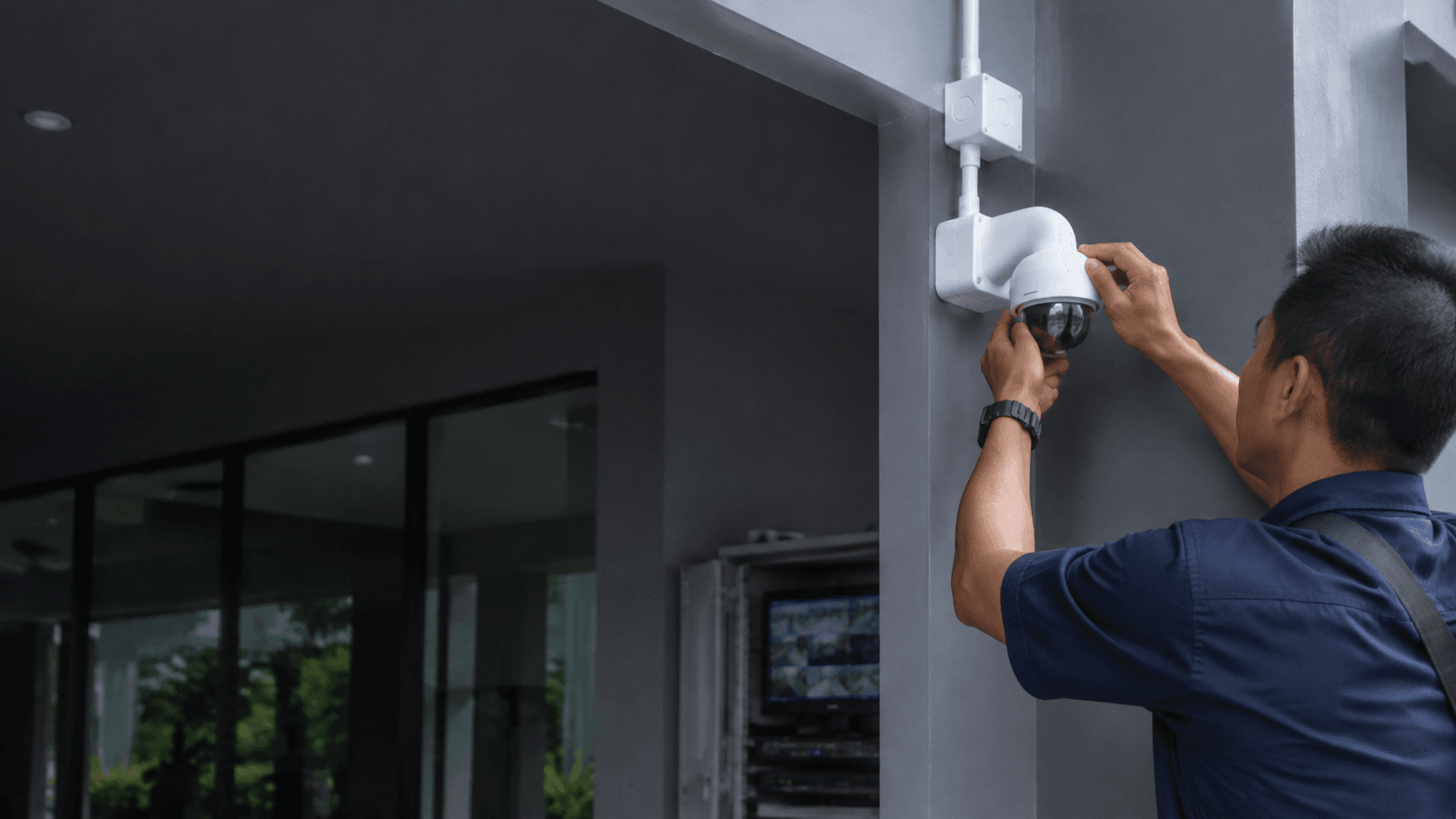
The exact-match query wireless camera system for home describes a category rather than a single product. The label covers battery cameras that talk to a phone app, plug-in Wi-Fi cameras, and full kits where cameras stream to a Wi-Fi network video recorder. Each version solves a different problem, and the differences matter more than the word "wireless" suggests.
Wireless Camera System For Home. What Matters Before Choosing
Most buyers assume wireless means no cables at all. In practice, the term splits into three arrangements, and only one of them removes every cable.
- Confirm what "wireless" means for the property: cameras on Wi-Fi with power cables, battery cameras with no cabling, or a Wi-Fi NVR kit with a local hard drive.
- Check the Wi-Fi signal at each intended camera position, not just inside the house.
- Decide where recordings live. a recorder hard drive, a microSD card, or a paid cloud plan.
- Walk the property at night and note actual lighting before fixing camera positions.
- Match camera count to entry points, then confirm the recorder channel count leaves room to expand.
- Agree who installs the system and who handles handover, including mobile viewing setup.
Competitor catalogues show how wide the category runs. Night Owl lists AC-powered Wi-Fi systems with Wi-Fi NVRs and expandable hubs, while Lorex groups indoor Wi-Fi cameras separately from outdoor models. Arlo splits its range into battery-powered, plug-in and LTE/Wi-Fi cameras. Those three structures reflect the same underlying question: what is powering the camera, and what is storing the footage.
What Is a Wireless Camera System for Home?
A wireless camera system for home is a set of cameras that send video over a wireless network to a recording or viewing device, rather than through individual video cables back to a recorder. Power delivery is the part buyers most often overlook. A camera can be wireless for video and still need a power outlet, a battery, or a solar panel.
That distinction explains why two systems with similar names behave differently. A plug-in Wi-Fi camera needs an outlet near the mounting point. A battery camera needs a recharge schedule or a solar panel. A Wi-Fi NVR kit needs a recorder position with power and a stable network connection, but the cameras themselves avoid long cable runs through walls or ceilings.
Wireless, Wi-Fi and Battery Are Not the Same Thing
ZOSI's own FAQ set separates Wi-Fi cameras from wireless cameras, and asks whether wireless CCTV cameras need power at all. The honest answer is that most do. Battery and solar models are the exception, and they trade convenience for charging routines and, in some cases, lower continuous recording capacity.
For a Sarawak home, the practical split usually comes down to this: plug-in Wi-Fi cameras where an outlet already exists under a porch or along a wall, and battery or solar cameras where running power is impractical. A site survey settles which positions fall into which group.
Choosing the Right Wireless Camera System For Home
The right choice depends on four variables: how many entry points need coverage, whether power reaches those points, how long footage must be kept, and whether the household wants a subscription.
Coverage and Camera Count
Start with the points someone could actually reach: gates, car porches, side passages, back doors and ground-floor windows. A typical terrace house needs fewer cameras than a corner lot with two exposed sides. Recorder channel count should exceed the current camera count so a later addition does not force a replacement.
Power and Signal Reality
Wi-Fi cameras depend on signal strength at the mounting point. A camera mounted on a far corner may sit at the edge of coverage even when the phone shows full bars inside the house. Battery cameras avoid that cable problem but introduce a maintenance cycle. Solar panels reduce charging frequency but depend on daily sun exposure, which varies with roof orientation and surrounding trees.
Storage and Subscriptions
Local storage through a recorder hard drive or a microSD card keeps footage in the home and avoids recurring fees. Cloud plans add off-site backup and often unlock extra features. CNET's subscription-free camera coverage and Security.org's review roundups both treat storage as a primary buying decision rather than an afterthought, because it determines both cost and what happens if a camera is removed.
Night Performance
Resolution figures say little about night image quality on their own. Eyonic's own review guidance for ColorVu-style cameras recommends checking actual lighting conditions before confirming placement, because a position that looks adequate in daylight can behave differently after dark. That check belongs in the survey, not after installation.
Practical Considerations for a
Installation quality decides whether a wireless system performs as expected. Eyonic's CCTV installation process runs through site survey, system proposal, installation and handover, which puts the placement decision before any hardware is fixed to a wall.
| Consideration | What It Affects | Practical Check |
|---|---|---|
| Wi-Fi signal at camera position | Video stability and dropouts | Test at the mounting point, not indoors |
| Power source | Whether a battery, outlet or solar panel is needed | Confirm an outlet or plan a charging routine |
| Storage method | Footage retention and recurring cost | Decide between recorder drive, microSD and cloud |
| Night lighting | Usable image after dark | Walk the property at night before fixing positions |
| Recorder channels | Room to add cameras later | Choose a channel count above current camera count |
Two Eyonic projects show how the same planning logic applies at larger scale. The Kuching Immigration Office project focused on arrival flow, staff areas, visitor movement and dependable daily operation. The KTA Sarawak Sdn Bhd project covered staff movement, visitor handling, tidy cabling and clearer daily site control. Both began with what needed to be seen, not with a camera model.
Where Wireless Systems Struggle
Wireless cameras are a weaker fit when a position has no reliable power and no regular maintenance attention, when the Wi-Fi network is already congested, or when continuous high-resolution recording is required around the clock. In those cases a wired or PoE approach often costs less to run over time, even though the cabling work is greater upfront.
Wireless also depends on the home network remaining healthy. A router that drops under load will affect camera streams the same way it affects video calls.
Cost Expectations in Malaysia
Eyonic's published packages sit at RM 1,599 for a Hikvision CCTV package, RM 1,599 for a Hikvision alarm system, and RM 1,599 for an autogate package. Each includes supply, setup and handover steps rather than hardware alone. Larger project work scales well beyond that: the Kuching Immigration Office project carried an approximate budget of RM 12,000 to RM 28,000, and the KTA Sarawak Sdn Bhd project an approximate budget of RM 8,000 to RM 18,000.
Those figures describe completed or quoted scopes, not a fixed price for any single home. Camera count, cable routing, recorder capacity and site conditions all move the number.
Making an Informed Choice About
A wireless camera system for home works best when the decision sequence runs in the right order: define what needs to be seen, confirm power and signal at each position, choose where footage is stored, then select hardware that fits. Reversing that order usually produces either coverage gaps or unused capacity.
For properties in Sarawak, Eyonic Sdn Bhd handles planning, supply and installation across CCTV and ELV systems, with founder Eric Yong working in the industry for more than ten years. The company's project history includes government and engineering consultancy clients alongside residential work.
Share the property location, property type and required system with Eyonic on WhatsApp at +60 11-5111 7959 for the next practical step.