
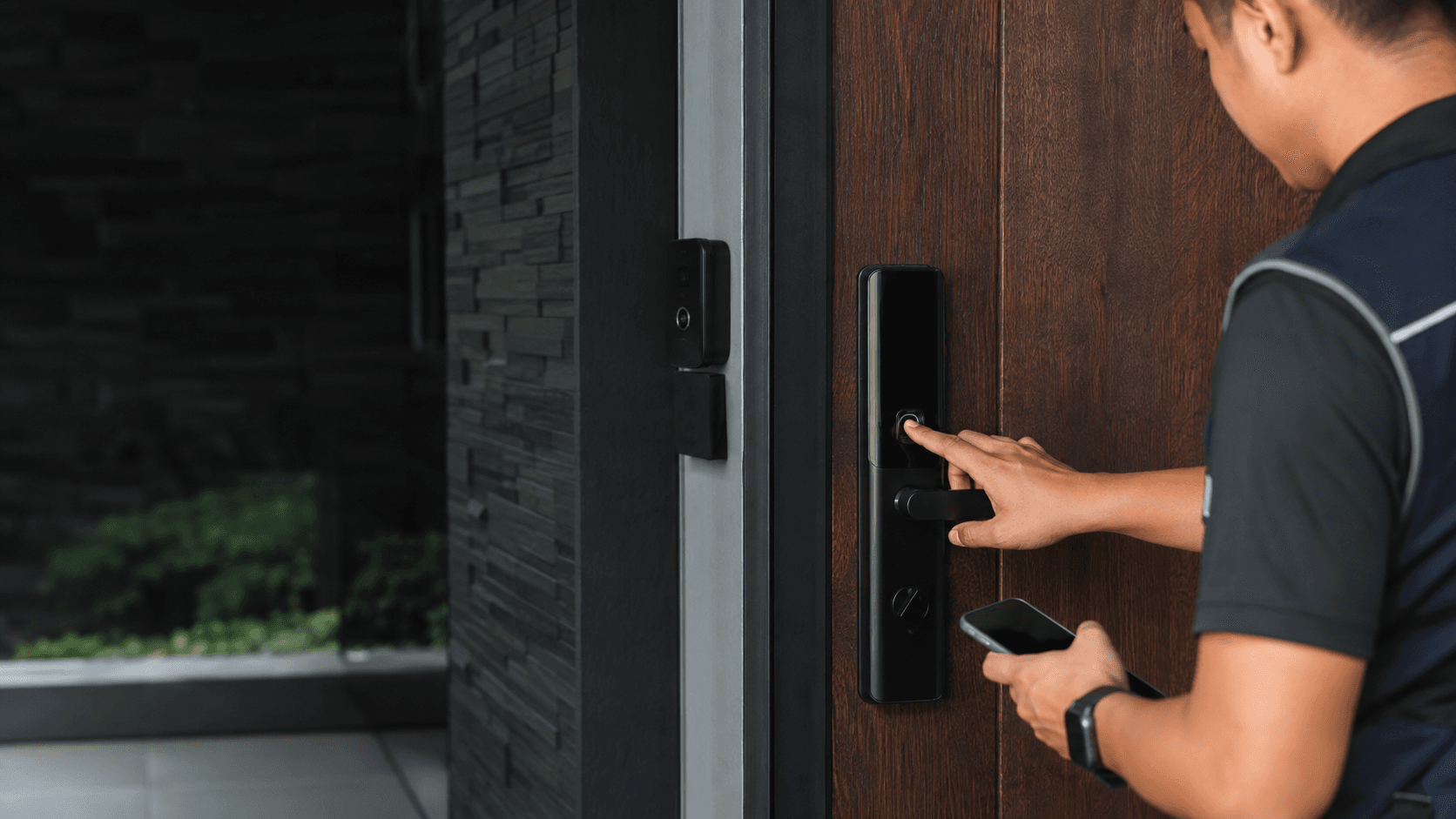
The brand sits in the same category as the wider smart lock market, where the practical questions are who needs access, how the door is built, and what happens when the network or the battery fails. Those questions matter more than the model name on the box.
Lockstate Smart Lock. What to Check Before Buying
Buying decisions for a Lockstate Smart Lock hinge on three things that can be inspected before any money changes hands: the physical door, the people who need entry, and the fallback method when normal operation is unavailable. Eyonic's own product review guidance states that smart locks work best when door condition, user roles and backup method are reviewed before installation, and that for business use the choice between a standalone smart lock and an access-control panel should be checked first.
That order matters because a lock that suits a family home may be the wrong answer for a shop with rotating staff, and a lock that suits a rental unit may be the wrong answer for a factory gate. The rest of this article works through each condition in turn.
What a Lockstate Smart Lock Does on a Door
A Lockstate Smart Lock replaces or augments the mechanical locking hardware on a door so that entry is granted by credential rather than by a cut key. In practice that means the lock holds a list of who may enter, records or reports activity, and allows that list to change without rekeying the door.
The category is commonly described in terms of keyless entry, remote access, temporary access codes and connectivity, and those descriptions are accurate at the category level. What they do not tell a buyer is whether a specific unit will fit a specific door, or whether the credential model matches how a building actually operates. Those are the questions that decide whether the installation is useful or frustrating.
Where the lock sits in the access chain
A door lock is one point in a chain that usually includes the door leaf, the frame, the strike, the hinge and the surrounding wall. A lock that is well chosen but mounted on a misaligned door will still jam. A lock that is well mounted but paired with a weak frame can still be forced. Reviewing the door as a system, rather than the lock as a product, is what prevents most post-installation complaints.
Door Condition and User Roles Decide the Fit
Two doors of the same width can behave completely differently under the same lock. Door condition covers alignment, swing, thickness, existing cut-outs, and whether the door is timber, metal or glass. User roles cover how many people need entry, how often that list changes, and whether entry needs to be time-limited.
Eyonic's smart lock review notes that the door condition, user roles and backup method should be reviewed before installation. That is a short sentence with a lot of practical weight behind it, because each element can independently rule out an otherwise suitable product.
Door condition checks
Alignment is the first check. A door that needs lifting to close, or that rubs along the frame, will place lateral load on a lock mechanism every time it is used. Swing direction is the second check, because deadbolt and lever hardware behave differently depending on which way the door opens. Existing cut-outs are the third, because a door already prepared for a different lock may need additional preparation or may not accept the new hardware cleanly.
Material matters as well. Timber doors can usually be prepared on site. Metal doors may require different tooling and may have internal reinforcement that affects where hardware can sit. Glass doors typically need a different approach entirely, often involving a frame-mounted solution rather than a leaf-mounted lock.
User role checks
User roles determine whether a standalone lock is sufficient or whether a broader access-control approach is warranted. A home with four regular occupants and occasional visitors has a simple role structure. A shop with a manager, shift staff, delivery drivers and cleaners has a role structure that changes weekly, and the lock needs to support that change without friction.
Eyonic's guidance for business use is to check whether a standalone smart lock or an access-control panel is more appropriate. That check is worth doing early, because the two approaches differ in how credentials are issued, how activity is reviewed, and how the system grows when a second or third door is added.
Compared With Access Control Panels
A standalone Lockstate Smart Lock manages one door with its own credential list. An access control panel manages multiple doors from a central point, with credentials and permissions handled in one place. The choice between them is driven by door count and by how much central oversight the site needs.
For a single entrance to a home, a standalone lock is usually the simpler answer. For a building with a main entrance, a staff entrance and a back-of-house door, a panel-based approach avoids managing three separate credential lists that drift apart over time. The trade-off is complexity. a panel system needs more planning, more cabling or network provision, and more configuration before it is useful.
When a standalone lock is the better fit
A standalone lock suits a single door where the people who need entry are known and the list changes slowly. It also suits situations where the door already has suitable preparation and where the surrounding infrastructure, such as power and network, is either present or not required.
When a panel based approach is the better fit
A panel-based approach suits sites where multiple doors need consistent rules, where entry needs to be reviewed centrally, or where the site already runs other building systems that should be coordinated. Eyonic's project work for the Kuching Immigration Office focused on arrival flow, staff areas, visitor movement and dependable daily operation, which illustrates the kind of site where movement across several areas matters more than the behaviour of any single door.
Installation Steps for a
Installation is a sequence rather than a single visit, and the sequence matters because each stage depends on the one before it. Eyonic's installation process follows four stages: site survey, system proposal, installation, and handover.
- Site survey. inspect the door, frame, surrounding surfaces and available power or network provision, and confirm how the door is used through the day.
- System proposal. set out the recommended hardware and configuration, and confirm whether a standalone lock or a panel-based approach fits the site.
- Installation. prepare the door as required, mount and connect the hardware, and configure credentials and permissions.
- Handover. test normal operation, test the backup entry method, and walk through day-to-day use with the people who will manage it.
The survey stage is where most avoidable problems are caught. A door that is out of alignment, a frame that cannot accept the required preparation, or a site with no practical route for power or network will all surface during the survey rather than after the hardware has been ordered.
What handover should cover
Handover is not just a demonstration that the lock opens and closes. It should cover how credentials are added and removed, what the lock does when the network is unavailable, how the backup entry method works, and who to contact when something behaves unexpectedly. A handover that skips the backup method leaves the site exposed to a lockout the first time normal operation is interrupted.
Backup Entry and Daily Operation
Backup entry is the part of a smart lock installation that is most often under-planned and most keenly felt when it is needed. Every credential-based lock needs a defined answer to the question of how the door opens when the primary method is unavailable.
Eyonic's smart lock guidance places backup method alongside door condition and user roles as a pre-installation check, which reflects how often this is the difference between a system that works and one that causes disruption. The backup method should be tested at handover, not assumed.
Daily operation considerations
Daily operation covers how people actually use the door: whether they arrive in groups, whether they carry items that make a keypad awkward, whether they need entry outside normal hours, and whether visitors need to be let in remotely or in person. These patterns determine whether the chosen credential type is convenient or irritating.
Battery and connectivity behaviour also sit in this category. A lock that depends on a network connection will behave differently during an outage than one that holds its credential list locally, and the site should know which situation applies before it becomes urgent.
Edge cases worth planning for
Edge cases include staff turnover where a credential is not returned, a door that is propped open during deliveries, and a period where the site is empty but access is still required for maintenance. Each of these is easier to handle when the credential model and the backup method were chosen with them in mind.
Eyonic is a security system supplier based in Sarawak, Malaysia, working on CCTV and ELV systems for homes, offices, shops and industrial sites. The company's founder, Eric Yong, has more than ten years in the industry, with experience in technical installation of digital security solutions for commercial businesses in Sarawak. Sites that need a lock reviewed alongside cameras, alarms or intercoms can have those systems considered together rather than as separate purchases.
Share your location, property type and required system with Eyonic on WhatsApp at +60 11-5111 7959 for the next practical step.