
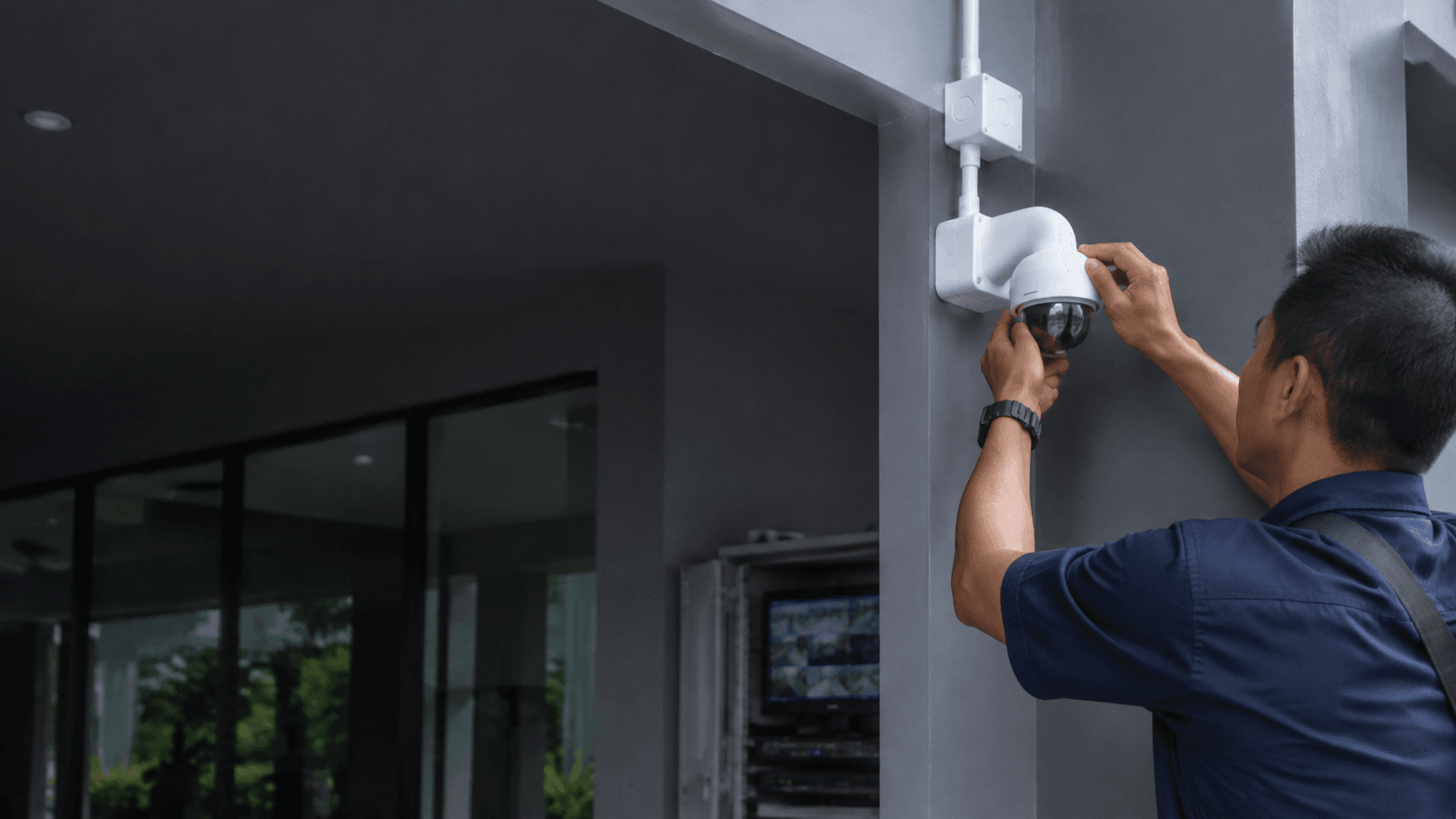
The compatibility question is rarely answered by the brand name alone. Two Eufy products sold side by side can behave differently in the Apple Home app, and the difference usually comes down to the exact model number, the hub in the box, and whether the device was built for HomeKit Secure Video or only for the Eufy Security app.
eufy homekit: what the compatibility question actually covers
Three separate things get bundled under the same phrase, and separating them prevents most buying mistakes.
Native HomeKit support means the device appears directly in the Apple Home app and can be controlled by Siri and automations. HomeKit Secure Video is a narrower feature: the camera streams to Apple's recording service, which requires an iCloud+ plan and a home hub such as a HomePod or Apple TV. A bridge workaround is a third route, where software running on separate hardware exposes a non-HomeKit Eufy device to Apple Home.
A device can sit in one category and not the others. A camera with native HomeKit support may still not offer HomeKit Secure Video. A lock may appear in Apple Home through Matter rather than through HomeKit itself. Treating these as one feature is the source of most disappointment after purchase.
Eufy Homekit across cameras, doorbells and locks
Eufy's HomeKit position has moved over time rather than staying fixed. Coverage of the brand's HomeKit history notes that Eufy stepped away from HomeKit for a period and later returned with newer hardware, including an outdoor camera announced with HomeKit compatibility and a later trio of devices covering a video doorbell, a smart lock and an outdoor camera.
That history matters for buyers because it means older and newer stock can differ sharply. A model that was never HomeKit-capable does not become capable through a firmware update alone, and a model that is capable may still need a specific hub generation to expose that capability.
Indoor cameras are the clearest example of the split. Eufy's own support documentation covers HomeKit setup for Indoor Cam models, which confirms that at least part of the indoor range carries the feature. The same support library lists which Eufy cameras work with HomeKit, which is the authoritative place to confirm a specific model rather than relying on retailer listings.
Doorbells and locks follow the same pattern. Some Eufy video doorbells and smart locks carry HomeKit or Matter support, and others do not. Matter support is not identical to HomeKit support, though it can bring a lock into the Apple Home app on newer Apple home hub software.
HomeKit Secure Video and the hub requirement
HomeKit Secure Video is where the practical constraints concentrate. The camera does not record to Apple's service on its own; an Apple home hub must be present and signed in, and an iCloud+ plan must be active. Without both, the camera may still appear in Apple Home for live viewing while recording stays with Eufy's own storage.
Eufy's HomeBase hub plays a different role. It is Eufy's own recording and management device, and for several Eufy camera generations it is the component that enables HomeKit exposure. A camera sold as a standalone unit and a camera sold in a kit with a HomeBase can therefore behave differently even when the camera model is identical.
The trade-off is straightforward. Recording through HomeKit Secure Video moves footage into Apple's ecosystem and its storage limits, while recording through a HomeBase keeps footage local and typically avoids a subscription. Choosing one usually means accepting the other's constraints, and the choice is made at setup rather than after.
Bridge routes when a model has no native support
When a Eufy device has no native HomeKit support, the common workaround is a software bridge. Homebridge is the widely used open-source option, and packaged alternatives such as HOOBS reduce the configuration work. Both run on separate hardware, often a small single-board computer, and both depend on a community plugin that talks to Eufy's own service.
This route has real costs. It adds a device that must stay powered and updated, it depends on a plugin maintained outside Eufy and Apple, and it can break when either company changes its app or firmware. It also generally does not deliver HomeKit Secure Video, because that feature requires Apple's own certification path rather than a bridge.
For a household that wants one or two cameras visible in Apple Home and is comfortable maintaining a small server, a bridge is a reasonable answer. For a business or a household that needs dependable daily operation without ongoing tinkering, a bridge is a fragile foundation.
What to check before buying or installing in Malaysia
Malaysian buyers face an extra layer of uncertainty because Eufy stock arrives through several channels, and model naming is not always consistent between listings. The checks below reduce that risk before money changes hands.
- Confirm the exact model number, not the marketing name, and match it against Eufy's own compatibility documentation.
- Confirm whether the HomeBase hub is required for HomeKit exposure on that model, and whether the listing includes it.
- Confirm the recording route. HomeKit Secure Video with an iCloud+ plan and Apple home hub, or local recording through the HomeBase.
- Confirm camera placement and actual lighting conditions at the site before fixing positions, since night performance depends on what is really there rather than on a specification sheet.
- Confirm who handles setup, account configuration and handover, and whether that person will also support the bridge if one is used.
Two of these checks are routinely skipped. Buyers often assume a hub is included when it is sold separately, and they often plan camera positions from a floor plan rather than from the lighting and sightlines at the actual location. Both mistakes surface only after installation.
Regional and firmware differences are a genuine open question. Compatibility can vary by market and by firmware version, so a model confirmed as HomeKit-capable in one region is not automatically confirmed for a Malaysian unit. Verifying against the documentation for the specific unit in hand is the only reliable check.
Where Eyonic fits for Sarawak homes and offices
Eyonic Sdn Bhd plans, supplies and installs CCTV and ELV systems in Sarawak, covering camera placement, recording configuration, NVR setup and remote viewing for homes, offices, shops and industrial sites. The company's installation process runs through site survey, system proposal, installation and handover.
That process matters for a HomeKit question because the hard parts are physical and operational rather than app-based. Camera placement, lighting at the actual site, cabling, recording storage and who holds the account are all decided before a device ever appears in the Apple Home app. Eyonic's own guidance on ColorVu-style cameras is to check real lighting conditions before confirming placement, and the same principle applies to any camera being positioned for night use.
Completed work includes the Kuching Immigration Office, where the focus was arrival flow, staff areas, visitor movement and dependable daily operation, and KTA Sarawak Sdn Bhd, an office setup supporting staff movement, visitor handling, tidy cabling and clearer daily site control. Both illustrate the pattern. the value sits in placement, cabling and handover rather than in the app layer.
Eyonic's published packages are priced at RM 1,599 for a Hikvision CCTV package, RM 1,599 for a Hikvision alarm system and RM 1,599 for an autogate package, each including supply, setup and handover. These are Hikvision-based systems rather than Eufy products, so a household already committed to Eufy hardware should treat Eyonic as a source of installation and placement support rather than as an Eufy retailer.
Where a Sarawak property needs cameras in specific positions, tidy cabling, a recording setup that survives a power interruption, and a handover that leaves someone able to operate the system, that work is within Eyonic's stated scope. Where the requirement is specifically Eufy Homekit compatibility for a particular model, the model documentation is the deciding source, and Eyonic's role is limited to the physical installation around it.
For a property in Sarawak, sharing the location, property type and required system with Eyonic on WhatsApp at +60 11-5111 7959 is the practical next step.