
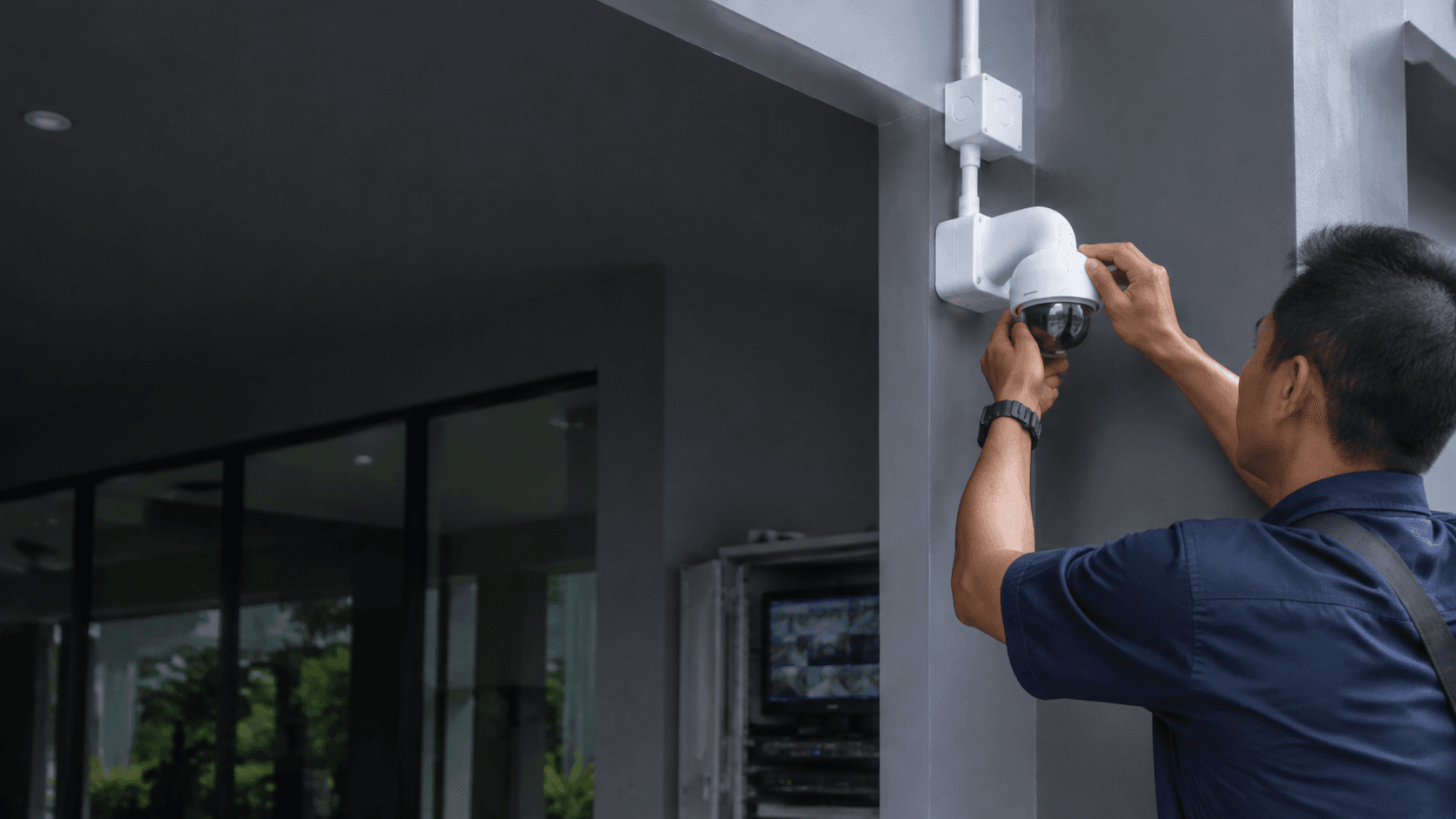
Surveillance Cameras. What Matters Before You Choose
Choosing surveillance cameras starts with the site, not the camera model. A camera that works well in a bright shop may fail in a dim corridor. Eyonic's CCTV installation process begins with a site survey, then a system proposal, installation, and handover, which keeps the whole setup grounded in real conditions.
The practical sequence for planning surveillance cameras follows a clear order:
- Define the areas that need coverage, such as entrances, staff zones, or visitor paths.
- Check the lighting at each spot, since placement depends on actual conditions.
- Decide between wired and wireless based on power access and signal reliability.
- Match the camera resolution and lens to the distance and detail required.
- Plan recording storage and remote viewing before installation begins.
Choosing the Right Surveillance Cameras
The main choice in surveillance cameras sits between wired and wireless systems. Wired cameras connect through cables to a recorder, which suits fixed sites that need constant power and stable recording. Wireless cameras rely on Wi-Fi or battery power, which fits rented spaces or spots where running cable is difficult.
Resolution matters more than brand name. A 4K camera captures more detail than a 2K unit, but the extra detail only helps when the lens covers the right area. Eyonic's work on the Kuching Immigration Office project shows how coverage planning comes first: the focus was on arrival flow, staff areas, and visitor movement, not on buying the highest-resolution unit available.
What is surveillance cameras?
Surveillance cameras are video devices that capture and record activity for security monitoring. The term covers indoor and outdoor units, wired and wireless models, and systems that range from a single camera to multi-channel recorders. Most modern surveillance cameras support remote viewing, which lets owners check footage from a phone or computer.
The phrase "surveillance cameras" often overlaps with "CCTV" or "security cameras," but the practical meaning stays the same: a camera system that records what happens in a defined space. For a home, that might mean one camera at the front door. For a business, it usually means several cameras feeding into a network video recorder.
Practical Considerations for Surveillance Cameras
Lighting is the most overlooked factor in surveillance cameras. Eyonic recommends checking actual lighting conditions before confirming placement for ColorVu-style cameras, which are designed to produce color images in low light. A camera positioned without this check may capture dark or washed-out footage that defeats the purpose of the system.
Storage and recording also shape the decision. Local storage on a recorder keeps footage on-site, while cloud storage sends it off-site. Each has trade-offs. local storage avoids monthly fees but can be stolen or damaged, while cloud storage costs more but survives physical incidents. The right choice depends on whether the footage is for daily review or for evidence after an event.
How do surveillance cameras handle different site types?
Homes typically need fewer cameras with simpler setups, often wireless units that the owner can manage. Offices and shops need more structured systems because they have staff areas, visitor paths, and inventory zones that all need coverage. Industrial sites add factors like dust, weather, and large open spaces that require weatherproof housings and longer-range lenses.
Eyonic's project for KTA Sarawak Sdn Bhd illustrates the office pattern. The engineering consultancy needed a practical setup in Kuching to support staff movement, visitor handling, tidy cabling, and clearer daily site control. The emphasis on tidy cabling points to a wired system, which keeps the office looking professional while providing reliable recording.
What budget fits a surveillance camera project?
Project budgets vary widely with the number of cameras, the recorder capacity, and the installation complexity. Eyonic lists approximate budgets for its completed projects: RM 8,000 to RM 18,000 for the KTA Sarawak office setup, and RM 12,000 to RM 28,000 for the Kuching Immigration Office project. These ranges show that a single-camera home system costs far less than a multi-camera public office installation.
The budget should include installation, not just equipment. A camera bought online still needs mounting, cabling, and configuration. Eyonic's process covers the full cycle from site survey to handover, which means the quoted price reflects a working system rather than a box of parts.
Making an Informed Choice About
A reliable surveillance camera setup balances four factors: coverage, lighting, storage, and budget. Coverage decides where cameras go. Lighting decides which camera technology will work. Storage decides how long footage stays available. Budget decides how many cameras and what quality the project can afford.
The evidence from completed projects shows that planning beats hardware. The Kuching Immigration Office project succeeded because it focused on arrival flow, staff areas, and visitor movement. The KTA project succeeded because it addressed staff movement, visitor handling, and tidy cabling. Both started with the site conditions, not with a camera catalog.
For sites in Sarawak, Eyonic offers planning, supply, and installation for homes, offices, shops, and industrial locations. The company's founder, Eric Yong, has over 10 years of experience in technical installation of digital security solutions for commercial businesses. That background supports the practical approach: understand the site, propose a system, install it properly, and hand over a system that works daily.
Share your location, property type and required system with Eyonic on WhatsApp at +60 11-5111 7959 for the next practical step.