
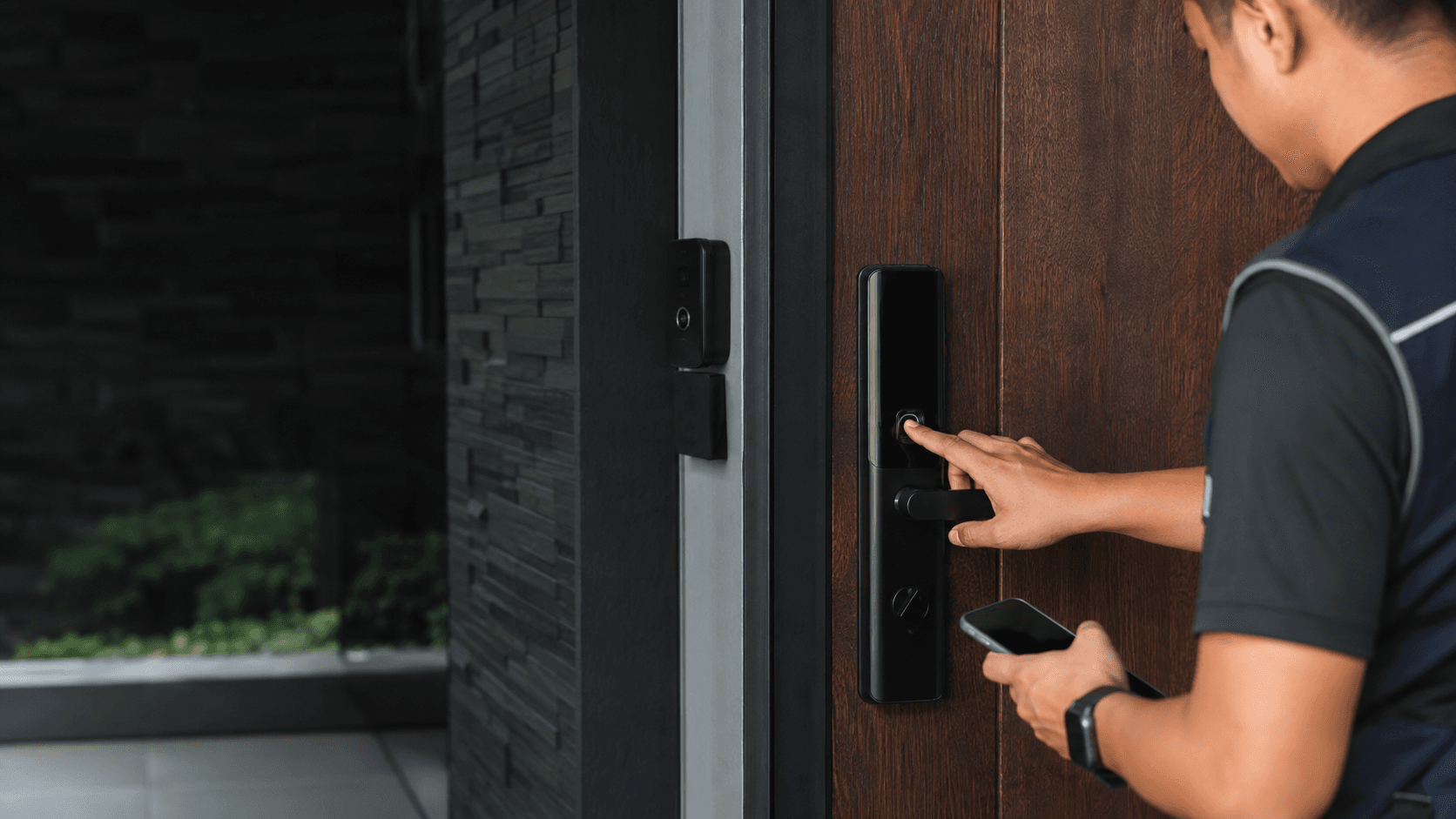
Both routes remove the lost-key problem that shared storage creates. They differ in who manages the user list, how the lock gets power, and what happens on the day the reader is standing at the door with a dead battery.
Locker With Fingerprint. What Buyers Compare
Buyers comparing a locker with fingerprint entry usually weigh three things: how the lock is fitted, who controls enrolment, and what the fallback is when the primary method fails. A fingerprint padlock hangs on an existing hasp. A built-in biometric locker lock replaces the lock body inside the door. An access-control setup moves the decision to a panel that can drive several compartments at once.
The competitor set shows how thin most of this coverage is. Across seven analysed pages, none used the complete query in the H1 and none used the main entity in an H1. Median word count was 334 and median heading count was 2. Most pages sell a single product rather than explain the decision.
Three clusters dominate. Biometric safes with litre capacities and pricing. Fingerprint-controlled workplace lockers with almost no extractable body content. Fingerprint padlocks and valet or cabinet locks sold as standalone products. Recurring topics across those pages are biometric access control, keyless entry, USB rechargeable locks, and gym or school lockers.
Fingerprint Padlock Versus Built-In Locker Lock
A fingerprint padlock is the lowest-friction option because it needs no wiring and no door modification. It suits a single user, a gym locker, a toolbox, or a cabinet with an existing hasp. The trade-off is that the print list lives on the device, so a shared locker with rotating users means re-enrolling prints by hand.
A built-in biometric locker lock sits inside the door and looks like part of the furniture. It suits an office locker bank or a school where appearance and tamper resistance matter. It usually needs a power plan, either batteries or a low-voltage feed, and it may need the door prepared to accept a different lock body.
An access-control setup is the third route. It moves authentication to a reader or panel and can release several compartments from one system. That is the right shape when an administrator needs to grant and revoke access centrally, and the wrong shape when the requirement is one cabinet in one room.
Where fingerprint lockers fit in Malaysia
Shared facilities drive most of the demand: gyms, schools, offices, and staff storage in commercial buildings. In Sarawak, the same pattern shows up in office fit-outs where staff movement and visitor handling already need to be managed. Eyonic's work for the Kuching Immigration Office focused on arrival flow, staff areas, visitor movement, and dependable daily operation, and the KTA Sarawak Sdn Bhd project covered staff movement, visitor handling, tidy cabling, and clearer daily site control.
Humidity is a real constraint in Malaysian buildings. A padlock rated for outdoor use is a different product from an indoor cabinet lock, and the rating should come from the manufacturer's datasheet rather than from a listing title. Where a locker bank sits in a covered but open corridor, that distinction decides whether the lock survives the first year.
What to Check Before Choosing a Locker With Fingerprint
Most failures trace back to something that was not checked before the lock was ordered. The checks below apply whether the plan is a padlock, a built-in lock, or a panel-driven setup.
- Door or hasp condition. A padlock needs a sound hasp and enough clearance. A built-in lock needs a door that can accept the lock body without weakening the frame.
- User roles. Decide whether one person, a fixed group, or a rotating group needs access, because that determines whether prints are enrolled on the device or managed centrally.
- Backup entry method. Every fingerprint lock needs a documented second way in, whether that is a key, a code, or an administrator override.
- Power or battery plan. Confirm whether the lock runs on batteries or a low-voltage feed, and who replaces or monitors it.
- Admin rights. Name the person or role that can add and remove users, and record how that handover happens when staff change.
The backup method is the check most often skipped. A fingerprint lock with no key override and no administrator path becomes a problem the first time a sensor fails or a battery drains.
What a fingerprint lock cannot fix
A biometric lock changes how a door is opened. It does not change the strength of the locker, the condition of the frame, or the fact that a determined person can attack the hinge side. Where the contents justify real security, the locker body matters as much as the lock.
It also does not solve shared-use turnover on its own. If a gym or school reassigns the same locker to a new user each term, someone has to delete the old prints. A lock with a small print capacity and no easy deletion path becomes an administrative burden rather than a convenience.
How Eyonic Plans a Locker With Fingerprint Installation
Eyonic Sdn Bhd is a security system supplier in Sarawak that plans, supplies, and installs CCTV and ELV systems for homes, offices, shops, and industrial sites. The documented process runs through site survey, system proposal, installation, and handover.
That sequence matters for locker work because the survey is where the door condition, user roles, and backup method get settled. Eyonic's published guidance on smart lock door access makes the same point: smart locks work best when the door condition, user roles, and backup method are reviewed before installation, and for business use the check is whether a standalone smart lock or an access-control panel is more appropriate.
Eric Yong, founder of Eyonic Security Systems, has worked in the industry for more than ten years and is experienced in technical installation of digital security solutions for commercial businesses in Sarawak. That background is relevant to locker banks because the work sits between a lock and a wider access system.
One limit should be stated plainly. Eyonic's published product coverage documents smart lock door access and access control. It does not document a specific fingerprint locker or cabinet lock model, so sensor type, print capacity, battery life, and IP rating cannot be confirmed from Eyonic's own material. Those figures have to come from the manufacturer datasheet for whichever model is proposed.
Pricing follows the same rule. Eyonic's published packages are the Hikvision CCTV package at RM 1,599, the Hikvision alarm system at RM 1,599, and the autogate package at RM 1,599. No published price covers fingerprint locker supply or installation, so a locker project is quoted from the survey rather than from a list.
What the survey should produce
A useful survey output names the compartments in scope, the number of users, the entry method for each group, the power source, and the fallback. It should also state who holds administrator rights after handover, because that is the detail that decides whether the system stays usable six months later.
Where a site already runs CCTV, an alarm, or an intercom, the locker decision should be made alongside those systems rather than after them. Cabling routes, power availability, and who responds to an alert are shared questions.
Practical Next Step for a
The decision narrows quickly once the door condition, user roles, and backup method are known. A single-user gym locker points to a fingerprint padlock. An office locker bank with fixed staff assignments points to a built-in biometric locker lock. A multi-compartment facility with central administration points to an access-control panel.
Before ordering anything, confirm the model's sensor type, print capacity, battery life, and IP rating from the manufacturer datasheet, and confirm whether the supplier installs it or only ships it. A product listing answers the first question and rarely answers the second.
Share the location, property type, and required system with Eyonic on WhatsApp at +60 11-5111 7959 for the next practical step.