
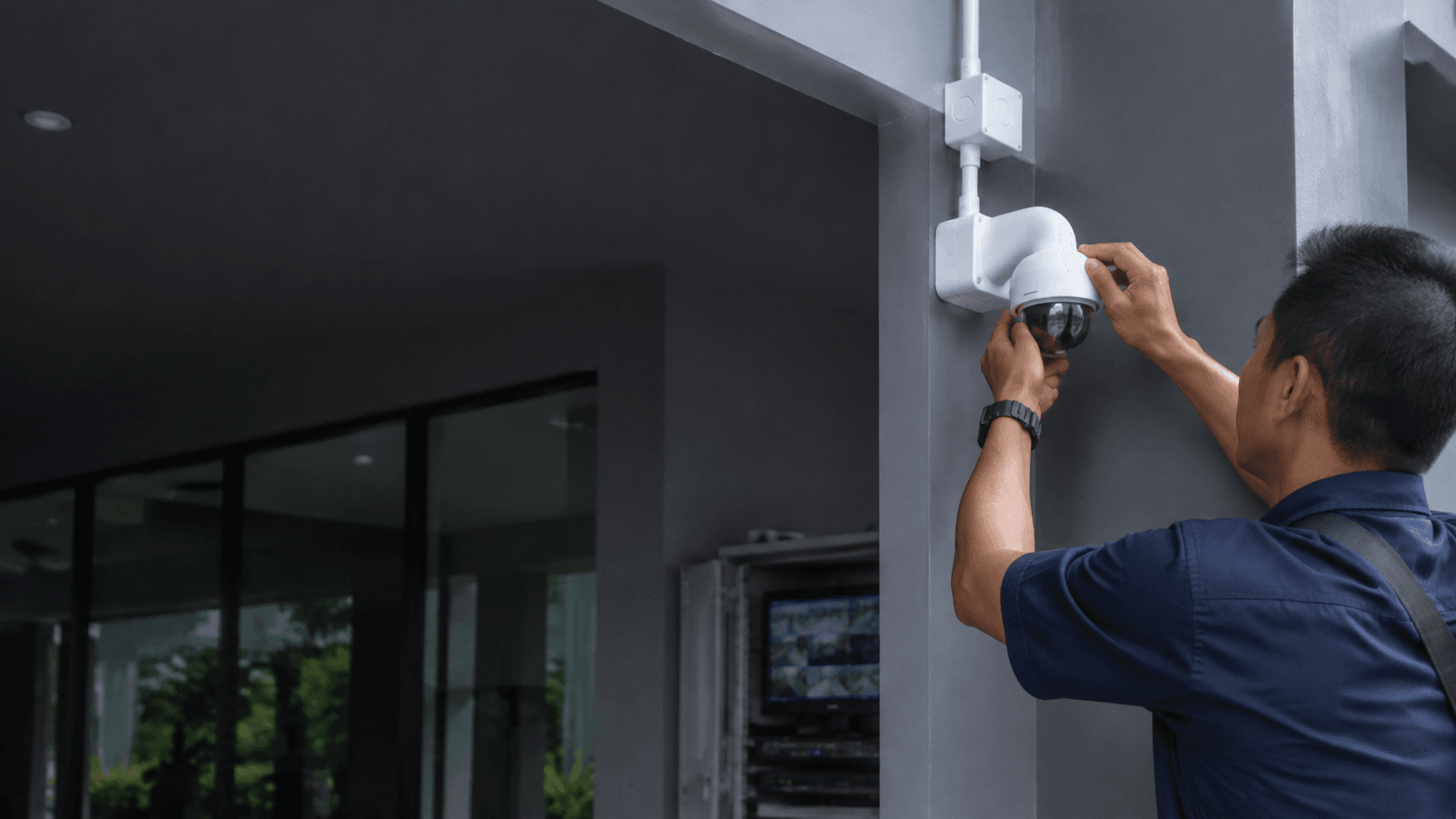
The exact-match query video surveillance cameras describes a system rather than a single boxed product. A working setup combines cameras, a recorder, cabling or network links, and a viewing method. In Sarawak, Eyonic Sdn Bhd plans, supplies and installs these systems for homes, offices, shops and industrial sites, covering camera placement, recording and remote viewing.
Buyers comparing quotes across Malaysia usually face the same problem: two quotations can look identical on paper while producing very different results on site. The difference sits in how the site was read before the equipment list was written.
Video Surveillance Cameras. What Buyers in Malaysia Should Know
A video surveillance cameras system is judged by what it records, where it records it, and how quickly someone can review the footage afterwards. Resolution and brand matter less than whether the cameras actually see the entrances, counters, walkways and storage areas that matter to daily operations.
Four practical questions separate a workable quotation from a weak one:
- Which specific areas must be covered, and which can be left out?
- What happens at night or in low light at each of those areas?
- Who reviews footage, and from where?
- What happens when a camera, cable or recorder fails?
Eyonic's founder, Eric Yong, has worked in the industry for more than 10 years and is experienced in technical installation of digital security solutions for commercial businesses in Sarawak. That background shapes how sites are read before any equipment is proposed.
Homes, shops, offices and industrial sites behave differently
A home usually needs a small number of cameras at the gate, car porch and main door, with mobile viewing for the owner. A shop needs counter and entrance coverage where staff and cash handling happen. An office needs arrival flow, staff areas and visitor movement covered without making staff feel watched at their desks. An industrial site needs wider coverage across yards, loading areas and perimeter routes, where cable runs and power availability often decide the design more than the camera choice does.
The same camera model can be right for one of these and wrong for another. A wide view that suits a shop counter may leave a factory gate too small to identify anyone.
How Video Surveillance Cameras Are Planned Before Installation
Eyonic's CCTV installation process follows four stages: site survey, system proposal, installation, and handover. Each stage exists to remove guesswork before money is committed.
- Site survey. The property is walked through to identify entry points, high-value areas, existing cabling, power points and mounting surfaces. Lighting at each candidate position is checked at the times of day that matter.
- System proposal. The survey findings become a written scope: which positions are covered, how recording is stored, how footage is viewed, and what the work includes.
- Installation. Cameras, cabling and the recorder are installed and configured, with camera placement and NVR setup handled as part of the same job.
- Handover. Recording and remote viewing are demonstrated so the people who will actually use the system know how to find footage and check a live view.
The survey stage is where most disagreements between a quotation and a finished job are prevented. A proposal written without a site visit tends to assume standard cable lengths, standard mounting heights and standard lighting, none of which hold across Malaysian properties.
Why the proposal matters more than the equipment list
A proposal should state what is covered and what is not. If a quotation lists cameras and a recorder but never says which door, counter or walkway each camera watches, the buyer has no way to check the design against the site. A clear proposal also separates supply from installation, so it is obvious whether cabling, configuration and handover are included.
What Video Surveillance Cameras Cost in Malaysia
Eyonic's published package pricing starts at RM 1,599 for a Hikvision CCTV package covering camera supply and setup, basic recording configuration, and mobile viewing handover. The same RM 1,599 tier applies to a Hikvision alarm system and to an autogate package, so the entry price reflects a defined scope rather than a fixed camera count.
Larger sites move well beyond that tier. Eyonic's Kuching Immigration Office project carried an approximate budget of RM 12,000 to RM 28,000, and the KTA Sarawak Sdn Bhd office project carried an approximate budget of RM 8,000 to RM 18,000. Those ranges reflect public-office and commercial-office scopes rather than a single-room installation.
Three things push a video surveillance cameras budget upward:
- Camera count and spread. More positions mean more cameras, more cable and more installation time.
- Cable routing difficulty. Long runs, concrete walls, ceilings without access and outdoor routes all add labour.
- Recording and viewing requirements. How long footage is kept and how many people need remote access both affect the recorder and network side of the job.
Cost is therefore a function of the site, not of a price list. Two properties with the same number of cameras can land in different budget bands once routing and coverage are worked out.
Camera Placement and Lighting Checks That Change Results
Camera placement decides what a system is worth. A well-positioned camera at a doorway usually contributes more than an extra camera pointed at open space.
Eyonic recommends checking actual lighting conditions before confirming placement for ColorVu-style cameras. Colour night imaging depends on the light actually present at the position, so a spot that looks bright during a daytime survey can behave differently after dark. The check is done at the position itself, not from a general assumption about the area.
Placement decisions that commonly change outcomes:
- Height and angle. Mounting too high captures heads and shoulders rather than faces; mounting too low invites tampering.
- Backlight. A camera facing a bright entrance or window can lose detail in the area that matters most.
- Coverage overlap. Entrances and cash counters benefit from two angles, so a single failure does not create a blind spot.
- Obstruction over time. Trees, signage, parked vehicles and stored goods can block a view months after installation.
These are site conditions, not product features. No specification sheet can confirm that a chosen position sees a gate at night; only a check at that position can.
Remote viewing and NVR setup
Remote viewing is only useful if it works on the devices the owner actually carries and if the people who need access have been set up correctly. NVR setup covers recording schedules, storage and the accounts that can view footage. Handover should include a live demonstration, because a system nobody can operate confidently tends to be ignored.
A Local Project Example. Kuching Immigration Office
Eyonic completed a project for the Kuching Immigration Office in Sarawak. The work needed practical support for a public office in Kuching, focused on arrival flow, staff areas, visitor movement and dependable daily operation.
That scope shows how a public-facing site differs from a home. Arrival flow means the entry route and queue areas need coverage that shows how people move through the building. Staff areas need coverage that supports daily operations without turning into desk-level monitoring. Visitor movement needs continuity between the entrance and the areas visitors reach. Dependable daily operation means the system has to keep recording through ordinary working days without constant attention.
The approximate budget for that type of work was RM 12,000 to RM 28,000. A comparable commercial office scope, the KTA Sarawak Sdn Bhd project, needed a practical office setup in Kuching to support staff movement, visitor handling, tidy cabling and clearer daily site control, with an approximate budget of RM 8,000 to RM 18,000.
Both examples point to the same lesson: the brief is written around how the site is used, and the equipment follows.
Questions to Ask Before Confirming a Supplier
The right questions are about scope and follow-through rather than brand names.
- Will a site survey be carried out before the quotation is finalised?
- Which specific positions will be covered, and which will not?
- Has lighting at each position been checked at the relevant time of day?
- Is installation, cabling, NVR setup and handover included in the stated price?
- Who will demonstrate the system, and will remote viewing be tested on the owner's own device?
- What is the process if a camera or recorder fails after handover?
A supplier who can answer these in writing is easier to hold to the agreed scope. A supplier who cannot is a risk regardless of the equipment offered.
For a next practical step, share the location, property type and required system with Eyonic on WhatsApp at +60 11-5111 7959.