
Most published ADT camera pricing comes from United States sources and quotes figures in US dollars for Google Nest hardware or ADT-branded cameras sold through ADT Pro Install and ADT Blu. None of that pricing is verified for Malaysia, and no verified ADT camera, equipment, monitoring, or installation figure exists for the Malaysian market in the evidence available here. That gap matters because a reader comparing a US headline price against a local quotation is comparing two different cost structures, not two prices for the same thing.
What can be stated with confidence is how camera pricing is built. A camera cost is the sum of hardware, cabling and mounting, recording and storage, configuration labour, and any recurring service attached to the system. Each of those lines moves independently, which is why two quotations for the same number of cameras can differ substantially.
What the Adt Cameras Price Usually Includes
A camera price is rarely a single product cost. It bundles several components that are quoted together because they only function as a set.
- Site survey to confirm sightlines, lighting, mounting points, and cable routes before any hardware is specified.
- System proposal setting out camera positions, recording method, storage duration, and viewing access.
- Supply of cameras, recorder, cabling, connectors, and mounting hardware.
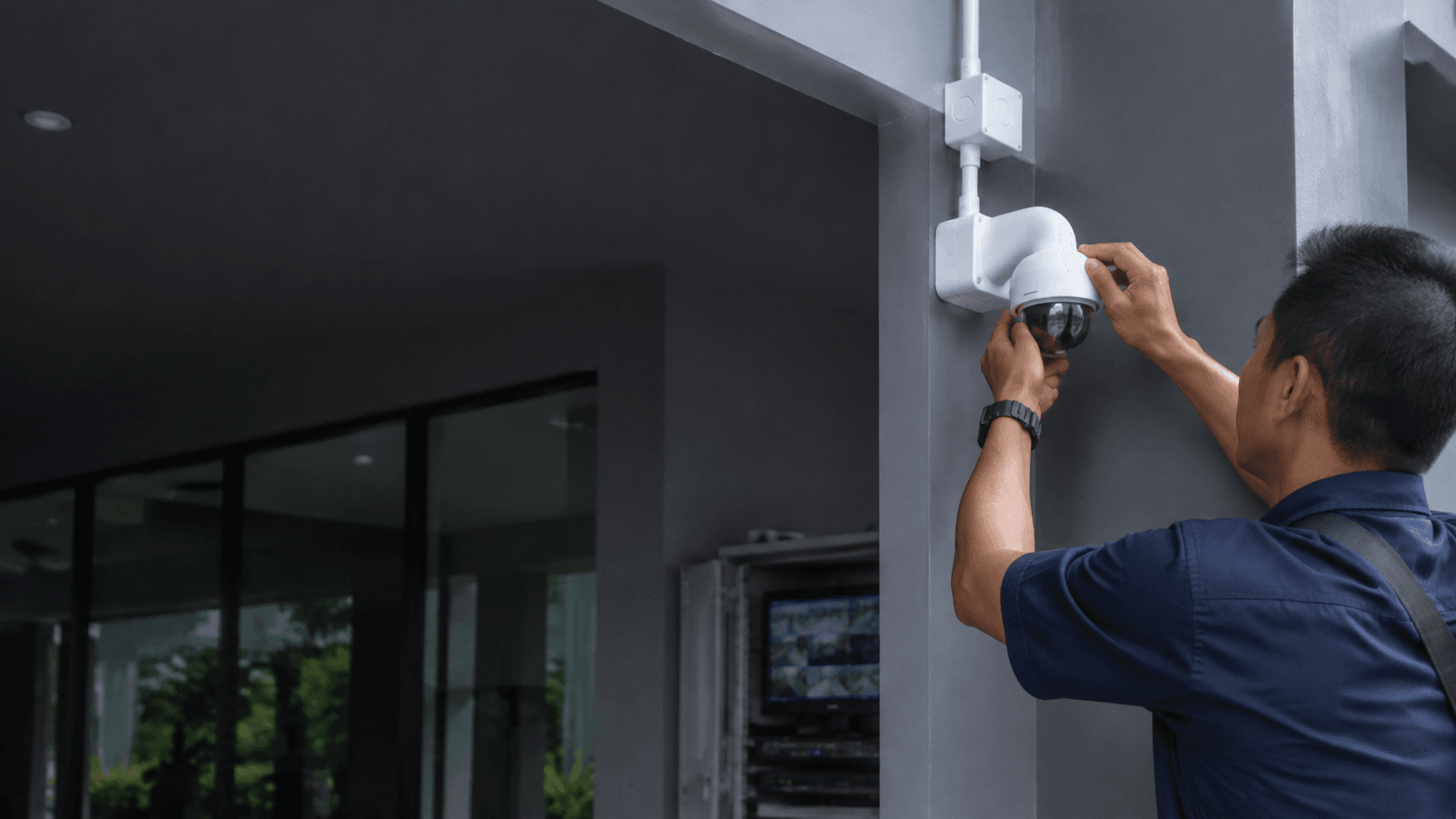
- Installation, including cable runs, termination, mounting, and power arrangements.
- Configuration of recording schedules, motion or event settings, and remote viewing on phones or desktops.
- Handover covering user access, basic operation, and what to do when something stops working.
Eyonic's own CCTV installation process follows that sequence: site survey, system proposal, installation, and handover. The order is not administrative. A survey that happens before pricing prevents a quotation from being built on assumed camera positions that later prove unusable.
Recurring charges sit outside the equipment figure. Monitoring, cloud storage, and subscription viewing features are billed separately from hardware in most camera offerings, and they continue after the installation is paid for. A buyer comparing a one-off equipment price against a monthly plan is comparing a capital cost against an operating cost.
Where the Hidden Cost Sits
The costs that surprise buyers are usually physical rather than technical. Long cable runs through finished walls, mounting heights that need access equipment, power points that do not exist where the camera needs to go, and lighting conditions that require a different camera type than the one originally quoted. Each of these is discoverable during a survey and expensive to discover afterwards.
Eyonic recommends checking actual lighting conditions before confirming placement for ColorVu-style cameras, because low-light performance depends on what the site actually looks like at night rather than on a specification sheet. A camera chosen for the wrong lighting condition is a cost paid twice: once for the wrong unit and once for the replacement.
Adt Cameras Cost Compared With Local Installation Options
ADT camera pricing in the sources reviewed is structured around two platforms, one using Google Nest cameras with professional installation and one using ADT-branded cameras in a do-it-yourself format. Both are priced for the United States market. No verified local competitor camera pricing is available for comparison in Malaysia, so a direct price comparison cannot be made honestly.
What can be compared is structure. A brand-led camera package typically ties hardware to a monitoring or subscription relationship, which lowers the entry price and raises the lifetime cost. A locally specified installation typically prices hardware and labour as a project, which raises the entry price and leaves recurring costs optional or absent.
For a Malaysian buyer, the practical question is not which headline number is smaller. It is whether the quotation covers the full scope: every camera position, the recorder, storage sized for the required retention period, cabling, configuration, and remote viewing. A quotation that omits any of those lines is not cheaper; it is incomplete.
Eyonic publishes package pricing for its own work rather than for ADT products. The Hikvision CCTV Package is listed at RM 1,599 and covers camera supply and setup, basic recording configuration, and mobile viewing handover. The Hikvision Alarm System is listed at RM 1,599, and the Autogate Package is listed at RM 1,599. These are Eyonic's figures for its own packages and are not ADT camera prices.
Project-scale work sits well above package pricing. The Kuching Immigration Office project, which covered arrival flow, staff areas, visitor movement, and dependable daily operation, carried an approximate budget of RM 12,000 to RM 28,000. The KTA Sarawak Sdn Bhd project, an office setup supporting staff movement, visitor handling, tidy cabling, and clearer daily site control, carried an approximate budget of RM 8,000 to RM 18,000. Those ranges reflect scope, camera count, and site conditions rather than a per-camera rate.
How Eyonic Plans Camera Placement Before Pricing
Placement decisions drive cost more than camera model does. A position that needs a long cable run, a higher mount, or a power supply that does not yet exist adds labour that no hardware discount recovers.
Eyonic's approach is to survey first and price second. The survey establishes where cameras can actually see what matters, which is a different question from where they can be mounted. Entrances, counters, stock areas, and perimeter routes each need coverage that a generic four-camera layout will not deliver.
Lighting is checked on site rather than assumed. A camera that performs well in daylight may produce unusable footage at night under the same mounting position, and the correction is either a different camera or a different position. Both change the quotation.
Recording and viewing requirements are settled before hardware is chosen. Retention period determines storage capacity, and storage capacity determines recorder specification. Remote viewing determines network configuration. Deciding these after installation is how a system ends up technically installed but practically unusable.
Eric Yong, founder of Eyonic Security Systems, has worked in the industry for more than 10 years and is experienced in technical installation of digital security solutions for commercial businesses in Sarawak. That experience is applied at the survey stage, where the cost consequences of placement are still avoidable.
Adt Cameras Cost Questions Buyers Ask Before Paying
Is the quoted price per camera or for the system? Most quotations are for a system, which means the per-camera figure changes as the camera count changes. Asking for a per-camera breakdown makes it easier to see where the money goes and to compare two quotations on the same basis.
Does the price include recording and storage? Camera supply without a recorder and storage produces live views and nothing else. Retention period is the variable that most often changes the recorder specification and therefore the price.
Are monitoring or subscription fees separate? In most camera offerings they are. A monthly fee that continues indefinitely is a different commitment from a one-off installation cost, and the two should be evaluated separately rather than added into a single headline number.
What happens if a camera fails? Warranty, contract, and cancellation terms for ADT products are not verified in the evidence available here, so those terms need to be confirmed directly with the provider rather than assumed from a published price.
Why do two quotations for the same camera count differ? Cable routes, mounting heights, power availability, lighting conditions, and storage duration all vary by site. A quotation built without a survey is an estimate, and estimates move.
What to Confirm Before Accepting Any Camera Quote
Confirm the scope line by line rather than the total. A quotation should state the number of cameras, their positions, the recorder and storage capacity, the retention period, whether cabling and mounting are included, and what configuration and handover cover.
Confirm what is excluded. Power points, conduit, ceiling access, and network changes are common exclusions, and each adds cost after the fact.
Confirm the recurring position. If monitoring or cloud storage is part of the proposal, the monthly figure and the minimum term matter as much as the equipment price.
Confirm the viewing setup. Remote viewing on a phone is a configuration task, not an automatic feature, and it should be demonstrated at handover rather than described.
Confirm who supports the system afterwards. A camera system that nobody maintains becomes a set of unmonitored hardware within a year.
Share your location, property type and required system with Eyonic on WhatsApp at +60 11-5111 7959 for the next practical step.