
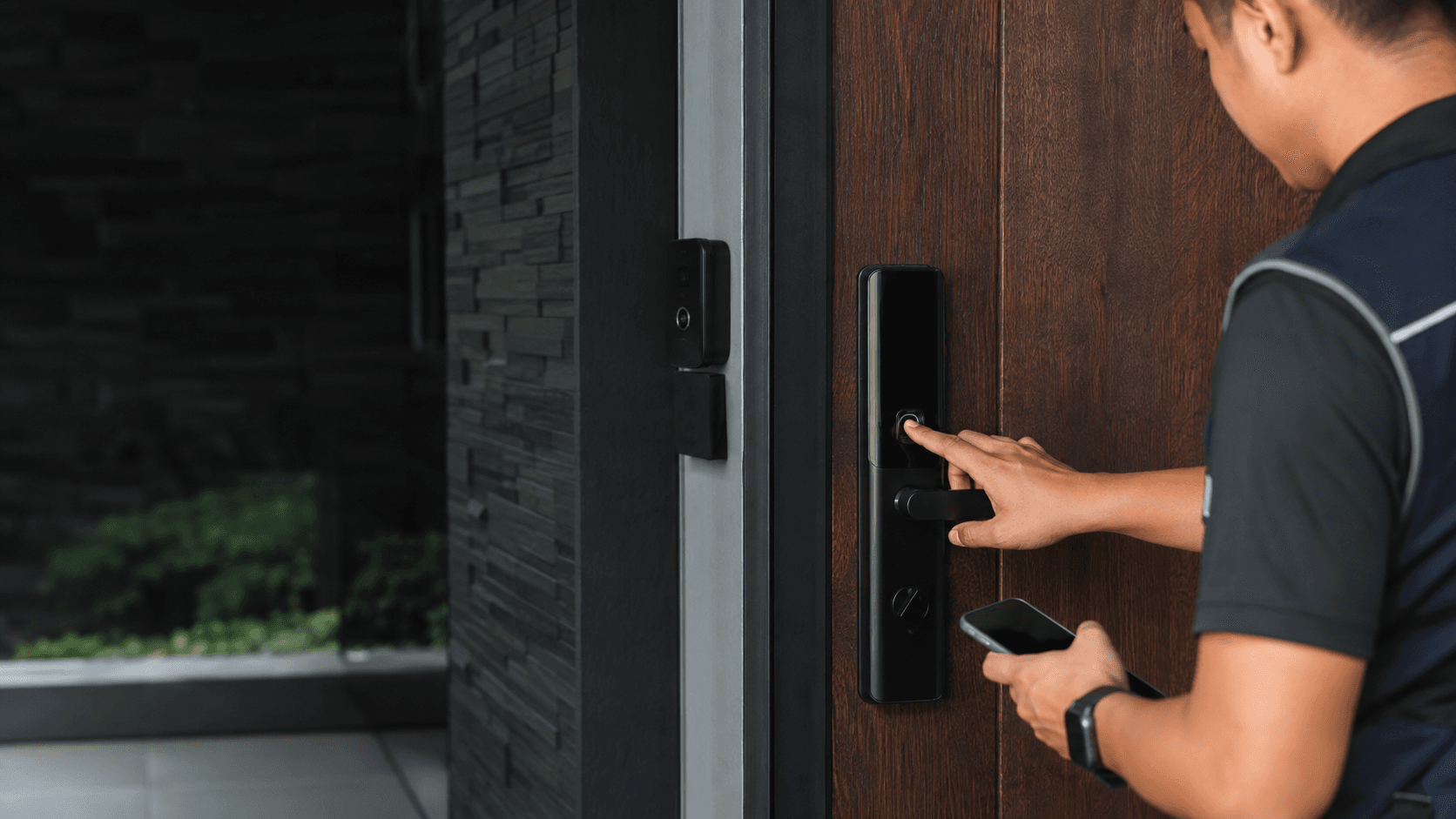
The term covers a broad family of hardware, and the differences between those products matter more than the label. A digital combo lock can mean a standalone keypad lock fitted to a wooden or metal door, a code lock built into a safe or cabinet, or a padlock-style unit used on a gate or storage point. Each of those sits in a different environment, takes a different kind of wear, and fails in a different way.
What the products share is the entry method. A code replaces a key, so access can be granted or withdrawn without cutting a new key or collecting one back. That is the practical appeal for a home with regular visitors, an office with staff turnover, or a shop that needs a controlled back entrance.
What they do not share is everything else. Housing material, how the code is stored, whether a mechanical override exists, and how the unit is powered all vary between products. Those differences decide whether a unit suits a sheltered interior door or an exposed outdoor gate, and they are the reason a site check comes before a purchase rather than after.
Digital Combo Lock. what the term covers
Retail listings and buying guides use the phrase loosely, which is why two pages describing a digital combo lock can be describing very different objects. The common thread is keyless code entry. Beyond that, the category splits by mounting type and by what the lock is protecting.
Door-mounted units are the version most people picture. They replace or supplement an existing door lock and are operated at the door itself. Storage and cabinet units are smaller and are usually fitted to a specific enclosure rather than a room entrance. Padlock-style units are portable and are used where a hasp or chain is already in place.
Safe and vault locks form a separate group again. These are built for a container rather than a doorway, and the priorities shift toward the lock body and the container it secures rather than toward daily foot traffic.
The practical consequence is that a product page alone rarely answers whether a unit will suit a particular opening. The same phrase can describe hardware intended for a mailbox, a gym locker, a safe door or an office entrance, and those are not interchangeable.
Where a digital combo lock fits in Malaysian homes and offices
Keyless code entry earns its place where keys are the actual problem. In a home, that usually means a main door used by family members who would otherwise carry and lose keys, or a grille and door combination where one entry point is used far more than the rest. In an office, it usually means a door that staff, cleaners or contractors need to pass through at different times.
Shops and small commercial premises tend to have a different pattern. A back entrance or a stockroom door may need to be reachable by several people during trading hours but secured outside them. Code entry removes the need to hand out and later recover keys from staff who leave.
Storage points are a third case. A cabinet holding documents, tools or stock can take a code lock where a key would be shared or copied. The requirement there is usually simpler than a room entrance, because the enclosure itself already provides most of the physical barrier.
Outdoor gates and exposed entrances are the hardest case. Weather, temperature swings and direct rain all act on the hardware, and a unit chosen for an interior hallway may not be the right choice for a gate post. This is where a site check changes the recommendation rather than confirming it.
Eyonic's own review of smart lock door access notes that these products work best when door condition, user roles and backup method are reviewed before installation, and that for business use the choice between a standalone smart lock and an access-control panel is worth settling first. That distinction matters in Malaysian offices, where a single door with a code lock and a multi-door system with managed permissions are different projects with different scopes.
Digital Combo Lock checks before any unit is confirmed
These checks run in order, because each one can change the answer to the next. Skipping ahead to a product choice before the opening has been assessed is the most common way a keyless entry project goes wrong.
- Confirm the door or opening condition, including the frame, the existing lock cut-out and whether the door is timber, metal or glass.
- Confirm who needs entry and at what level, separating people who need permanent access from those who need occasional or time-limited access.
- Confirm the backup entry method, so that a flat battery, a forgotten code or a failed component does not lock out everyone with a legitimate reason to enter.
- Confirm power or battery expectations, including how the unit is supplied and who is responsible for replacing consumables.
- Confirm the handover and user testing, so that every person who needs a code has used the lock before the installer leaves.
The first check is the one most often underestimated. A door that has been adjusted, painted or repaired may no longer present a clean mounting surface, and a frame that has moved can prevent a lock body from aligning with the strike. None of that is visible from a product listing.
The second check decides whether a standalone unit is enough. A single door with a handful of regular users is a straightforward fit. Several doors, or a mix of staff, contractors and visitors with different access needs, points toward a managed access-control arrangement instead, because a standalone lock has no central record of who holds which code.
Door condition, user roles and backup entry
Door condition determines whether a unit can be fitted at all, and how much preparation the opening needs. Thickness, material and the existing hardware all affect the mounting options. A hollow or lightweight door may need reinforcement before a lock body can be fixed securely, and a glass door usually requires a different fixing approach entirely.
User roles determine how the code is managed. A household with three or four regular users can work with a shared code or a small number of individual codes. An office with rotating staff, temporary contractors and departing employees needs a way to remove access without changing the code for everyone else. Where that requirement exists, the choice of lock should be driven by how codes are issued and revoked, not by how the keypad looks.
Backup entry is the check that protects against the obvious failure modes. A mechanical override key, a second entry point, or a documented procedure for a dead battery all serve the same purpose. The point is to decide in advance what happens when the primary method does not work, rather than discovering the answer at the door.
Power expectations follow from the same logic. A battery-powered unit needs someone to notice a low-battery warning and act on it. A mains-powered unit needs a supply route to the door, which may or may not exist depending on the building. Both are workable; the mistake is assuming one without checking.
How Eyonic plans a keyless entry installation
Eyonic Sdn Bhd is a security system supplier based in Sarawak, working across CCTV and ELV systems for homes, offices, shops and industrial sites. The company's installation process runs through site survey, system proposal, installation and handover, and that sequence applies to keyless entry work in the same way it applies to camera systems.
The site survey is where the checks above get answered with real measurements rather than assumptions. Door condition, mounting options, cable routes and power availability are all settled at this stage. The proposal then sets out what is being supplied and fitted, so the scope is agreed before work begins rather than adjusted during it.
Installation follows the agreed scope, and handover covers user testing. That last step matters more for a code lock than for many other products, because the lock is only useful if the people who need entry can actually operate it. Testing each user's code before the installer leaves is a small step that prevents a large amount of frustration.
Eyonic's project work includes the Kuching Immigration Office, where the focus was arrival flow, staff areas, visitor movement and dependable daily operation. That kind of environment illustrates why user roles and backup entry get settled early: a public office cannot afford an entry point that fails during operating hours, and the people passing through it change constantly.
The company's work for KTA Sarawak Sdn Bhd followed a similar pattern, supporting staff movement, visitor handling, tidy cabling and clearer daily site control in a Kuching office. Both projects point to the same principle. Entry hardware is part of how a building operates day to day, not a standalone purchase.
For readers weighing a digital combo lock against a wider access-control setup, the deciding question is usually how many doors and how many user roles are involved. One door and a stable group of users suits a standalone unit. Multiple doors, changing users, or a need to review who entered and when points toward a managed system, where the lock is one component rather than the whole solution.
Digital Combo Lock questions worth settling early
Several questions come up repeatedly, and most of them can be answered before any product is chosen.
Whether a unit suits an outdoor gate depends on the specific product and its exposure. A sheltered gate under a porch is a different proposition from an exposed gate post in direct rain. Without verified weather-resistance data for a named model, the safe position is that outdoor use needs to be confirmed against the actual product rather than assumed from the category.
Whether a code can be changed easily matters more in commercial settings than in homes. A household may set a code once and leave it. An office needs to remove access when someone leaves, and the ease of that process should be checked before purchase rather than after.
What happens when the battery runs out is the question most often left until it becomes urgent. A mechanical override, a second entry point or a clear replacement routine all solve it. The absence of any of those is a reason to reconsider the unit, not a detail to handle later.
Whether a standalone lock or a panel-based system is the better fit is a scope question rather than a product question. It depends on the number of doors, the number of user roles and whether a record of entries is needed. Settling that first prevents buying a unit that has to be replaced when the requirement grows.
Cost is the question that cannot be answered from general information. Unit prices and installation costs vary with the door, the mounting work required and the scope of the project, and no verified figure applies across the category. A site survey is what turns that uncertainty into a specific proposal.
Readers who want to move from general information to a specific answer can share their location, property type and required system with Eyonic on WhatsApp at +60 11-5111 7959. The useful next step is a site survey, because the door and the users decide the recommendation far more than the product category does.