
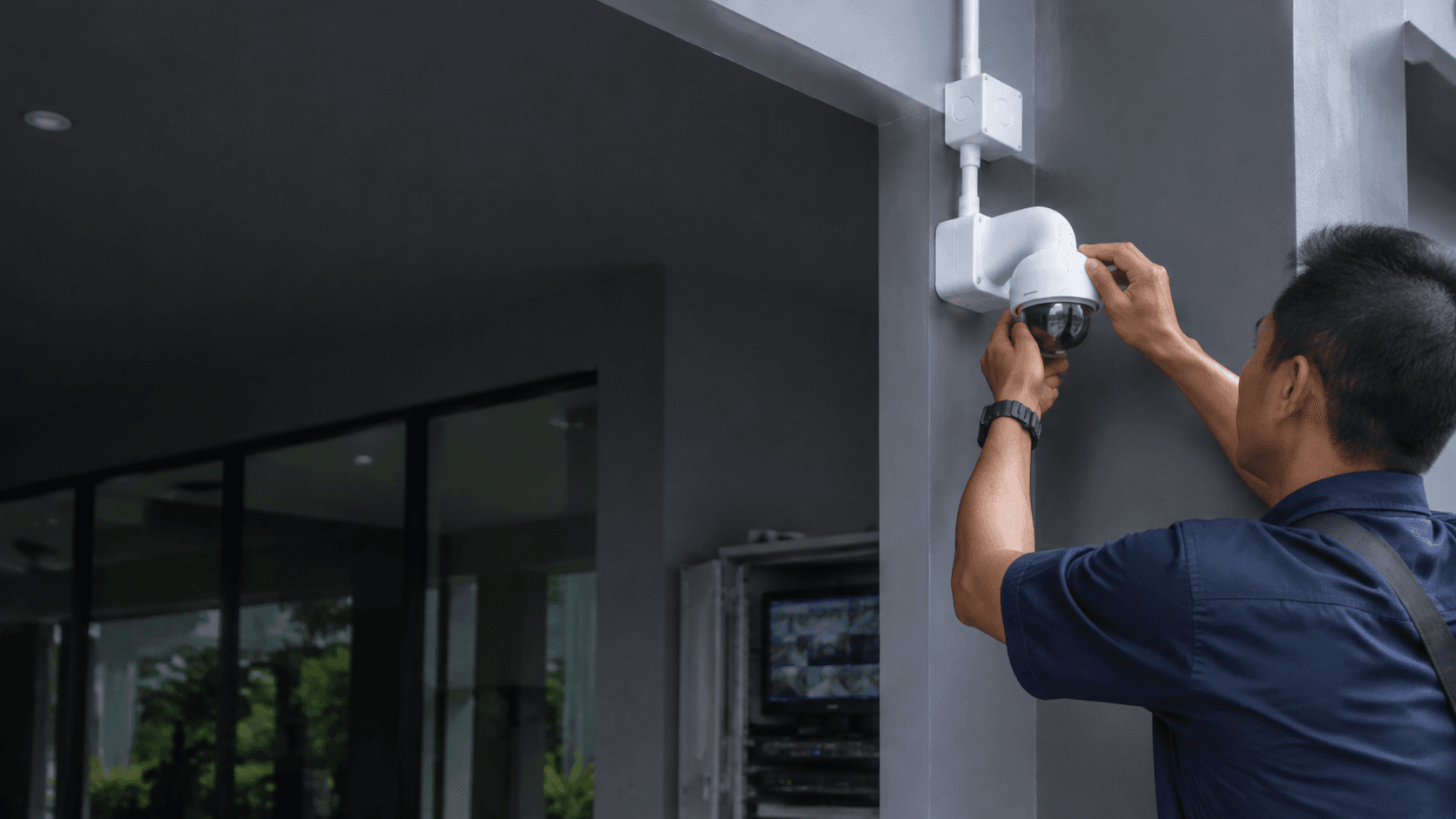
How a Solar Camera Works
A solar camera pairs a rechargeable battery with a small photovoltaic panel. Sunlight charges the panel during the day, and that stored energy powers the camera through the night and overcast periods. Most units connect to home Wi-Fi for live viewing and alerts, while some models support 4G LTE for remote or off-grid locations.
The core trade-off is energy management. Motion detection, night vision, and two-way audio all draw from the same battery. A camera that records continuously consumes far more power than one that wakes only when triggered. That is why most solar camera designs default to event-based recording rather than 24/7 capture.
Key Features to Compare in a Solar Camera
When comparing a solar camera against wired alternatives, several specifications determine real-world performance.
**Resolution and sensor quality.** Most current models offer 2K or 2.5K video. Higher resolution helps identify faces and vehicle plates, but it also produces larger files that consume more bandwidth and storage.
**Battery capacity and solar panel output.** These two numbers work together. A larger battery carries the camera through consecutive cloudy days, while a higher-wattage panel recovers charge faster. A camera that needs only one hour of direct sun per day, as some manufacturers claim, suits partially shaded locations better than a panel-hungry unit.
**Night vision type.** Infrared night vision produces black-and-white footage. Color night vision, sometimes called ColorVu-style imaging, relies on ambient light and delivers clearer detail but consumes more power. Eyonic recommends checking actual lighting conditions before confirming placement for ColorVu-style cameras, since a dark corner will not provide enough light for useful color footage.
**Detection and alerts.** Human and vehicle detection reduces false alerts from passing animals or moving branches. Some cameras include spotlight and siren functions that activate on detection.
**Storage options.** Local microSD storage avoids subscription costs. Cloud plans add convenience but introduce recurring fees, which contradicts the no-monthly-fees appeal of many solar camera setups.
**Two-way audio.** This feature allows speaking through the camera's speaker and listening through its microphone, useful for deterring intruders or talking to delivery personnel.
Solar Camera Installation Considerations in Malaysia
Malaysia's tropical climate creates specific conditions for solar camera placement. The country receives strong equatorial sunlight, but monsoon seasons bring prolonged cloud cover and heavy rain that reduce solar charging for days at a time.
Follow this evaluation sequence before committing to a mounting position:
- Assess sunlight exposure at the proposed mounting point across all seasons, not just during dry months.
- Check Wi-Fi signal strength at the camera location, since walls and metal roofing attenuate wireless signals.
- Determine the field of view and camera angle needed to cover entry points, driveways, or perimeter lines.
- Verify battery capacity and solar panel output against the camera's expected activity level and local weather patterns.
- Plan for periodic cleaning and maintenance, as dust, pollen, and rain residue reduce panel efficiency.
Roof overhangs that shield a camera from rain also block sunlight. A camera mounted under a deep eave may never receive enough direct sun to stay charged. Conversely, a fully exposed panel collects more energy but requires weatherproof mounting and secure cable routing.
For commercial properties, the installation process typically follows a structured path. Eyonic's CCTV installation process includes site survey, system proposal, installation, and handover. A site survey identifies sunlight patterns, Wi-Fi coverage, and vulnerable entry points before any equipment is purchased. This approach prevents the common mistake of installing a solar camera where it cannot maintain charge or see the intended area.
Solar Camera Maintenance and Reliability
Solar cameras reduce but do not eliminate maintenance. The panel surface must stay clean. A thin layer of dust can cut charging output noticeably, and in Malaysia's haze season, panels may need monthly wiping. Rain helps wash panels but leaves mineral deposits over time.
Battery health degrades with heat. Malaysian daytime temperatures regularly exceed 32°C, and a black camera housing in direct sun can reach much higher internal temperatures. This accelerates battery aging compared with temperate climates. Choosing a camera rated for outdoor use with adequate thermal management matters more in Malaysia than in cooler regions.
Cloudy periods test the system's reserve. During the northeast monsoon, several consecutive overcast days can drain a battery that normally recovers fully each afternoon. A camera with a larger battery or a separate, larger solar panel handles these stretches better. Some systems allow the solar panel to be mounted separately from the camera, which helps when the best camera position has poor sun exposure.
Choosing the Right Solar Camera for Your Property
Property type and monitoring goals should drive the selection. A single residential driveway camera has different requirements than a multi-point commercial installation.
For homes, a standalone solar camera with local storage and no monthly fees often suffices. The main constraints are Wi-Fi range and mounting height. A camera placed too high for easy panel cleaning will gradually lose charging efficiency.
For offices, shops, and industrial sites, reliability and coverage take priority. Eyonic's completed project for the Kuching Immigration Office focused on arrival flow, staff areas, visitor movement, and dependable daily operation. That project illustrates a broader principle: commercial security systems must operate consistently during business hours, when detection events are most likely. A solar camera that enters low-power mode during peak activity would fail that requirement.
Commercial buyers should also consider how a solar camera integrates with existing systems. Many solar cameras operate as standalone units rather than feeding into a central NVR. If centralized recording and monitoring are required, a wired or hybrid system may serve better. Eyonic's work for KTA Sarawak Sdn Bhd, an engineering consultancy, needed a practical office setup supporting staff movement, visitor handling, tidy cabling, and clearer daily site control. That kind of requirement points toward a structured system rather than individual battery cameras.
Solar Camera. Is It Worth the Investment?
A solar camera makes financial sense when running power cabling is impractical or costly. Remote gates, perimeter fences, construction sites, and areas far from existing electrical outlets are prime candidates. The elimination of monthly fees also appeals to budget-conscious buyers who prefer to pay once for hardware.
The main limitations are recording continuity and environmental dependence. Solar cameras cannot match wired systems for continuous, high-frame-rate recording. Event-based capture means the camera must wake, detect, and record, which introduces a small delay. For properties requiring uninterrupted surveillance, a wired camera with an NVR remains the more dependable choice.
Malaysian buyers should weigh the monsoon factor honestly. A solar camera that performs well in dry months may struggle during prolonged rain. Choosing a model with generous battery capacity and a separate, larger solar panel mitigates this risk. Regular panel cleaning and annual battery checks are part of ownership.
For properties where solar suits the layout, the practical evaluation is straightforward: confirm sunlight reaches the panel, verify Wi-Fi reaches the camera, and match battery capacity to expected activity. A site survey that checks actual conditions before installation prevents most performance problems. Eyonic's structured process of site survey, system proposal, installation, and handover reflects this approach, and the same logic applies whether the buyer works with a professional installer or mounts a single unit at home.