
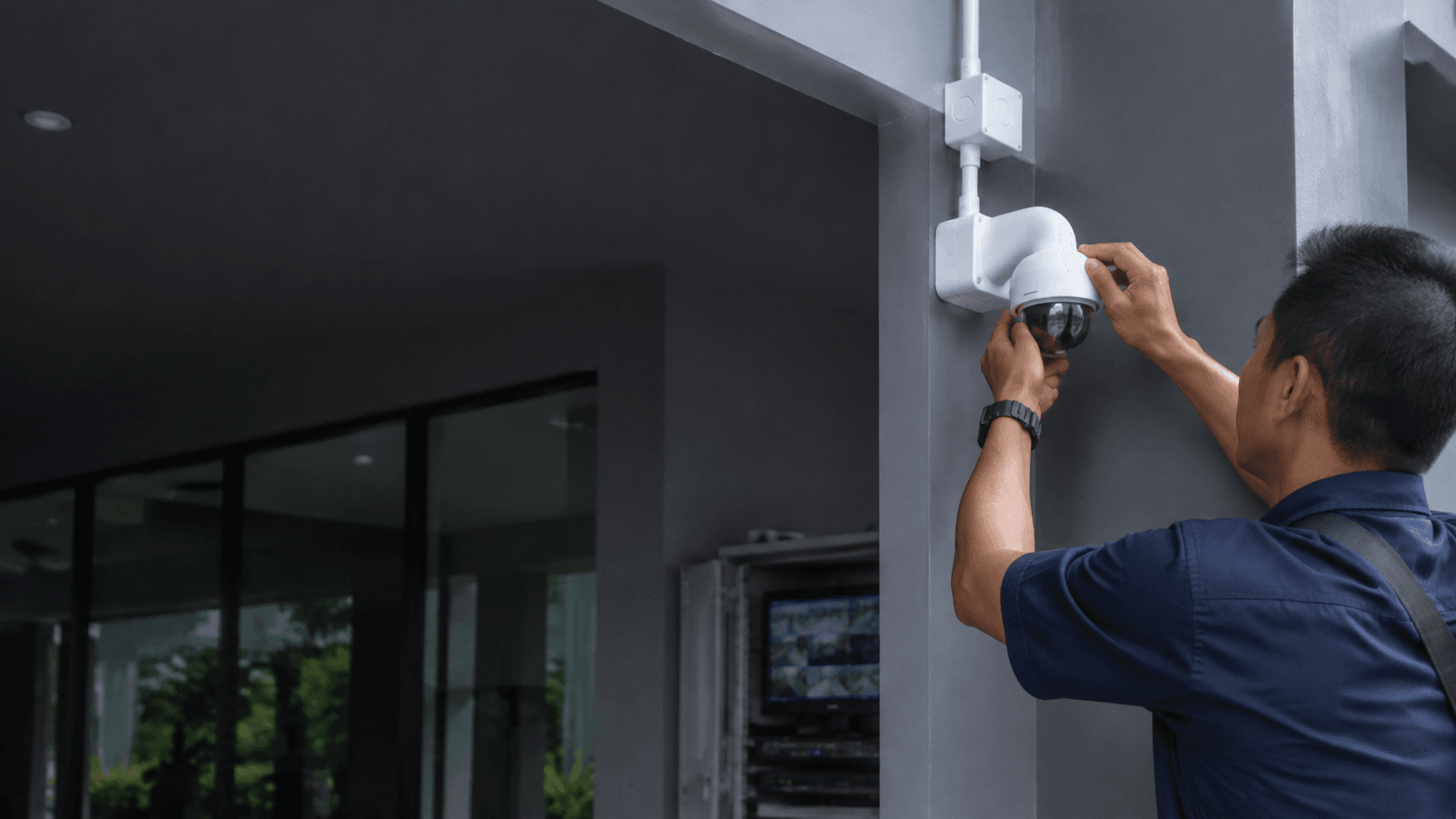
The recorder sits at the centre of a wired surveillance setup. Cameras send video down coaxial cable, the cctv dvr converts those signals into digital files, and the footage stays on a hard drive inside the unit rather than on a monthly cloud plan. That local-storage model is why DVR-based systems remain common in Malaysia, where existing coax runs can often be reused instead of replaced.
Cctv Dvr. What Matters Before Choosing
Most buying mistakes happen before anyone compares models. The recorder has to match the cameras already on site, the number of channels has to leave room for later additions, and the storage has to cover the retention period the site actually needs.
- Confirm which camera formats the existing or planned cameras use, since a DVR must support the same signal type.
- Count the cameras needed now, then add spare channels for future coverage.
- Estimate how many days of footage must be kept, because retention drives hard-drive size.
- Check whether the recorder supports remote viewing on a phone or computer.
- Verify that the recorder can keep recording when the internet connection drops.
- Plan where the unit will sit, with ventilation and a locked enclosure where the site requires it.
Choosing the Right Cctv Dvr
Channel count is the first filter. A four-channel unit suits a small shop or a single home entrance, while larger premises need eight, sixteen or more inputs. Buying only for today's camera count usually forces a second purchase later.
Camera compatibility comes next. DVRs are built for analogue and HD-over-coax cameras, and many current models accept several formats on the same box. A recorder that does not recognise the installed camera format will not display a picture, so the camera model list matters more than the brand name on the front panel.
Storage is the third decision. Continuous recording fills a drive faster than motion-triggered recording, and higher resolution fills it faster still. A site that wants a month of footage needs a larger drive than one that only reviews the past week.
What Is Cctv Dvr and How Does It Work
A cctv dvr takes the video signal from each connected camera, converts it to a digital format, compresses it, and writes it to an internal hard drive. Compression matters because it decides how much footage fits on a given disk. Older codecs consume more space for the same picture quality, while newer ones stretch the same drive further.
Playback works from the same unit. An operator can search by date and time, jump between camera views, and export a clip for a report or an incident record. When the drive is full, most recorders overwrite the oldest footage first, so the retention window stays roughly constant once the system has been running for a while.
Remote viewing is a separate function from recording. The recorder keeps writing to its drive whether or not anyone is watching, and a network connection only adds the ability to see live or stored video from elsewhere. A recorder can run without internet service and still capture everything.
Security DVR. Practical Considerations
Placement decisions affect results more than specification sheets suggest. Camera position, lighting and cable routing determine whether footage is usable when it is needed. Eyonic recommends checking actual lighting conditions before confirming placement for ColorVu-style cameras, because a position that looks adequate in daylight can behave differently after dark.
Installation follows a defined sequence. Eyonic's CCTV installation process includes site survey, system proposal, installation and handover, which keeps the recorder, cameras and cabling planned as one system rather than assembled piece by piece.
Public and commercial sites add their own requirements. Eyonic completed a project for the Kuching Immigration Office, focused on arrival flow, staff areas, visitor movement and dependable daily operation. A second project for KTA Sarawak Sdn Bhd covered a practical office setup in Kuching to support staff movement, visitor handling, tidy cabling and clearer daily site control. Both cases show the same pattern: the recorder is only one part of a layout that has to suit how the building is actually used.
Budget expectations vary with scope. Eyonic's published package pricing starts at RM 1,599 for a Hikvision CCTV package covering camera supply and setup, basic recording configuration and mobile viewing handover. Larger office and public-sector work sits in a different range; the Kuching Immigration Office project carried an approximate budget of RM 12,000 to RM 28,000, and the KTA Sarawak Sdn Bhd project an approximate budget of RM 8,000 to RM 18,000.
Making an Informed Choice About Cctv Dvr
The decision usually comes down to what already exists on site. Where coaxial cable is already installed and the cameras still work, a DVR keeps the cabling and replaces only the recording end. Where the site is being wired from scratch, the choice between a DVR and a network recorder deserves a direct comparison, because the two use different cable types and different camera families.
Retention is the constraint most often underestimated. A recorder with too little storage still works, but it overwrites footage sooner than expected, which matters when an incident is reviewed weeks after it happened. Matching drive size to the required retention period at the planning stage avoids that problem.
Maintenance is modest but not zero. Drives age, ventilation matters in enclosed cabinets, and firmware occasionally needs attention. A recorder installed with clear labelling and accessible cabling is easier to service than one squeezed into a sealed space.
For sites in Sarawak, the practical next step is a site survey that confirms camera positions, lighting, cable routes and recorder location before any equipment is ordered. Eric Yong, founder of Eyonic Security Systems, has worked in the industry for more than 10 years and is experienced in technical installation of digital security solutions for commercial businesses in Sarawak.
Share your location, property type and required system with Eyonic on WhatsApp at +60 11-5111 7959 for the next practical step.