
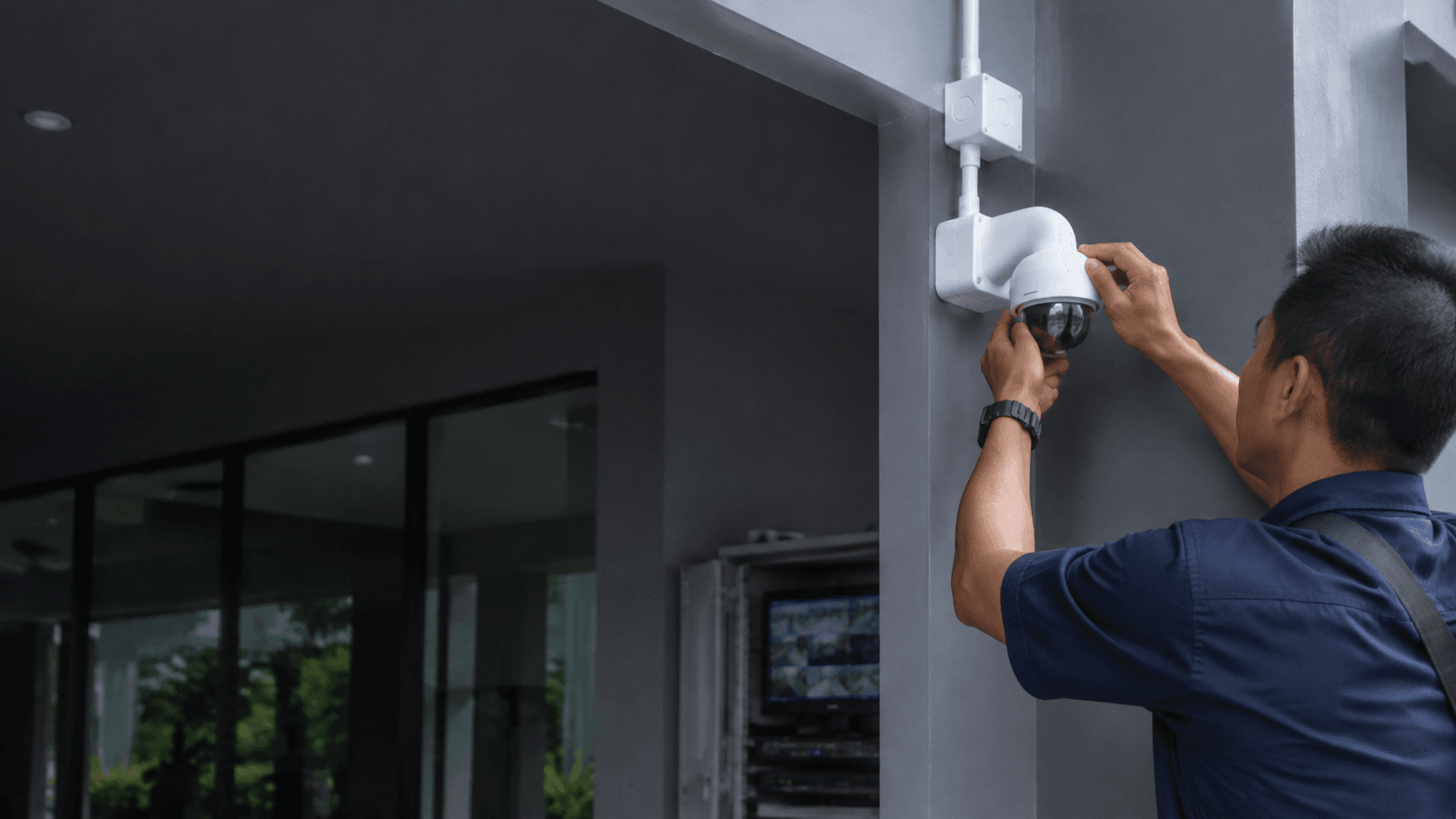
The exact-match query hilook camera price sits at the meeting point of two different shopping behaviours. One reader wants to replace or add a single camera and needs a per-unit figure. Another reader is pricing a complete system for a shop, office, or house and needs the total installed cost. Those two readers should not be given the same answer, because the components, the labour, and the risk profile are different.
Hilook Camera Price. What Matters Before You Choose
Published HiLook listings cluster into three product shapes: standalone cameras, recorder-and-camera kits, and accessories such as PoE network switches and intercom door stations. A price quoted for one shape rarely transfers to another, which is why a single "HiLook costs X" figure is unreliable.
Three cost drivers explain most of the variation between quotes:
- Resolution and sensor type, since 2MP, 4MP, 6MP, and 8MP models sit at different points in the range.
- Whether a recorder, hard drive, and cabling are included, because a kit price bundles hardware that a camera-only price excludes.
- Installation scope, including cable routing, mounting height, power arrangement, and configuration of remote viewing.
Buyers comparing a HiLook camera price against a Hikvision-branded equivalent are usually comparing the same manufacturing group at two price tiers. HiLook is positioned for small and medium projects and basic monitoring needs, while the main Hikvision line carries the wider catalogue. That positioning is the reason the two price bands do not overlap neatly.
Choosing the Right Hilook Camera
Camera selection should follow the scene, not the specification sheet. A driveway, a shop entrance, a warehouse aisle, and an office corridor each create different lighting, distance, and identification requirements.
Match the camera to the lighting first
Lighting decides more outcomes than resolution. A 4MP camera in a well-lit entrance can produce more usable footage than an 8MP camera pointed at a dark corner, because resolution does not create light. Where a scene stays dim through the evening, a colour-capable model matters more than a higher pixel count.
Eyonic advises checking actual lighting conditions before confirming placement for ColorVu-style cameras, since the real scene at night often differs from the assumption made during planning. The same discipline applies to any low-light HiLook model.
Decide between a kit and separate components
A kit usually wins on simplicity. The recorder, cameras, and storage arrive matched, and the channel count is already fixed. Separate components win when the site has an existing recorder, an unusual camera mix, or a phased budget.
Channel count is the constraint that catches people out. A four-channel recorder cannot accept a fifth camera later, so a site that may expand should be planned at eight or sixteen channels from the start rather than upgraded twice.
What Is a HiLook Camera?
HiLook is a sub-brand of Hikvision that supplies cost-effective video surveillance products, including network cameras, analog cameras, digital video recorders, and network video recorders. The line targets small and medium-sized businesses, home users, and sites with basic security monitoring needs.
Because the products come from the same manufacturing group, HiLook shares familiar conventions with Hikvision equipment: PoE network cameras, recorder-based local storage, and mobile app viewing. That familiarity is useful at handover, because staff who have used Hikvision interfaces tend to recognise the HiLook equivalents.
The practical trade-off is catalogue depth rather than basic function. A HiLook camera price is lower partly because the range is narrower and the feature set is trimmed to the essentials that most small sites actually use.
HiLook Products and Pricing Structure
HiLook pricing is best understood as a structure rather than a number. The published catalogue separates into cameras, recorders, kits, and supporting hardware, and each category carries its own cost logic.
| Category | What it covers | Cost behaviour |
|---|---|---|
| Single camera | One IP or analog camera, no recorder | Lowest entry point; rises with resolution and low-light capability |
| Camera and recorder kit | Multiple cameras plus NVR or DVR | Higher total, lower cost per camera than buying separately |
| Storage | Hard drive sized to channel count and retention | Scales with how many days of footage must be kept |
| Network hardware | PoE switches and cabling | Scales with camera count and cable run length |
| Installation | Survey, mounting, routing, configuration, handover | Driven by site conditions rather than hardware |
Retention is the quiet cost. A site that must keep thirty days of footage across eight cameras needs more storage than one keeping seven days across four, even when the cameras are identical. That difference shows up in the total price without appearing in any camera specification.
Where installation cost comes from
Eyonic's CCTV installation process runs through site survey, system proposal, installation, and handover. Each stage adds scope that a hardware-only price excludes.
For reference, Eyonic's published package pricing for Hikvision CCTV supply and setup, alarm system, and autogate work each sits at RM 1,599. Larger commercial work scales well beyond that: the Kuching Immigration Office project carried an approximate budget of RM 12,000 to RM 28,000, and the KTA Sarawak Sdn Bhd office project carried an approximate budget of RM 8,000 to RM 18,000. Those figures describe completed project scopes, not HiLook hardware, and they show how far a total can move once a site is real rather than hypothetical.
Practical Considerations for
A HiLook camera price quoted online and a HiLook camera price paid at handover are different numbers, and the gap is usually installation and configuration rather than hardware.
What changes the final figure
Cable routing is the most common variable. A camera mounted on an accessible wall with a short run to the recorder costs far less to install than one at the far end of a building where cable must be concealed or protected. Mounting height, power availability, and whether existing conduit can be reused all move the labour component.
Configuration is the second variable. Remote viewing, recording schedules, motion zones, and user accounts all need to be set up and tested before the system is genuinely useful. A system that records but cannot be checked from a phone has not delivered what most buyers expect.
Where HiLook fits and where it does not
HiLook suits homes, small shops, offices, and sites that need dependable everyday coverage without a large capital outlay. It fits less well where the requirement includes advanced analytics, very large channel counts, or integration with complex access-control and alarm infrastructure.
Sites with demanding identification requirements, such as a location where faces or plates must be resolved at distance, should confirm camera choice against the actual scene before committing. Resolution alone does not settle that question.
Making an Informed Choice About
The useful comparison is not HiLook against another brand in the abstract. It is the total delivered cost of a system that meets the site's actual requirements, measured against the cost of a cheaper system that fails one of them.
A short decision sequence keeps the comparison honest:
- Define what must be seen, at what distance, and under what lighting.
- Count the cameras needed now and the channels likely to be needed later.
- Decide the retention period, then size storage to match it.
- Confirm whether the site has an existing recorder or cabling that can be reused.
- Price hardware and installation together rather than separately.
Two named projects show how scope drives budget. The Kuching Immigration Office work focused on arrival flow, staff areas, visitor movement, and dependable daily operation. The KTA Sarawak Sdn Bhd work supported staff movement, visitor handling, tidy cabling, and clearer daily site control. Both are office environments, and both required planning beyond camera count.
For a HiLook camera price specifically, the honest position is that published listings give a hardware range while the installed figure depends on the site. A buyer who gathers the five decisions above before requesting pricing will get a comparable number rather than a placeholder.
Share the location, property type, and required system with Eyonic on WhatsApp at +60 11-5111 7959 for the next practical step.