
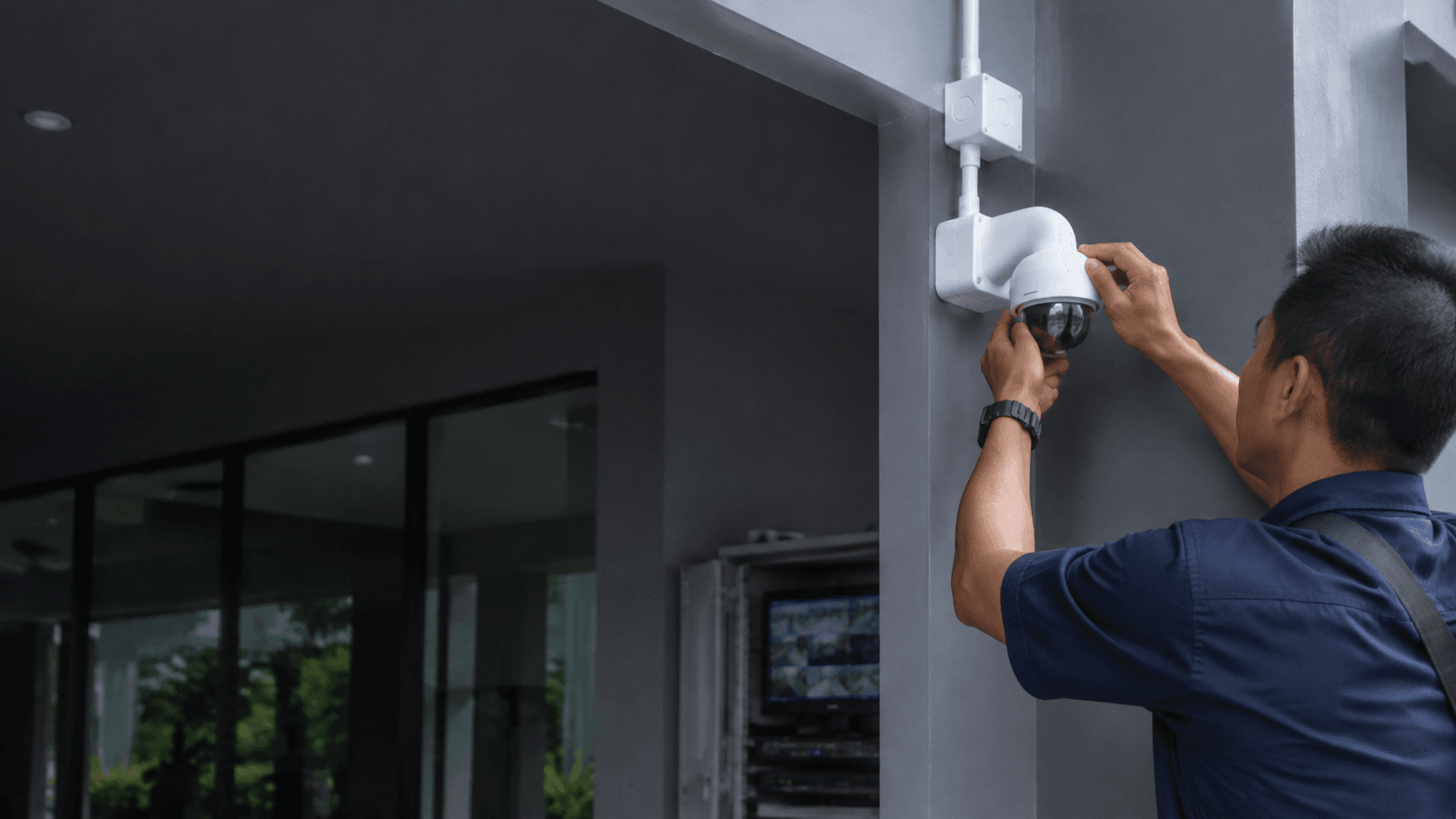
The exact-match phrase "hikvision 2mp bullet camera" describes a shape and a resolution class rather than one single product. Hikvision builds several bullet cameras at 2 megapixel resolution, and the differences between them sit in lighting behaviour, lens choice and housing rather than in the headline number. That matters in Malaysia, where a camera that performs well under one set of conditions can disappoint under another.
Buyers in Malaysia usually arrive with a site in mind: a shop lot in Kuching, a factory perimeter, a terrace house gate, or an office entrance. The useful question is not which model number is cheapest, but which combination of placement, lighting and recording setup will still produce usable footage months later.
Hikvision 2mp Bullet Camera: What the Model Family Covers
The 2MP label refers to a resolution class of roughly two megapixels. Within that class, Hikvision has produced multiple bullet camera lines, and the naming conventions differ between them. Some carry a Pro Series EasyIP designation, others sit in the Value Series, and some are described as fixed bullet network cameras while others are described as mini bullet cameras.
Because the model family is broad, a specification copied from one datasheet does not automatically apply to another camera in the same resolution class. Sensor type, lens options, infrared distance, weather rating and power requirements vary by model. Any of those details should come from the datasheet for the exact model being quoted, not from a general description of 2MP cameras.
What the family does share is a common purpose. A bullet camera is a long-bodied camera normally mounted on a wall, bracket or pole, aimed along a boundary, corridor, driveway or perimeter. The form factor suits directional coverage. It is less suited to a wide indoor room where a different housing shape would cover more of the space.
Two practical consequences follow from that. First, the camera body is visible, which can act as a deterrent but also means the mounting position should be chosen with appearance in mind. Second, because the camera is aimed rather than panoramic, the angle chosen at installation determines what the recording actually contains.
Where a Hikvision 2mp Bullet Camera Fits in a Malaysian Property
Bullet cameras tend to earn their place where the coverage need is linear. A shop front along a five-foot way, a side lane beside a corner unit, a factory fence line, a driveway leading to a gate, or a corridor between two blocks all suit a directional camera better than a wide-angle one.
For homes, the common positions are the front gate approach, the car porch and the rear perimeter. For offices and shops, the entrance, the counter area and any rear loading access are typical. For industrial sites, perimeter runs and vehicle entry points usually carry the most value.
There is a trade-off worth naming. A single bullet camera aimed down a long driveway gives detail at distance but leaves the area immediately beneath it uncovered. Two cameras at different angles often solve more than one camera with a wider lens, because widening the view spreads the same pixel count across more scene.
Malaysian conditions add their own constraints. Direct afternoon sun, reflective surfaces, heavy rain and, in some locations, persistent low light after dark all affect what a camera records. A position that looks correct on a site visit at midday can behave differently once the sun moves or the street lighting comes on.
Lighting, Placement and Lens Choices Before Confirming a Hikvision 2mp Bullet Camera
Eyonic's own product review guidance for Hikvision ColorVu cameras makes a point that applies more broadly: check the actual lighting conditions before confirming placement. That is a site-specific check, not a catalogue decision. A camera chosen for a well-lit entrance may be the wrong choice for an unlit rear lane.
Placement decisions usually come down to a short set of checks:
- Confirm the lighting conditions at the position across the full day and night cycle, not just at the time of the survey.
- Confirm what the camera must actually capture, such as a face, a plate, a gate, or general movement.
- Confirm the lens choice suits the distance between the camera and the subject, since a wider view reduces detail at range.
- Confirm the mounting height and angle avoid obstructions such as signage, foliage, awnings and moving tree branches.
- Confirm the cable route and power source before drilling, so the installation stays tidy and serviceable.
Lens choice is where many installations go wrong. A wide lens covers more of the scene but places fewer pixels on each subject. A narrower lens concentrates detail but covers less. The right answer depends on whether the purpose is to see that something happened or to identify who or what was involved.
Recording and viewing complete the picture. A camera on its own stores nothing. An NVR setup provides the recording, retention and playback, and remote viewing allows the footage to be checked from elsewhere. Both should be planned alongside the camera positions rather than added afterwards.
How Eyonic Plans, Supplies and Installs a Hikvision 2mp Bullet Camera
Eyonic Sdn Bhd is a security system supplier in Sarawak that plans, supplies and installs monitoring systems with camera placement, recording and remote viewing for homes, offices, shops and industrial sites. The founder, Eric Yong, has worked in the industry for more than 10 years, with a focus on technical installation of digital security solutions for commercial businesses in Sarawak.
The installation sequence follows a defined path:
- Site survey to review the property, the coverage required and the conditions at each proposed position.
- System proposal setting out the camera positions, recording setup and viewing arrangement.
- Installation of cameras, cabling and recording equipment.
- Handover covering the working system and how it is used day to day.
That order matters because it puts the survey before the equipment list. A proposal built from a site visit can account for the actual lighting, the cable routes and the way people move through the property. A proposal built from a photograph or a floor plan alone cannot.
Eyonic's published packages start at RM 1,599 for a Hikvision CCTV Package, which covers camera supply and setup, basic recording configuration and mobile viewing handover. Separate packages at the same price cover a Hikvision alarm system and an autogate setup. These are package starting points rather than a price for any individual camera model.
Project Evidence. Kuching Immigration Office and KTA Sarawak Sdn Bhd
Two completed projects show the kind of brief Eyonic works to. For the Kuching Immigration Office, the requirement was practical support for a public office focused on arrival flow, staff areas, visitor movement and dependable daily operation. The approximate budget for that type of work was RM 12,000 to RM 28,000.
For KTA Sarawak Sdn Bhd, an engineering consultancy, the requirement was a practical office setup in Kuching supporting staff movement, visitor handling, tidy cabling and clearer daily site control. The approximate budget for that type of work was RM 8,000 to RM 18,000.
Both briefs share a pattern. The camera positions were driven by how people actually move through the site, and cabling tidiness formed part of the requirement rather than an afterthought. Neither project was specified as a camera count. Both were specified as an operational outcome.
That distinction is useful when weighing a Hikvision 2mp bullet camera for a specific property. The resolution class is one input. The survey, the placement and the recording setup determine whether the system does what the property needs.
Costs, Handover and the Next Practical Step
Cost depends on the number of positions, the cable runs, the recording equipment and the viewing setup. The published package starting point is RM 1,599 for the Hikvision CCTV Package, and the two completed office projects carried approximate budgets of RM 8,000 to RM 18,000 and RM 12,000 to RM 28,000 respectively. Those figures describe different scopes and should not be read as a per-camera rate.
Handover is the point at which the system becomes usable. It covers the working installation and how the recording and viewing are used in daily operation. A system that records correctly but is never checked provides little value, so the handover step is where the practical benefit is confirmed.
For a property in Sarawak, the sensible starting point is a site survey rather than a model number. Share the location, the property type and the required system with Eyonic on WhatsApp at +60 11-5111 7959 to arrange the next practical step.