
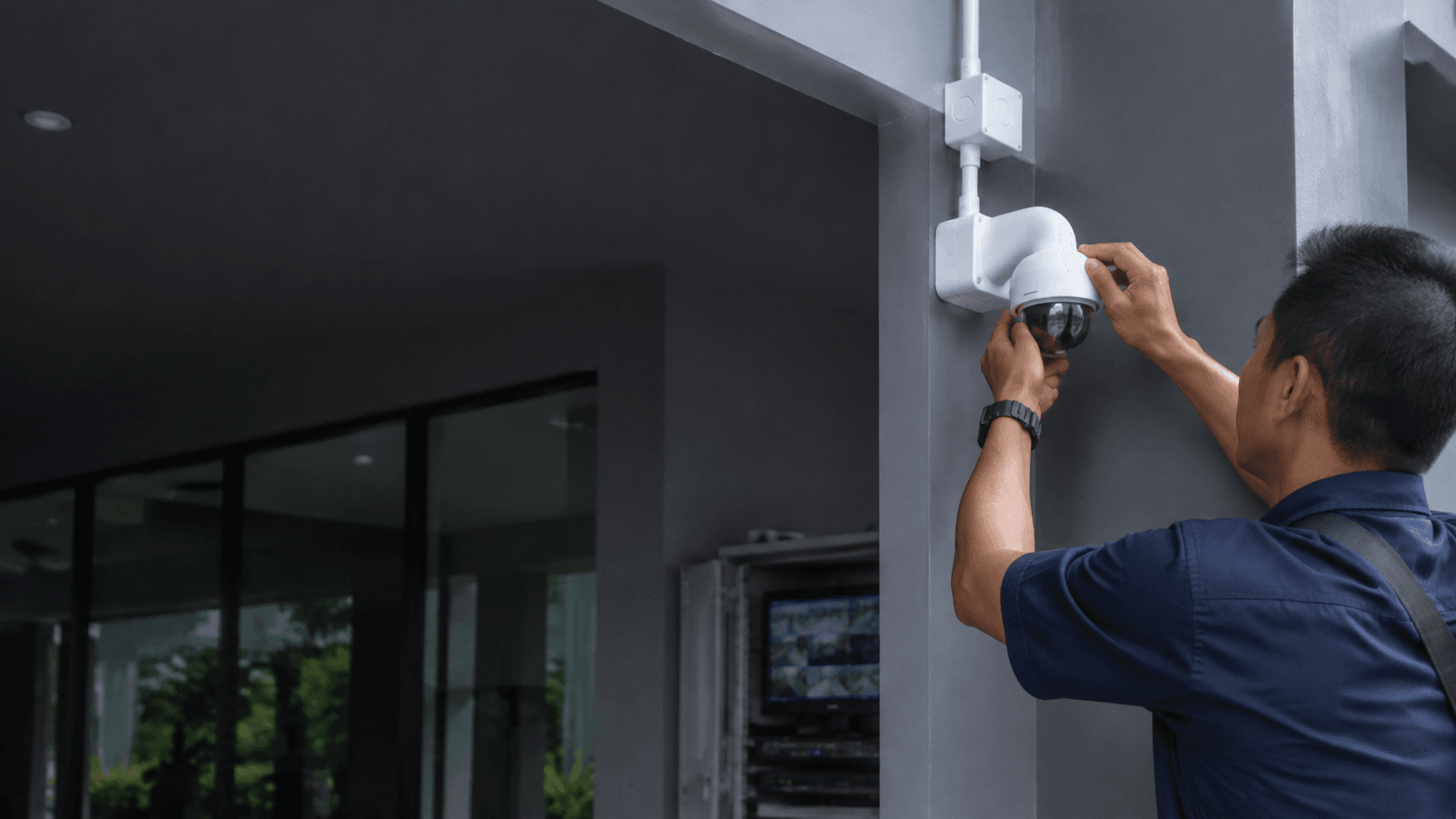
Malaysia readers searching for a secret CCTV camera usually want coverage that does not advertise itself: a camera that blends into a ceiling, a corridor, or a shopfront without drawing attention from visitors. The practical questions are placement, lighting, recording, and the limits of what any discreet camera can honestly deliver. Eyonic Sdn Bhd, a security system supplier in Sarawak, plans, supplies, and installs monitoring systems with camera placement, recording, and remote viewing for homes, offices, shops, and industrial sites.
What a secret CCTV camera can and cannot do
A discreet camera changes how visible the hardware is. It does not change what the lens can see. Coverage still depends on angle, distance, light, and where the recorder sits.
What discreet placement can support:
- Coverage of an entrance, counter, corridor, or staff area without a large housing in plain sight.
- Recording to a recorder, with playback reviewed later rather than watched live.
- Remote viewing so a owner or manager can check a site from elsewhere.
What it cannot do.
- Record a face that never enters the lens angle, however small the camera is.
- Produce usable footage in conditions the camera was not chosen for.
- Replace a visible deterrent. A camera nobody knows about does not discourage a casual intruder the way a visible one can.
- Resolve a legal question. Covert recording in Malaysian homes, workplaces, and commercial premises carries obligations around personal data and consent, and those obligations sit with the operator, not the equipment.
That last point matters most. A discreet camera is a tool for observation, and observation of people raises privacy duties. Anyone planning covert coverage of staff, tenants, or visitors should confirm the position that applies to their premises before installation rather than after.
Placement and lighting checks before installation
Placement decides whether a discreet camera is useful. A camera hidden well but aimed badly records a wall. A camera aimed well but lit badly records a silhouette.
Eyonic recommends checking actual lighting conditions before confirming placement for ColorVu-style cameras. That check is not a formality. Light levels at 9am and at 9pm are different problems, and a position that works in daylight may fail after dark.
Points worth settling during a walkthrough:
- Site survey — walk the premises, note entry points, counters, corridors, and staff areas, and record where light falls during the day and after dark.
- System proposal — match camera positions, recorder capacity, and viewing method to the coverage the site actually needs.
- Installation — mount cameras, run cabling tidily, and configure recording and remote viewing.
- Handover — test playback, confirm mobile viewing works, and explain how the system is used day to day.
That sequence is Eyonic's standard CCTV installation process in Sarawak, and it applies whether the cameras are obvious or discreet. The survey stage is where a covert placement either becomes workable or gets ruled out.
Angle, height, and what the lens actually captures
A camera placed high and angled down captures heads and shoulders. A camera placed at counter height captures faces. Discreet housings often sit lower than expected because the useful angle is lower than expected. The trade-off is that a lower camera is easier to notice and easier to reach.
Distance matters too. A wide view covers more floor but shows less detail per person. A narrow view identifies people but misses movement at the edges. Most sites need a mix rather than one perfect position.
Lighting conditions and night performance
Lighting is the most common reason a discreet camera disappoints. A position that looks fine during a site visit at midday can be near-black at night, and a camera that relies on available light will record noise rather than detail.
Practical checks before confirming a position:
- Observe the position at the hours the site is actually occupied, not only during a daytime survey.
- Note whether the area is lit by fixed lighting, daylight through glass, or nothing at all.
- Check for glare sources such as windows, reflective counters, and bright signage that can wash out a frame.
- Confirm whether the camera position can be reached for cleaning and adjustment.
Where lighting is genuinely poor, the honest answer may be that the position needs supplementary light or a different camera choice, not a cleverer hiding place.
How Eyonic plans a discreet camera setup
Eyonic Sdn Bhd is a security system supplier based in Sarawak, Malaysia, working on CCTV and ELV systems. The company plans, supplies, and installs monitoring systems with camera placement, recording, and remote viewing for homes, offices, shops, and industrial sites. Eric Yong, the founder, has worked in the industry for more than ten years and focuses on technical installation of digital security solutions for commercial businesses in Sarawak.
The planning work covers four moving parts:
- Camera placement — where each camera sits, what it covers, and how visible it will be.
- NVR setup — how footage is recorded, how long it is kept, and where the recorder is stored.
- Remote viewing — how the site is checked from a phone or office desk.
- Site survey — the walkthrough that confirms all of the above against the real building.
Discreet coverage is a placement decision inside that process, not a separate product line. The survey determines whether a low-profile position is available, whether lighting supports it, and whether the recorder can be sited somewhere secure and accessible.
Where discreet placement usually makes sense
Some sites benefit from cameras that do not announce themselves. Others are better served by visible ones.
Discreet placement tends to suit:
- Retail counters and stock areas where a visible camera changes staff or customer behaviour.
- Office corridors and staff entrances where a large housing would look out of place.
- Residential entries where the owner prefers the hardware to stay unobtrusive.
Visible placement tends to suit.
- Perimeter and gate coverage, where the deterrent value is part of the point.
- Public-facing entrances where visitors expect to see monitoring.
- Anywhere a camera needs to be serviced often and reached easily.
The two approaches are not exclusive. A site can carry visible cameras at the perimeter and lower-profile cameras inside.
Kuching Immigration Office. a public office example
Eyonic completed a project for the Kuching Immigration Office, providing practical support for a public office focused on arrival flow, staff areas, visitor movement, and dependable daily operation. The approximate budget for that type of work was RM 12,000 to RM 28,000.
That project is a useful reference for how coverage gets decided in a busy public building. Arrival flow, staff areas, and visitor movement are three different viewing problems, and each needs its own camera position and its own answer on how visible the hardware should be. Dependable daily operation is the constraint that shapes the rest: a public office cannot afford a system that needs constant attention.
A second reference point is the KTA Sarawak Sdn Bhd project, a practical office setup in Kuching supporting staff movement, visitor handling, tidy cabling, and clearer daily site control, with an approximate budget of RM 8,000 to RM 18,000. Both projects show the same pattern: the coverage plan follows the building's movement, not a product list.
Practical limits legal care and next steps
Three limits are worth stating plainly before any discreet camera work begins.
Specifications are not interchangeable. No verified technical specifications exist here for a specific covert or hidden camera model, and no verified performance claims exist for detection range, night-vision distance, resolution, or recording duration. Any figure quoted for a particular model should come from that model's manufacturer documentation, not from a general description of discreet cameras.
Legal position is site-specific. No verified legal position is stated here on covert recording in Malaysian residential, commercial, or workplace settings. Covert recording of people engages personal data and consent questions, and the operator carries that responsibility. Where staff or tenants are recorded, the position should be confirmed before installation.
Availability is not assumed. There is no verified statement on whether Eyonic supplies disguised-object cameras. The supported ground is discreet camera placement, recording, and remote viewing within a planned CCTV system, not a catalogue of hidden devices.
On cost, the supported figures are the RM 1,599 Hikvision CCTV Package, which covers camera supply and setup, basic recording configuration, and mobile viewing handover, and the project budget ranges above. No verified pricing exists for a discreet or covert camera installation specifically.
For a site in Sarawak or elsewhere in Malaysia, the practical first move is a survey rather than a product decision. Share the location, property type, and required system with Eyonic on WhatsApp at +60 11-5111 7959 to arrange the next step.